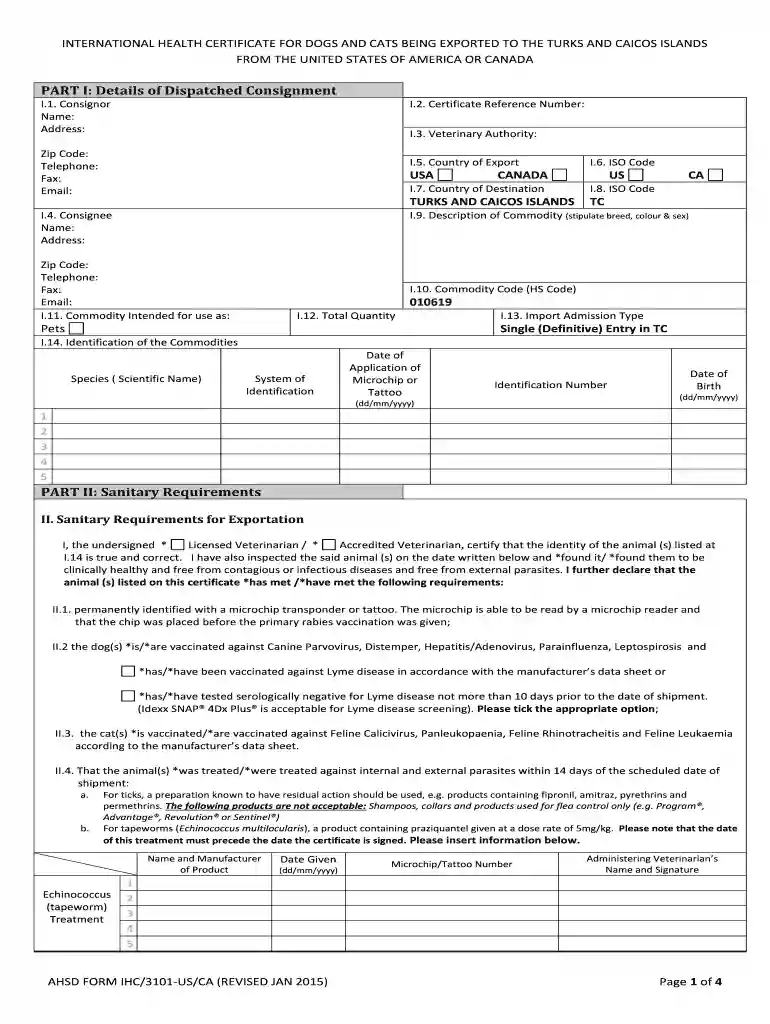
International health certificate for dogs and cats canada 2026

Get Form
international health certificate for dogs and cats Preview on Page 1

Here's how it works

01. Edit your international health certificate for dogs and cats online
Type text, add images, blackout confidential details, add comments, highlights and more.

02. Sign it in a few clicks
Draw your signature, type it, upload its image, or use your mobile device as a signature pad.

03. Share your form with others
Send veterinary health certificate canada via email, link, or fax. You can also download it, export it or print it out.

Understanding the International Health Certificate for Dogs and Cats in Canada

The international health certificate for dogs and cats serves as an essential document for pet owners looking to facilitate the travel of their pets across borders, particularly from Canada. This certificate is a formal declaration of an animal's health status, underscoring compliance with pertinent veterinary standards and regulations to ensure the pet's safety during transit.

Key Components of the International Health Certificate

The health certificate includes a variety of critical information which is used to confirm that a pet is healthy and meets the import requirements of the destination country. The components typically include:

  • Owner and Animal Details: Name and contact information of the pet owner, along with the pet’s identification details (such as microchip number or tattoo).
  • Veterinary Information: Contact details of the licensed veterinarian who completed the assessment.
  • Health Status Declaration: A statement confirming that the animal does not exhibit signs of communicable diseases and is fit for travel.
  • Vaccination Records: Details regarding the animal's vaccination history are documented, including dates and types of vaccinations received, particularly for rabies, which is crucial for international travel.
  • Parasite Treatment: Evidence of recent treatments for parasites, such as ticks and fleas, may be required.

Steps to Obtain the International Health Certificate

Acquiring this health certificate involves several essential steps that pet owners need to follow:

  1. Schedule an Appointment with a Veterinarian: Move ahead by ensuring that your animal sees a qualified veterinarian within the time frame required by the destination country.
  2. Health Assessment: During the appointment, the veterinarian will conduct a thorough health examination and verify vaccinations.
  3. Complete the Certificate: Once health status is confirmed, the veterinarian will fill out the international health certificate, including all required personal and animal information.
  4. Submission to Appropriate Authorities: Depending on the travel arrangements, the completed health certificate may need to be submitted to a governmental authority for endorsement, such as the Canadian Food Inspection Agency (CFIA).
  5. Final Record: Ensure you obtain a copy of the completed certificate for your records and for presentation during travel.

Validity and Timing Requirements

The international health certificate typically has specific validity periods, which vary based on the destination. It is crucial for pet owners to:

  • Confirm how long the certificate is valid, typically ranging from ten days to six months depending on the country of entry.
  • Understand the timing of health assessments; many countries require a health examination to occur within a few days of travel.

Common Usage Scenarios for the Health Certificate

There are various situations in which an international health certificate is essential:

  • Relocating Families: Families moving abroad with their pets need to ensure that their animals meet the health requirements of their new country.
  • Traveling Abroad: Individuals traveling with their pets for vacations or long-term stays must present the health certificate for inspections by border authorities.
  • Pet Importation: Rescue organizations or breeders importing pets into Canada will also need this certificate to show compliance with health regulations.

Legal Considerations and Compliance

The international health certificate is a legally binding document, and any inconsistencies or errors may lead to complications at borders. Pet owners should:

  • Review all information carefully before the veterinarian signs the certificate.
  • Familiarize themselves with the import regulations specific to their destination to ensure all conditions are met, as failure to do so might result in denial of entry for the pet or additional quarantine measures.

Cost Factors and Considerations

The costs associated with obtaining the international health certificate can vary widely, dependent on several factors:

  • Veterinary Fees: The examination and certificate issuance may include a consultation fee, which can range from $50 to $200.
  • Additional Services: If vaccinations or treatments (like deworming) are necessary, these will incur extra charges.
  • Government Fees: Some countries might require that the certificate be endorsed by a governmental body, which could involve additional costs.

Exceptional Cases and Variations

Different countries may have unique protocols regarding the international health certificate. Here’s a brief overview of potential variations:

  • Some countries might require a specific format or additional documentation, such as proof of recent vaccinations or a rabies titer test.
  • Pets traveling under certain conditions, like emotional support animals, might have additional requirements or exemptions to consider.

By adhering closely to the stated procedures and ensuring proper documentation, pet owners can facilitate smoother travel for their beloved animals and ensure compliance with all international regulations.

See more international health certificate for dogs and cats canada versions

We've got more versions of the international health certificate for dogs and cats canada form. Select the right international health certificate for dogs and cats canada version from the list and start editing it straight away!
Versions Form popularity Fillable & printable
2015 4.8 Satisfied (262 Votes)
2013 4.2 Satisfied (38 Votes)
be ready to get more

Complete this form in 5 minutes or less

Get form

Got questions?

We have answers to the most popular questions from our customers. If you can't find an answer to your question, please contact us.
Contact us
The Canadian International Health Certificate may be used to accompany pet dogs and cats to other countries. This certificate must be printed on legal paper (8.5 X 14). No other format will be accepted.
CDC Dog Import Form receipt and. A Certification of U.S.-issued Rabies Vaccination form endorsed by the USDA or a valid USDA-endorsed export health certificate (the export certificate option is only available for certificates issued on or before July 31, 2025).
Health certificates must be legible, accurate, and complete. Pet dogs OLDER than 8 months do NOT require any health certificate.
When flying with a dog, youll typically need to provide a health certificate issued by your veterinarian, proving that your dog is fit to travel and up to date on vaccinations. Some airlines may also require a pet passport, especially for international travel, as well as proof of microchip identification.

Security and compliance

At DocHub, your data security is our priority. We follow HIPAA, SOC2, GDPR, and other standards, so you can work on your documents with confidence.

Learn more
ccpa2
pci-dss
gdpr-compliance
hipaa
soc-compliance
be ready to get more

Complete this form in 5 minutes or less

Get form