
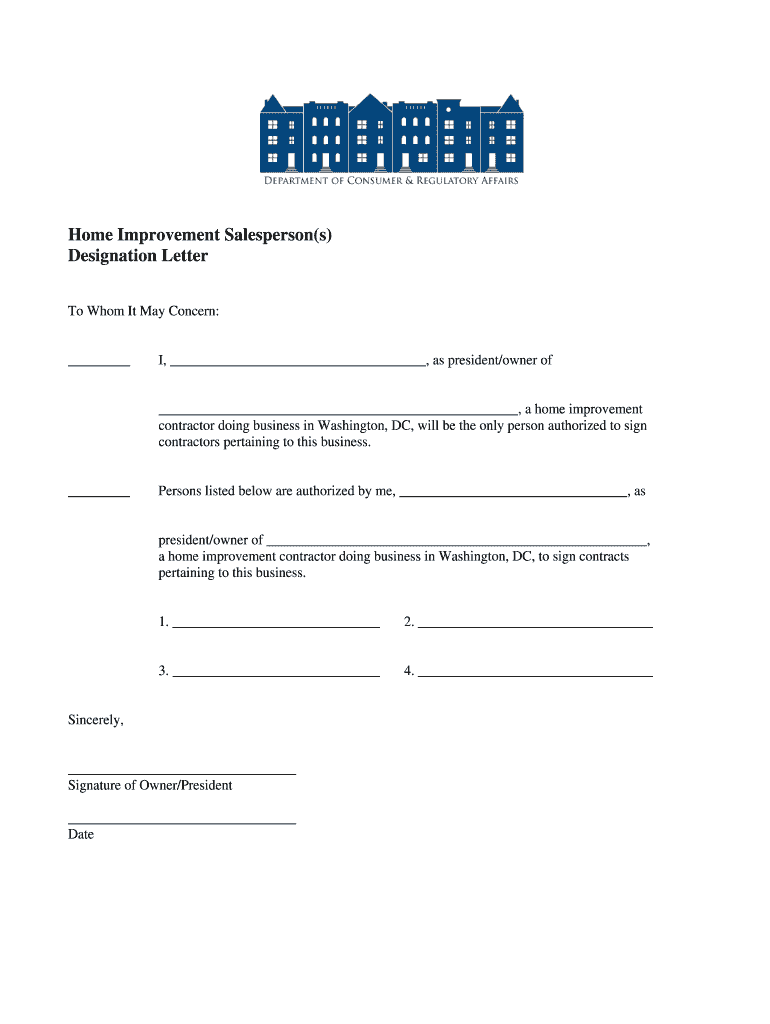







Definition and Meaning of the Home Improvement Letter
A home improvement letter is an official document used by contractors to authorize individuals to sign contracts on behalf of a home improvement business. This letter is crucial in the home improvement contracting industry, particularly in Washington, DC, where it may be required for obtaining various licenses and permits. The key purpose of the document is to clarify the authority of designated individuals, ensuring that they have the legal power to enter contracts and make commitments for the company.
Key Features of the Home Improvement Letter
- Authorization: Confers legal authority to individuals within the company, ensuring that authorized personnel can sign agreements on behalf of the business.
- Clarity: Provides a clear delineation of roles within the organization, mitigating the risk of unauthorized actions.
- Legitimacy: Establishes the credibility of the business when dealing with clients, suppliers, and licensing bodies.
How to Use the Home Improvement Letter
Using a home improvement letter involves several steps that ensure its validity and effectiveness in legal and business dealings. Understanding how to draft and utilize the letter can help streamline operations for home improvement contractors.
Steps to Draft the Home Improvement Letter
-
Identify Authorized Individuals:
- Clearly state the names and positions of individuals being authorized.
- Specify the extent of their authority, such as signing contracts and negotiating terms.
-
Include Company Information:
- Provide the legal name of the business, its address, and contact information.
- Ensure that the letter is printed on the company's official letterhead for authenticity.
-
Add Legal Language:
- Include a statement affirming the authority granted to the specified individuals.
- Reference any applicable laws or regulations relevant to the authority granted.
-
Sign and Date:
- The letter must be signed by a high-ranking official, typically the owner or president.
- Include the date of signing to ensure the letter's validity.
-
Distribute Copies:
- Provide copies of the signed letter to authorized individuals and retain a copy for company records.
Important Elements of the Home Improvement Letter
A home improvement letter should contain several key components to ensure that it is effective and legally binding. These elements not only reinforce the authority granted but also enhance the letter’s credibility.
Essential Components to Include
- Title of Document: Clearly label the document as a "Home Improvement Letter" at the top.
- Introduction Statement: A brief paragraph that states the purpose of the document.
- Identification of Parties: Names and titles of both the individual granting authority and those receiving it.
- Scope of Authority: Detailed description of what actions the authorized individuals are permitted to undertake.
- Effective Date: Specify the date from which the authority is applicable, often aligning with the date of signing.
- Termination Clause: Include provisions regarding how and when the authority may be revoked or modified.
Legal Use of the Home Improvement Letter
Understanding the legal implications of the home improvement letter is vital for contractors and authorized signers. Improper handling of this document can lead to legal repercussions, making it essential to abide by relevant laws and best practices.
Legal Considerations
- Adherence to Local Regulations: Ensure that the home improvement letter complies with the regulations set forth by the Department of Consumer and Regulatory Affairs (DCRA) in Washington, DC.
- Documentation of Authority Transfer: Maintain records of who was authorized and when authority was granted to prevent disputes.
- Liability Issues: If authorized individuals act beyond their scope, the company may be liable for unauthorized contracts; thus, outlining authority clearly is critical.
Typical Users of the Home Improvement Letter
Several stakeholders within the home improvement industry commonly utilize the home improvement letter. Recognizing the users helps in tailoring the document to meet their specific needs.
Common Users
- Home Improvement Contractors: Primary users who need to designate project managers or sales representatives.
- Franchise Owners: Those operating franchise locations may use the letter to specify authorized signers across their network.
- Real Estate Developers: Developers often need to authorize contractors to sign agreements related to property improvement projects.


Examples of Using the Home Improvement Letter
Real-world scenarios illustrate the application of the home improvement letter in various contexts. These examples highlight its significance in contract management and organizational structure.
Practical Scenarios
-
Contract Signing: A home improvement contractor wanting to enter into a contract for renovations on a residential property designates a project manager via the home improvement letter. This manager successfully signs the contract, providing the necessary authority outlined in the letter.
-
Client Meetings: During client negotiations, a sales representative presents the home improvement letter to substantiate their authority. This documentation increases client confidence, leading to smoother transaction processes.
How to Obtain the Home Improvement Letter
Acquiring a home improvement letter typically involves internal processes within a business. It is important for contractors to know how to create and officially document this authorization for use.
Steps for Obtaining the Home Improvement Letter
- Draft the Letter: Follow the guidelines outlined previously.
- Obtain Necessary Signatures: Ensure it is signed by the appropriate authority in the company.
- File the Letter: If required, submit a copy to the relevant licensing or regulatory authorities alongside applications for permits.
- Store Securely: Keep the original in a safe place and make copies available to authorized individuals.




