




01. Edit your renunciation of nominated executor form online
Type text, add images, blackout confidential details, add comments, highlights and more.

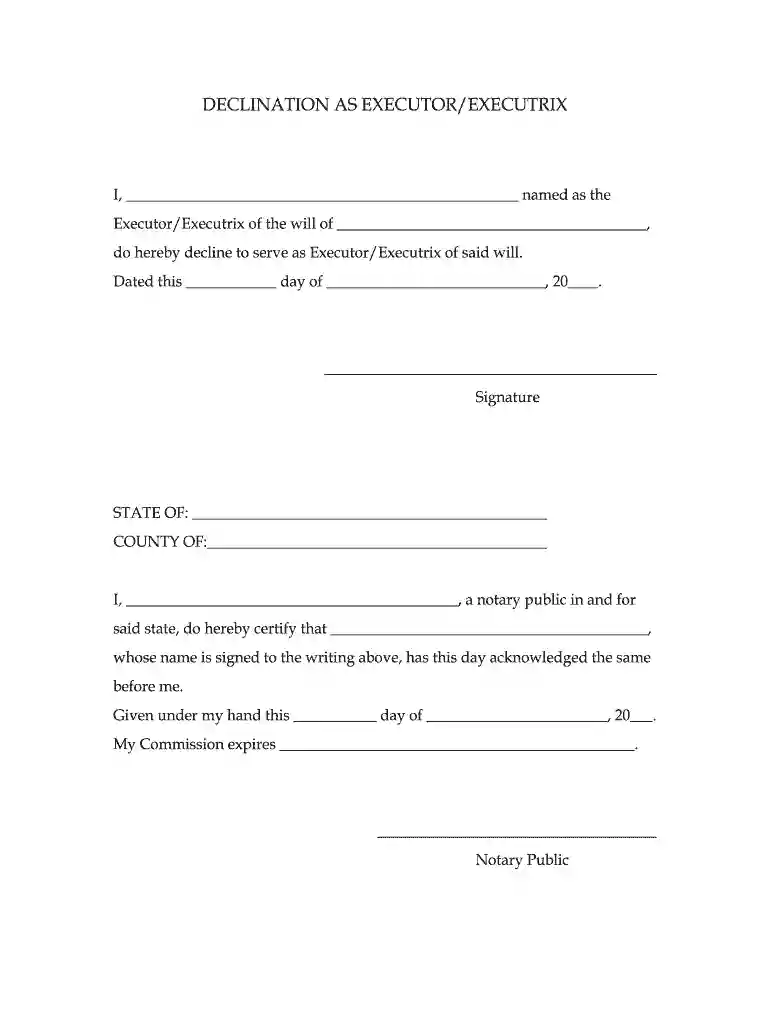
Type text, add images, blackout confidential details, add comments, highlights and more.

Draw your signature, type it, upload its image, or use your mobile device as a signature pad.

Send renunciation of executor form via email, link, or fax. You can also download it, export it or print it out.
The renunciation of executor form is a formal legal document utilized by individuals who have been nominated to serve as an executor or executrix for a will but choose to decline that responsibility. This document is essential for maintaining the integrity of the estate administration process, ensuring that the appropriate party manages the estate without delays or disputes. When someone renounces their role, it allows the appointed executor to pass on the duties to an alternative individual, facilitating a smoother transition in estate management.
The significance of this form lies in its legal capacity to release the nominated executor from their obligations, providing clear documentation of their decision. In states like New York and California, specific regulations govern how this form must be completed and submitted, ensuring compliance with state probate laws.
Obtain the Form: The first step involves acquiring the renunciation of executor form. Most states provide a standardized version of this document that can often be obtained from a courthouse or online legal resource.
Fill in Necessary Information: Essential details required include:
Declaration of Renunciation: The individual must clearly state their intention to renounce the executorship. This part should also indicate the reasons for declining the role, although this may not always need to be provided.
Signature and Date: The executor must sign and date the form in the presence of a notary public to ensure the declaration is legally binding.
Submit the Form: After notarization, the document should be filed with the probate court in the county where the decedent's estate will be administered.
Notify Relevant Parties: It is also advisable to inform the other beneficiaries and the alternative executor about the renunciation, ensuring clarity and transparency in the estate management process.
Renunciation forms can vary by state and may include different terminologies and formats. Some common variations include:
Renunciation of Nominated Executor Form: This term is often used interchangeably with the standard renunciation of executor form. It serves the same purpose but may have slight differences based on state regulations.
Deed of Renunciation: This is another official term for the document that may be used in certain jurisdictions, emphasizing the legal implications of renouncing an appointment.
Executor Renunciation Form: This variant focuses on the individual who was appointed as executor and their decision to decline that role.
It's important to use the exact terminology and format required by the jurisdiction in which the estate is being managed to ensure compliance with local laws.
The renunciation of executor form carries significant legal implications. By completing and submitting this document, the individual formally relinquishes all rights and responsibilities associated with the position. This action prevents future claims against the renouncing party concerning the estate and clarifies the administration process for the court and involved parties.
Here are a few key legal considerations:
Avoiding Liability: Once the renunciation is executed and submitted, the individual cannot be held liable for any decisions made or actions taken in relation to the estate management after renouncing.
Court Approval: In some jurisdictions, the probate court must approve the renunciation. This adds a layer of legal oversight to ensure that the estate's administration continues smoothly.
Subsequent Appointments: The renunciation also indicates an opening for another individual to step in as executor, which helps avoid delays in beginning the probate process.
Consider the following scenarios to illustrate the practical applications of the renunciation of executor form:
Scenario One: An executor nominated in a will is unexpectedly unable to fulfill their duties due to a personal emergency. They complete the renunciation of executor form, allowing a sibling, named as an alternative executor, to assume the role without delay.
Scenario Two: An individual formally appointed as an executor realizes that they lack the necessary time or expertise to handle estate matters, such as taxes and distribution of assets. After careful consideration, they choose to renounce their role, facilitating the appointment of a professional fiduciary who is better equipped to manage the estate.
These examples highlight how the use of the renunciation of executor form can help in avoiding complications and ensuring a more efficient process in managing an estate.
While the above writing doesn't contain a formal conclusion, recognizing the importance of the renunciation of executor form is critical for anyone involved in estate administration. The act of renouncing executorship is not only about stepping back from responsibilities but also about promoting clarity and effectiveness in the legal process, ultimately serving the best interests of the decedent's estate and beneficiaries. Each individual who has been nominated in this capacity should equip themselves with the necessary knowledge and resources to navigate this process effectively.
At DocHub, your data security is our priority. We follow HIPAA, SOC2, GDPR, and other standards, so you can work on your documents with confidence.
Citation of administrator or executors renunciation A citation shall be in the form prescribed in Form 11 set out in the First Schedule and shall be servedRead more
(Signature and Seal of Notary or other official qualified to administer oaths. Show date of expiration of Notarys Commission.) Form RW-06 eff. 09.01.16. NameRead more


