




01. Edit your borrower authorization form online
Type text, add images, blackout confidential details, add comments, highlights and more.

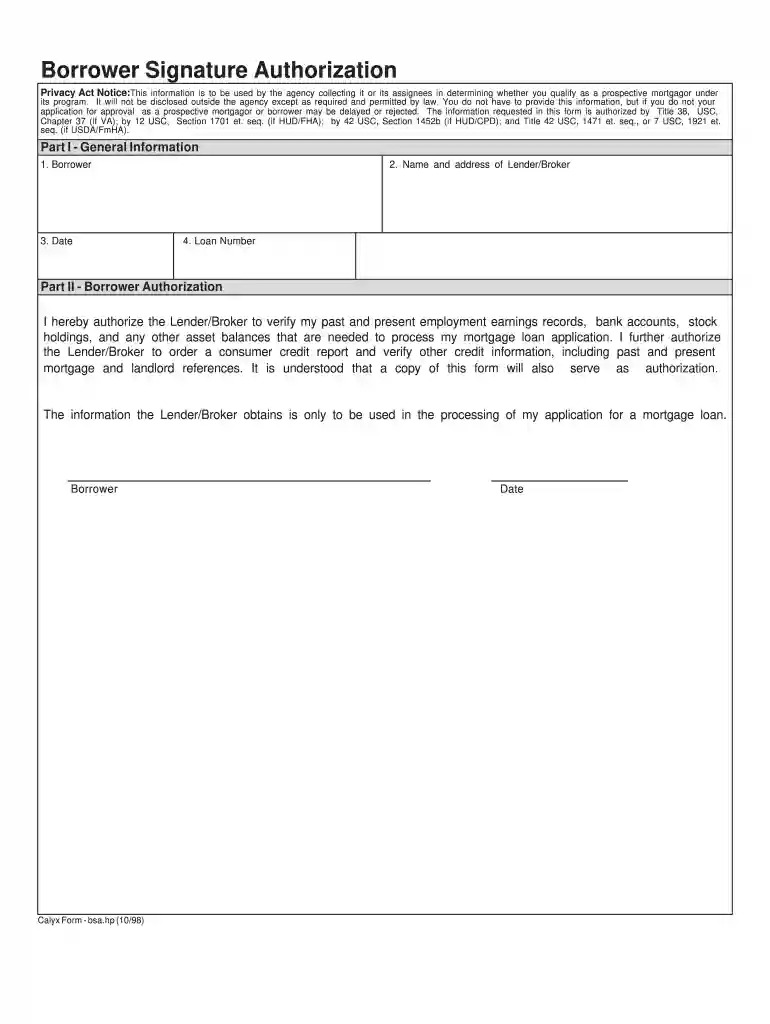
Type text, add images, blackout confidential details, add comments, highlights and more.

Draw your signature, type it, upload its image, or use your mobile device as a signature pad.

Send borrowers authorization form template via email, link, or fax. You can also download it, export it or print it out.
A borrower authorization form is a critical document that allows lenders or brokers to access a borrower's financial information. This form is essential in the mortgage loan application process, providing both a means to verify a borrower's employment, bank accounts, and credit history. By signing the borrower authorization, the applicant gives permission for the lender to obtain sensitive financial data directly from third-party institutions, enhancing the efficiency and accuracy of the loan evaluation process.
The form may include a Privacy Act Notice, which informs the borrower about the use and potential disclosure of their information. This disclosure is vital for maintaining transparency and protecting the borrower's privacy rights. In this context, the borrower authorization form acts as a safeguard that establishes mutual trust between the borrower and the lender.
Completing a borrower authorization form is not merely a procedural step; it significantly impacts the efficiency of the mortgage process. By filling this form, borrowers enable lenders to swiftly gather necessary details, eliminating potential delays in loan approval. The authorization simplifies the verification of critical components, such as:
Without this form, lenders face challenges in obtaining critical information, which can lead to prolonged processing times or even denied applications. Consequently, completing the borrower authorization form is essential to expedite the mortgage process, ensuring borrowers can close on their homes promptly.
Filling out the borrower authorization form involves several systematic steps to ensure accuracy and compliance with lender requirements. Follow these steps for effective completion:
These steps emphasize the importance of careful attention to detail, ensuring that all required fields are filled out accurately to avoid delays in processing.
The borrower authorization form is utilized by various stakeholders in the mortgage lending process. Its primary users include:
The form serves as a bridge allowing these parties to communicate critical financial information efficiently while ensuring that borrower rights are protected.


The borrower authorization form has a legally binding status, provided it complies with relevant laws, such as the Electronic Signatures in Global and National Commerce (ESIGN) Act. When properly completed, the authorization permits lenders to obtain the necessary consumer reports and information from designated institutions, reinforcing the compliance of information-sharing processes.
It is vital to understand that the form cannot be used arbitrarily; it must be specific to the loan process. Lenders must ensure borrowers are fully aware of what information will be gathered and how it may be used. Failure to adhere to these legal considerations could lead to liabilities for both borrowers and lenders, including potential violations of privacy laws or regulations.
Several key elements are commonly found within a borrower authorization form, ensuring that both borrowers and lenders can navigate the mortgage application process securely and efficiently. These elements typically include:
Understanding these key components helps borrowers recognize what they are agreeing to, thereby ensuring informed consent in the mortgage process.
We've got more versions of the borrower authorization form form. Select the right borrower authorization form version from the list and start editing it straight away!
At DocHub, your data security is our priority. We follow HIPAA, SOC2, GDPR, and other standards, so you can work on your documents with confidence.
PLUS Borrower Authorization. Academic Year. By signing and submitting this form, I, the PLUS loan borrower (parent), am requesting thatRead more
Indicate by check mark if the registrant is a well-known seasoned issuer, as defined in Rule 405 of the Securities Act. ☒ Yes ☐ No.Read more
Do not sign this form until the form is fully completed. Keep a copy of this form. This Authorization expires one year from the date signed unless BorrowerRead more


