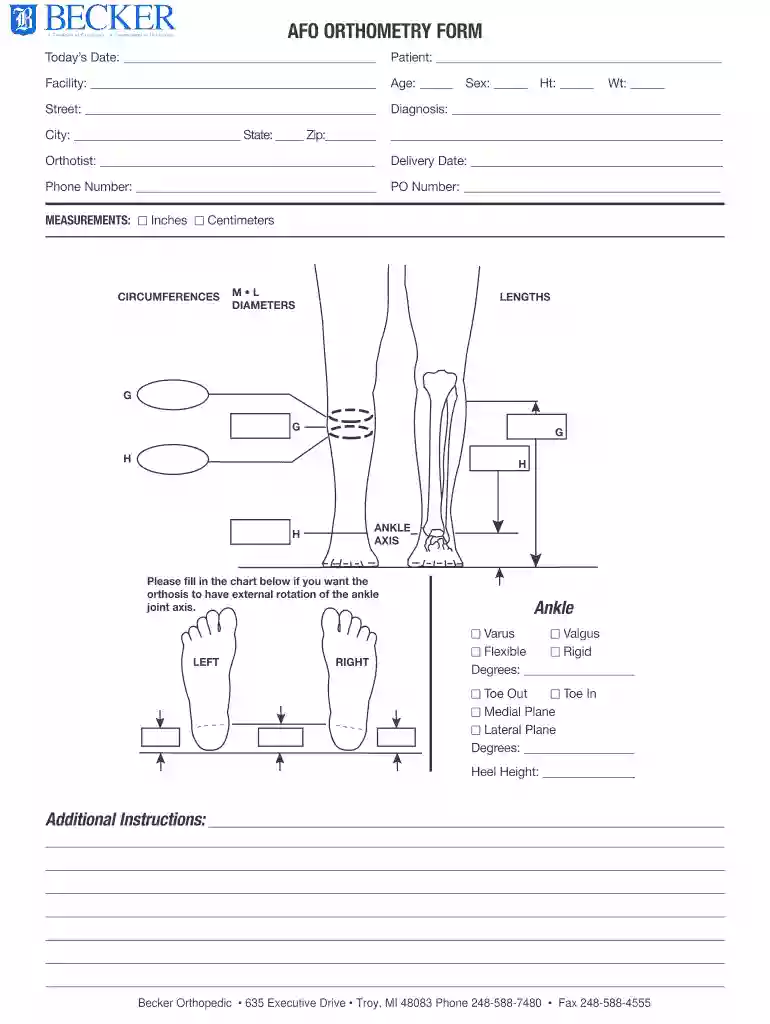
Definition and Meaning of the AFO Measurement Form
The AFO measurement form, also known as the Ankle-Foot Orthosis Orthometry Form, is a specialized document used to collect essential patient information and specific measurements for orthotic devices. This form plays a crucial role in the orthotic fitting process, ensuring that each device is tailored to meet the unique needs of the patient.
Purpose of the AFO Measurement Form
- Patient Information: Includes details such as name, age, gender, and contact information, which are vital for accurate record-keeping and communication.
- Medical History: Captures relevant medical conditions, prior treatments, and disabilities, assisting orthotists in designing appropriate solutions.
- Measurements: Collects precise measurements of the ankle and foot, which are crucial for fitting the orthotic device effectively.
This form aids in customizing orthotic solutions, ensuring both comfort and functionality for the patient.
Key Elements of the AFO Measurement Form
The AFO measurement form comprises various sections designed to gather comprehensive information required for orthotic manufacturing. Each section contains specific fields that need to be accurately filled out.
Important Sections of the Form
- Patient Details: This section requires basic demographic information about the patient.
- Diagnosis and Medical History: Essential for understanding the context of the orthosis usage.
- Leg Specifics: Measurements pertaining to the legs, including circumference and length, help ensure proper fitting.
- Material Choices: Details the type of materials preferred for the orthosis, affecting both comfort and durability.
- Type of Orthosis Required: Specifies whether the device is an AFO, custom-made or prefabricated.
- Measurements for Ankle and Foot Positioning: Ensures that the orthosis supports the patient's specific needs.
Providing accurate details in these sections is vital for effective orthotic solutions.
Steps to Complete the AFO Measurement Form
Completing the AFO measurement form involves a systematic approach to ensure accuracy and comprehensiveness.
Step-by-Step Process
- Gather Patient Information: Collect all relevant personal data, including contact information and medical history.
- Capture Measurements: Use appropriate tools to measure the ankle and foot. This can include:
- Measuring the circumference of the ankle.
- Measuring the length from heel to toe.
- Recording the height of the leg from the floor to the knee.
- Select Material Options: Discuss options with the patient to determine the best materials for their needs.
- Determine Orthosis Type: Evaluate the patient's condition to decide on the type of AFO, whether custom-fit or off-the-shelf.
- Final Review: Once all sections are filled out, review the document for accuracy before submission.
This structured method ensures that no crucial information is overlooked during the process.
Who Typically Uses the AFO Measurement Form?
The AFO measurement form is utilized by various professionals involved in patient care related to lower extremity conditions.

Primary Users
- Orthotists: Specialists who assess and design orthotic devices based on the form's data.
- Physicians: Doctors who refer patients for orthotic evaluation use the form to provide necessary medical backgrounds.
- Physical Therapists: Engage with the form to record patient progress and adjustments to orthotic solutions.
- Podiatrists: May use the form to understand foot mechanics and recommend orthotic interventions.
This collaborative approach enhances overall patient outcomes by combining expertise across disciplines.
How to Obtain the AFO Measurement Form
Acquiring the AFO measurement form is essential for practitioners and patients needing orthotic solutions.
Methods of Obtaining the Form
- Healthcare Providers: Many hospitals, clinics, and orthopedic offices provide the form directly to patients during consultations.
- Online Resources: Accessible through official medical websites and orthotic manufacturers who supply templates.
- Local Orthotic Facilities: Clinics specializing in orthotics often have copies of the form available for their clients.
Ensuring you have the correct version of the AFO measurement form is important for compliance and effectiveness.
Digital vs. Paper Version of the AFO Measurement Form
Both digital and paper versions of the AFO measurement form can be utilized, presenting unique advantages and considerations.
Comparison of Formats
- Digital Version:
- Easier to edit and share electronically.
- Can be securely stored in digital health records and accessed remotely.
- Often includes built-in validation features to ensure accuracy.
- Paper Version:
- Familiar and traditional format for many practitioners and patients.
- Can be filled out manually in a face-to-face setting, which may enhance communication and understanding.
Choosing the appropriate format depends on the workflow of the healthcare provider and the preferences of the patient.
State-Specific Rules for the AFO Measurement Form
Users of the AFO measurement form must adhere to varying state-specific regulations, which can influence its use across different jurisdictions.
Important Considerations
- Regulation Compliance: Some states may have specific requirements on documentation for orthotic devices.
- Insurance Policies: Insurance providers may require certain forms to be filled out in specific ways or include additional information for claims processing.
- Local Orthotic Practices: Variations in orthotic practices and guidelines across states can affect how the form is completed and used.
Understanding these state-specific rules is vital for ensuring compliance and securing necessary approvals.
Examples of Using the AFO Measurement Form
Practical scenarios illustrate how the AFO measurement form assists in the orthotic fitting process.
Real-World Examples
- Case of Cerebral Palsy: A pediatric patient diagnosed with cerebral palsy requires an AFO to provide better foot positioning. Utilizing the measurement form, the orthotist captures the necessary dimensions and specifications to create a device that aids in ambulation.
- Diabetic Foot Complications: An elderly patient with diabetes requires an AFO to prevent foot ulcers. By thoroughly filling out the measurement form, the healthcare team can design an orthosis that offers both support and pressure relief during mobility.
These examples highlight the critical role of the AFO measurement form in ensuring effective treatment outcomes.