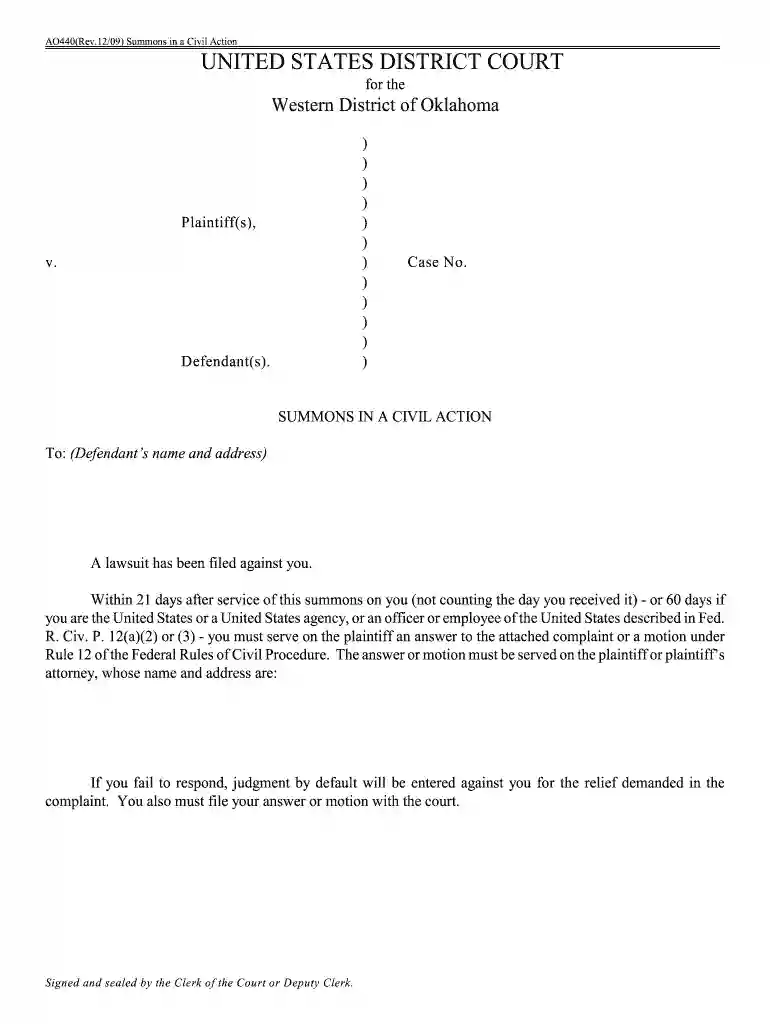
Summons sample 2026

Get Form
court summons example Preview on Page 1

Here's how it works

01. Edit your court summons example online
Type text, add images, blackout confidential details, add comments, highlights and more.

02. Sign it in a few clicks
Draw your signature, type it, upload its image, or use your mobile device as a signature pad.

03. Share your form with others
Send summon example via email, link, or fax. You can also download it, export it or print it out.

Definition and Significance of a Summons

A summons is a formal legal document that is issued by a court to notify an individual that they are being sued or are required to appear in court. Typically generated by the plaintiff or their attorney, the summons serves to inform the defendant of their legal obligations and the necessity of a response. Within the U.S. judicial system, it is crucial for ensuring a fair process, as it provides the defendant with adequate notice to prepare their defense.

  • Components of a Summons:
    • Case name and number
    • Name and address of the court
    • Names of the parties involved
    • Deadline by which the defendant must respond
    • Consequences of failing to appear, including possible default judgment

Understanding the structure and legal implications of a summons is vital for defendants, as responding appropriately can significantly affect the outcome of a case.

Types of Summons

There are various types of summons employed in legal procedures, each with specific purposes:

  • Civil Summons: Used in civil cases to inform a party that a lawsuit has been filed against them.
  • Witness Summons: Requires individuals to appear in court as witnesses for a trial.
  • Subpoena Duces Tecum: Compels a person to produce documents or evidence for a case.
  • Criminal Summons: Notifies a defendant of charges against them in a criminal matter.

Each summons type is governed by its respective rules and regulations, often dictated by jurisdiction, making it essential for legal professionals and defendants to understand the nature of the summons they are dealing with.

Responding to a Summons: Key Steps

Upon receiving a summons, the defendant has a legal obligation to respond within a specified timeframe, often detailed within the document. Below are the steps to effectively manage a summons:

  1. Read the Summons Thoroughly: Understand the allegations, deadlines, and actions required.
  2. Consult an Attorney: Legal counsel can provide crucial guidance on how to respond appropriately and represent the defendant's interests.
  3. Prepare a Response: This may involve drafting an answer or motion, wherein the defendant addresses the claims made.
  4. File the Response: Ensure that the document is filed with the appropriate court before the deadline.
  5. Serve the Plaintiff: The respondent must provide a copy of their response to the plaintiff.

Failure to adhere to these steps could result in a default judgment, where the court may rule in favor of the plaintiff without the defendant's input.

Consequences of Ignoring a Summons

Ignoring a summons can lead to serious legal repercussions. When a defendant fails to respond, the plaintiff has grounds to seek a default judgment. This outcome can include:

  • Financial liabilities as imposed by the court
  • Judgment liens on property
  • Wage garnishment
  • Restrictions on credit reports

Understanding the potential consequences underscores the importance of addressing a summons promptly and adequately.

Summons Sample Formats and Templates

Creating or referencing a summons can be streamlined by using established samples and templates. These samples outline the essential elements and provide a clear structure to follow:

  • Court Summons Template: This includes necessary fields such as case title, court details, response deadlines, and signatures.
  • Witness Summons Example: This document requests the presence of a witness, detailing the case they are associated with and the date of appearance.
  • Civil Summons Sample: A comprehensive format that integrates the case information, defendant's response expectations, and potential outcomes for non-compliance.

Utilizing these templates can simplify the drafting process, ensuring that all critical components are addressed.

Jurisdiction-Specific Considerations for Summons

Jurisdiction can significantly impact the requirements associated with a summons. Different states may have unique rules regarding:

  • Response Times: Some jurisdictions allow differing timelines for responses, typically between 20 to 30 days.
  • Service Methods: The method by which a summons must be served may vary; options can include personal service, certified mail, or publication in certain circumstances.
  • Additional Filings: Some states mandate filing additional documents along with the summons, such as affidavits or case management statements.

Understanding these nuances can aid defendants in ensuring they comply with all jurisdictional mandates which may affect their case.

Examples of Common Summons Scenarios

Real-world scenarios where summonses frequently arise include:

  • Landlord-Tenant Disputes: A landlord may issue a summons to a tenant for unpaid rent, requiring the tenant to respond or face eviction.
  • Breach of Contract Cases: A business may serve a summons to another entity for failing to fulfill contract terms, necessitating a legal response.
  • Family Law Matters: Summons related to divorce proceedings inform one spouse of the filing and necessary court appearances.

These examples highlight the varied contexts in which summonses play a crucial role in legal proceedings, emphasizing their relevance across different sectors of law.

be ready to get more

Complete this form in 5 minutes or less

Get form

Got questions?

We have answers to the most popular questions from our customers. If you can't find an answer to your question, please contact us.
Contact us
Its important to note that there are different types of summons used in various legal contexts. For example, a Civil Summons is used in civil lawsuits, while a Criminal Summons may be issued in criminal cases to notify individuals of pending criminal charges.
Important Elements in a Summons Letter Senders Identity: Clearly state the name, address, and identity of the party issuing the summons. Agreement or Contract Details: Provide a detailed explanation of the agreement or contract that serves as the basis for the summons, including the date and contract number.
Summons is issued by the Clerk of Court upon filing of the complaint and payment of the docket fees, bearing the court seal and date of issuance.
It involves presenting to the person or entity sued (the defendant) a Complaint in which the person suing (the plaintiff) describes its legal claims and should always be accompanied by a Summons, requiring a defendant to respond in court. There are very specific requirements for serving a lawsuit on a defendant.
If you have a summons and do not show up you are in contempt of court, and the judge may order a warrant for your arrest, and you may sit in jail waiting for your trial. More likely you will have to post bail and/or wear a monitoring ankle bracelet. All of this happens before the case is adjudicated.

Security and compliance

At DocHub, your data security is our priority. We follow HIPAA, SOC2, GDPR, and other standards, so you can work on your documents with confidence.

Learn more
ccpa2
pci-dss
gdpr-compliance
hipaa
soc-compliance
be ready to get more

Complete this form in 5 minutes or less

Get form

People also ask

You must prepare the summons and file it with the Clerk of the Court. There is no fee for the issuance of an initial summons. The Clerk of the Court will then issue the summons for you to serve on the defendant.
Draft a summons that includes the courts name, the title of the action, the case number, and the time and place of the hearing. Also include the name and address of the plaintiff and defendant. Make sure to include any other necessary information, such as an affidavit of service, or an affidavit of mailing.

summons sample