







Understanding the Motion to Amend Prior Domestic Violence Order in Kentucky
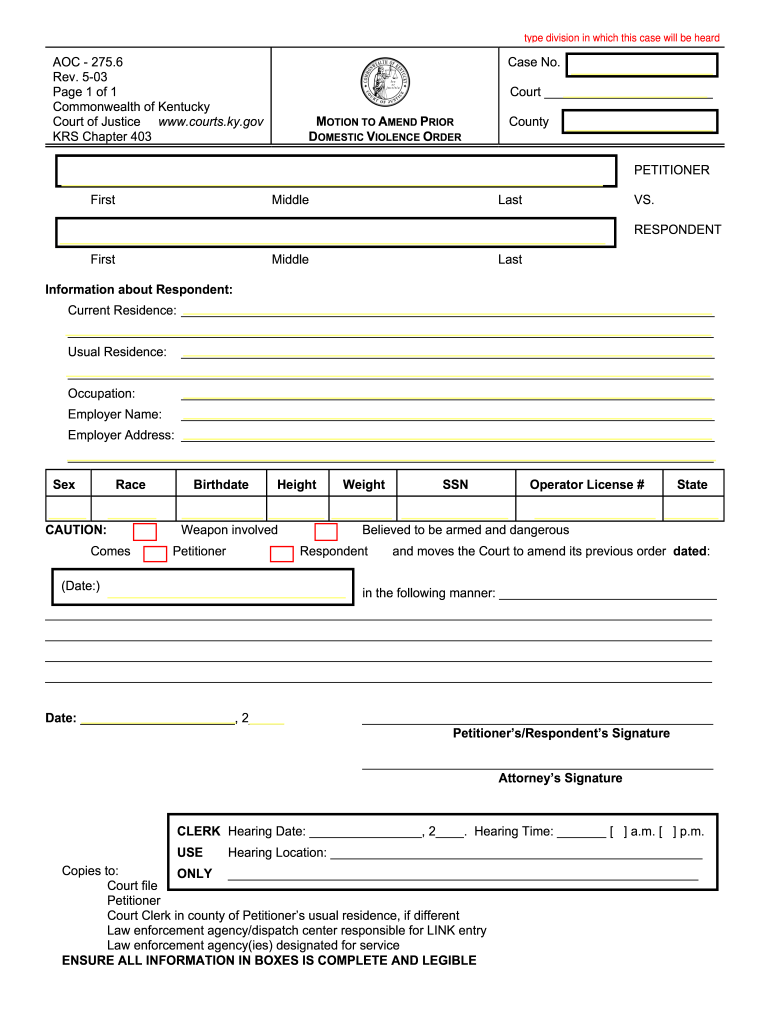
The Motion to Amend Prior Domestic Violence Order (DVO) is a legal request filed in Kentucky courts to modify an existing domestic violence order. This motion allows a party to seek changes to the terms or enforcement of the DVO. Understanding the process involved in filing this motion is crucial for those who need to make adjustments to their protective orders.
Definitions and Key Terms Related to Domestic Violence Orders
- Domestic Violence Order (DVO): A court order that protects individuals from domestic violence, requiring the perpetrator to refrain from specific actions such as contacting or approaching the victim. DVOs are typically issued in response to incidents of domestic abuse.
- Emergency Protective Order (EPO): A temporary order that provides immediate protection for individuals believed to be in danger. An EPO can lead to a DVO if a court hearing confirms the need for ongoing protection.
- Petitioner: The person filing the motion to amend the DVO, seeking changes to the existing order.
- Respondent: The individual against whom the DVO is issued, whose actions are being contested in the motion.
Filing the Motion: Requirements and Procedures
When filing a Motion to Amend Prior Domestic Violence Order, specific steps must be followed to ensure the request is properly submitted and considered by the court.
- Obtain the appropriate forms: The motion can typically be found online or at local court offices. Ensure to use the form specific to Kentucky courts.
- Complete the motion: Fill out the form with detailed information, including your name and contact information, case number, and specific changes requested to the DVO.
- Serve the respondent: According to Kentucky law, the respondent must be notified of the motion through proper service. This is usually achieved by personal delivery or certified mail.
- File with the court: Submit the completed motion to the relevant courthouse, ensuring to include any required supporting documentation and the proof of service for the respondent.
- Attend the hearing: A court hearing will be scheduled to discuss the motion. Both the petitioner and respondent have the opportunity to present their case.
Important Considerations When Amending a DVO
Amending a previous domestic violence order involves critical factors that must be carefully considered.
- Legal Grounds for Amendment: Common reasons for requesting an amendment include changes in living arrangements, reconciliation between the parties, or a reassessment of the threat level perceived by the petitioner.
- Evidence Requirement: The petitioner should gather and present evidence to support their motion, which may include documentation, witness statements, or police reports.
- Potential Outcomes: The court may either grant the motion in full, modify specific terms, or deny the request based on the evidence presented.
Consequences of Amending a DVO
Modifying a domestic violence order may have significant legal and personal consequences.
- Impact on Legal Rights: Changing a DVO can affect the rights of involved parties, such as visitation, custody of children, and access to shared properties.
- Violation of Orders: If the respondent violates the existing or amended order, it can lead to legal penalties, including arrest or further restrictions.
- Legal Counsel: It is advisable to seek the guidance of an attorney experienced in domestic violence law to understand rights and responsibilities regarding the amendment process.
Frequently Asked Questions (FAQs)
- Can a victim drop charges or modify a DVO?: Yes, a victim can request to modify or drop an existing DVO via a motion in court, but the decision ultimately rests with the judge.
- What happens if the victim violates the order of protection in Kentucky?: Violating a DVO can result in serious legal ramifications, including potential arrest and further restrictions on the respondent.
- Can a DVO be dismissed without a court appearance?: Generally, a court appearance is required for the judge to consider the motion to dismiss or amend the DVO.
Conclusion on the Motion to Amend Process
Understanding the process, requirements, and implications of the Motion to Amend Prior Domestic Violence Order is essential for those needing to navigate this legal landscape in Kentucky. Changes to protective orders should be approached thoughtfully and with the appropriate legal support to ensure all parties’ rights and safety are respected.


