
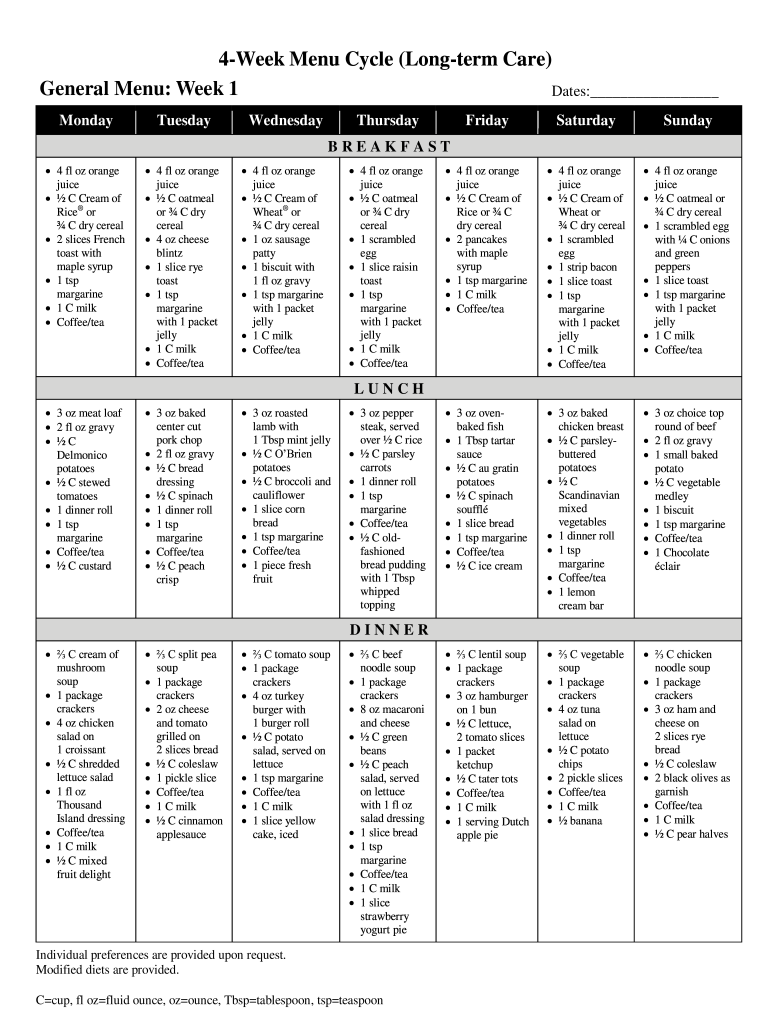







Understanding the Four-Week Cycle Menu
A four-week cycle menu is a structured meal planning system used primarily in long-term care facilities, schools, and other institutions. It provides a variety of meal options over a four-week period, ensuring nutritional diversity and accommodating various dietary needs.
Nutritional Considerations for a Cycle Menu
When planning a cycle menu, it's essential to consider the nutritional requirements of different populations, including seniors in care homes. A well-balanced cycle menu should include:
- Variety of Food Groups: Each meal should incorporate calcium, protein, vitamins, and minerals. This ensures residents receive essential nutrients.
- Portion Control: Meals should be portioned appropriately to prevent wastage while meeting caloric needs.
- Dietary Restrictions: Special considerations for allergies and health conditions (e.g., diabetes, hypertension) must be included.
Weekly Structure and Rotations
The four-week cycle menu typically follows a predetermined structure that repeats every four weeks. Each week may include:
- Breakfast Options: Daily breakfast might vary from oatmeal and fruit to eggs and whole-grain toast.
- Lunch Choices: For lunch, include options like grilled chicken salads, pasta dishes, or vegetarian meals.
- Dinner Selections: Dinner could offer meals such as stews, fish dishes, or plant-based proteins, ensuring variety while being nutritionally balanced.
Customization and Flexibility
While a cycle menu provides a roadmap for meal planning, there should be room for adjustments based on:
- Resident Preferences: Engage residents in menu planning to cater to their tastes and preferences.
- Seasonal Ingredients: Utilize fresh, in-season produce to enhance meal flavor and nutritional value.
- Cultural Considerations: Incorporate culturally significant foods to make meals more inclusive and enjoyable.
Implementation of the Cycle Menu
To implement a four-week cycle menu effectively:
- Menu Development: Develop weekly menus that align with dietary guidelines while considering resident input.
- Staff Training: Train kitchen staff on preparation and presentation of meals to ensure consistency and quality.
- Feedback Mechanisms: Establish channels for residents and staff to provide feedback on menus, allowing for iterative improvement.
Example of a Sample Cycle Menu
A sample four-week cycle menu might include:
- Week 1 Breakfast: Scrambled eggs, whole-grain toast, and fruit.
- Week 1 Lunch: Turkey sandwich with mixed greens and yogurt.
- Week 1 Dinner: Baked salmon, sweet potatoes, and steamed broccoli.
This example illustrates how meals can be structured for variety and nutrition while ensuring that all taste preferences and dietary restrictions are respected across the four-week period.
Benefits of a Cycle Menu in Care Homes
Implementing a four-week cycle menu in care homes offers numerous advantages:
- Consistency: Provides residents with predictable meal choices while reducing stress in meal preparation.
- Cost Efficiency: Helps in budgeting by streamlining purchasing and reducing food waste.
- Enhancing Dining Experience: A diverse menu can significantly improve residents' dining satisfaction and overall well-being.
A four-week cycle menu is an essential tool for promoting health, enhancing satisfaction, and ensuring efficient meal service in care home environments. Proper planning and execution can lead to significant positive outcomes for residents and staff alike.




