





Overview of the Act 13 Form
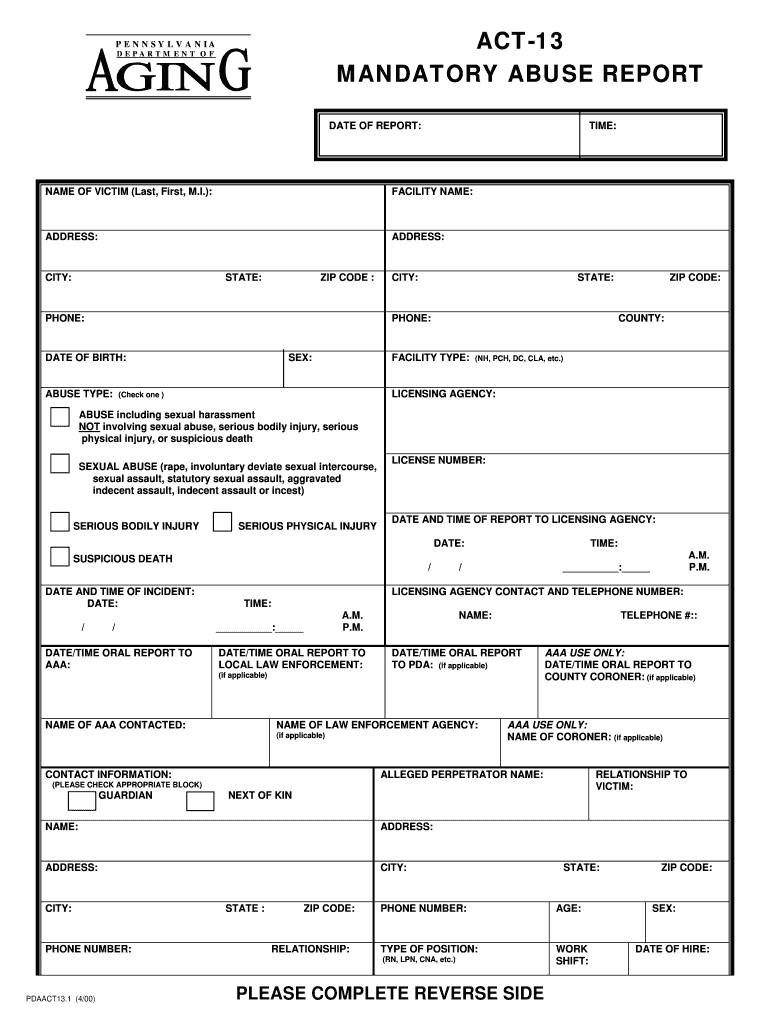
The Act 13 form is a crucial document required for reporting allegations of abuse and neglect within various care facilities in Pennsylvania. This form is part of Pennsylvania's commitment to ensuring proper oversight and protection for vulnerable populations, particularly in health and social service settings. Understanding the nuances of this document is essential for mandated reporters, caregivers, and facility administrators.
Purpose and Importance of the Act 13 Form
The Act 13 form serves multiple purposes that are pivotal in the context of safeguarding individuals affected by abuse.
- Incident Reporting: It collects detailed information about alleged incidents, including what occurred, where it took place, and who was involved. This ensures that all relevant data is documented.
- Legal Compliance: Use of the Act 13 form is mandated by Pennsylvania law for reporting abuse, thereby helping organizations and individuals comply with state regulations.
- Protection of Victims: The timely submission of this form can lead to prompt investigations and interventions, ultimately protecting those who are most vulnerable.
It is essential for mandated reporters to understand how and when to use this form, helping facilitate a structured response to abuse allegations.
Key Information Required on the Act 13 Form
When completing the Act 13 form, it's imperative to include comprehensive and accurate information.
- Victim Information: Name, age, and details regarding any injuries or signs of abuse.
- Perpetrator Information: The identity of the suspected abuser, including their relationship to the victim.
- Incident Details: Specifics about what was witnessed or reported, including dates, locations, and descriptions of events.
- Facility Information: Data about the care facility where the abuse allegedly occurred, contributing to accountability and oversight.
Completing this information accurately is vital, as it forms the basis of any investigation that follows.
Steps to Complete the Act 13 Form
Following a structured process to fill out the Act 13 form can ensure that all necessary details are captured efficiently.
- Gather Information: Collect all relevant details about the incident, including witness statements and physical evidence, if applicable.
- Fill Out Personal Details: Start by entering the victim's and perpetrator's information carefully, ensuring accuracy.
- Describe the Incident: Write a clear, factual account of what transpired, avoiding emotionally charged language.
- Specify Facility Details: Include information about the care facility, including its address and phone number.
- Submit the Form: Follow your organization’s protocol for submitting the form, whether online, via mail, or in person.
Adhering to these steps minimizes the risk of misinformation and helps maintain legal integrity during the reporting process.
Legal Requirements and Compliance
Understanding the legal framework surrounding the Act 13 form is critical for effective and compliant reporting.
- Mandated Reporter Requirements: Certain professionals, such as nurses and social workers, are legally obligated to report suspicions of abuse promptly.
- Timeliness: Reports must be submitted immediately upon suspicion of abuse to comply with Pennsylvania law.
- Confidentiality: Safeguarding the identities of both victims and reporters is a legal priority, ensuring safety and protection against retaliation.
Ensuring adherence to these legal stipulations helps mitigate risks associated with non-compliance.
Common Errors to Avoid on the Act 13 Form
Be vigilant about potential mistakes when completing the Act 13 form, as these can adversely affect investigations.
- Incomplete Information: Omitting crucial details can delay investigations and responses.
- Vague Descriptions: Using ambiguous language may lead to misinterpretation. Always aim for clarity in incident descriptions.
- Misspellings: Errors in names of individuals or places can complicate the reporting process and lead to issues in follow-up actions.
By being aware of these common pitfalls, reporters can effectively ensure their submissions are thorough and clear.
Additional Resources for Mandated Reporters
Staying informed about available resources can significantly enhance understanding and compliance concerning the Act 13 form.
- State Websites: The Pennsylvania Department of Human Services site offers comprehensive guides and resources related to mandated reporting.
- Training Programs: Various organizations provide training for mandated reporters, ensuring they understand both their responsibilities and how to use the Act 13 form properly.
- Legal Counsel: Consulting with legal professionals specializing in abuse reporting laws can provide further clarity and support.
Accessing these resources can bolster the effectiveness of mandated reporting and reinforce a culture of accountability.
Importance of Timely Reporting
The impact of timely reporting on the Act 13 form cannot be overstated.
- Immediate Actions: Prompt reporting allows for swift interventions that can protect victims from ongoing abuse.
- Investigation Efficiency: Quick responses can improve the quality of evidence and witness statements, aiding in investigations.
- Public Trust: Adhering to prompt reporting can enhance public confidence in care facilities and support systems.
Prioritizing timeliness in the reporting process is essential for effective prevention and intervention strategies.