







Definition & Meaning of the Engineering Change Proposal Template
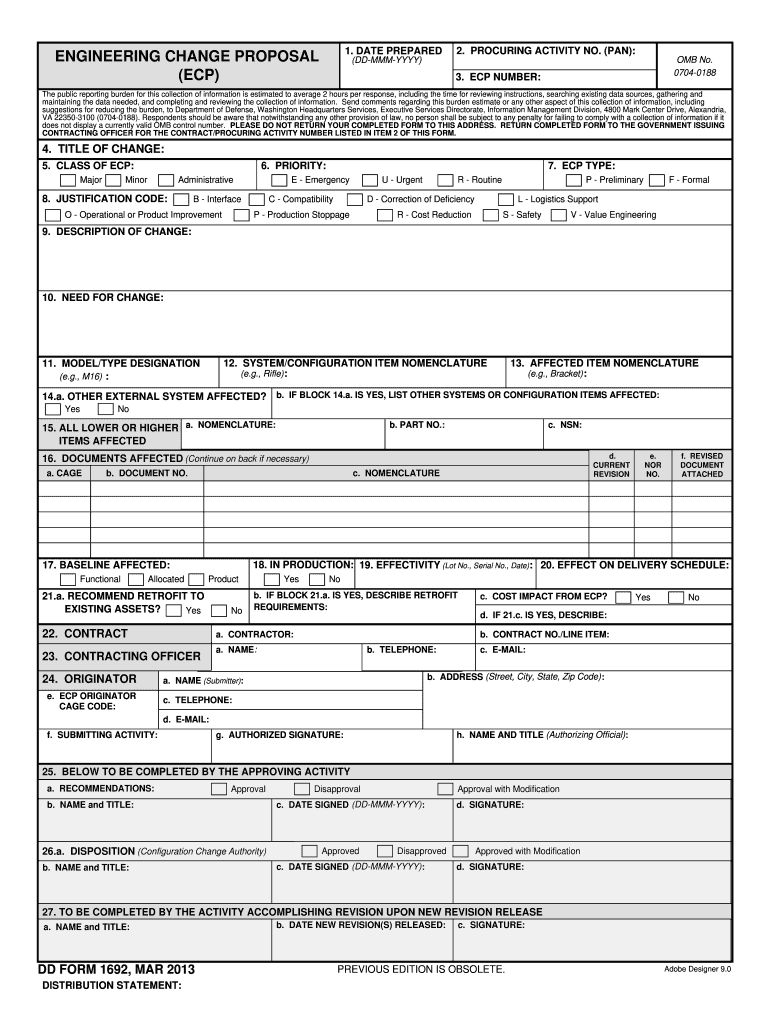
An Engineering Change Proposal (ECP) template serves as a structured document that organizations, especially within the Department of Defense and various engineering fields, utilize to formally request modifications in engineering specifications. This template ensures that changes are documented consistently, facilitating clear communication and organization. The ECP typically includes essential sections such as:
- ECP Number: A unique identifier assigned to each proposal for tracking purposes.
- Title of Change: A brief description that summarizes the change being proposed.
- Justification for Change: Detailed reasoning highlighting the necessity of the proposed modifications, often addressing issues like efficiency, cost savings, or compliance with new regulations.
- Affected Systems: Identification of the systems or components impacted by the proposed changes, providing clarity on the scope of the modification.
- Priority Level: An assessment of how critical the proposed change is to operations or project schedules.
- Impact on Production and Delivery Schedules: An evaluation of how the proposed changes may affect timelines, ensuring stakeholders are aware of potential delays.
This structured approach ensures that all relevant information is captured, enabling decision-makers to assess and approve changes effectively.
Steps to Complete the Engineering Change Proposal
Completing an Engineering Change Proposal involves several critical steps to ensure comprehensive accuracy and alignment with organizational standards. Follow these instructions for an effective submission:
- Gather Background Information: Compile all relevant data regarding the current engineering specifications and any issues prompting the change.
- Complete the ECP Template:
- Fill in the ECP number and title of the change.
- Articulate the justification, providing specific examples and data supporting the necessity for the change.
- List all affected systems to clarify the scope of the proposal.
- Assign a priority level based on urgency and importance.
- Assess and estimate the impact on production and delivery timelines.
- Review for Clarity and Completeness: Ensure that all sections are comprehensively addressed, with clear language that facilitates understanding among reviewers.
- Obtain Required Approvals: Depending on organizational processes, circulate the proposal to necessary stakeholders such as project managers, engineers, and leadership for their review and signatures.
- Submit the Completed ECP: Submit the finalized document to the designated authority for record-keeping and tracking.
Properly following these steps enhances the chances of a successful proposal and facilitates smoother implementation of the proposed engineering changes.
Key Elements of the Engineering Change Proposal Template
Understanding the specific components of the Engineering Change Proposal template is crucial for its effective utilization. The essential elements include:
- Basic Information Section: This area collects fundamental details about the proposal, including proponent information, date of submission, and ECP number.
- Change Description: An in-depth description detailing what the proposed change entails, including technical specifications or modifications to existing processes.
- Justification Section: Providing a strong rationale for the change is vital. This section should address:
- Expected benefits (cost savings, improved performance).
- Compliance with regulatory or quality standards.
- Impact Analysis: An examination of how the proposed change affects:
- Existing processes, systems, or products.
- Production schedules and resource allocation.
- Approval Workflow: Details on the process for obtaining necessary approvals, including lists of stakeholders who need to sign off.
Including these elements ensures clarity and provides all necessary information for reviewers to make informed decisions.
Important Terms Related to Engineering Change Proposals
Being familiar with key terminology related to Engineering Change Proposals is vital for everyone involved in the process. Some important terms include:
- Engineering Change Order (ECO): A formal document that communicates the necessary changes to be made in technical specifications or processes, often initiated by an ECP.
- Change Directive: An instruction issued by management to make an immediate change without a detailed proposal, used in urgent situations.
- Baseline: The established and documented standards and requirements that serve as a reference point for future changes.
- Stakeholders: Individuals or groups with vested interests in the engineering project, whose input might be crucial for proposals and approvals.
- Project Milestones: Key points in the project timeline that indicate significant progress, often impacted by proposed changes.
Understanding these terms aids in navigating discussions and documentation effectively throughout the proposal process.
Examples of Engineering Change Proposals
Providing real-world examples of Engineering Change Proposals can enhance understanding. Here are a few illustrative cases:
- ECP for Component Upgrade: A company proposes an ECP to upgrade a circuit board in a radar system to enhance reliability and performance based on recent testing results. This includes justification based on decreased failure rates observed in prototype testing.
- Software Update Proposal: An engineering team submits a change proposal to update software used in a defense communication system, detailing enhanced security features and compliance with new government regulations.
- Process Reengineering: A manufacturer submits an ECP suggesting reengineering of an assembly line to increase throughput, justified by recent data showing increased demand and potential revenue growth.
These examples demonstrate the diversity of scenarios where an Engineering Change Proposal template can be effectively employed to document and justify necessary changes.
Digital vs. Paper Version of the Engineering Change Proposal Template
When deciding between a digital versus paper version of the Engineering Change Proposal template, there are several factors to consider, each with its advantages:
-
Digital Version:
- Accessibility: Easily shareable via email or cloud-based platforms, permitting real-time collaboration.
- Editing Capabilities: Allows for quick modifications and updates without needing to start a new document.
- Storage Efficiency: Digital documents require less physical space and can be easily organized and retrieved.
- Audit Trails: Many digital systems provide built-in tracking features that maintain records of changes and contributor input.
-
Paper Version:
- Physical Signatures: Some organizations may require hard copies with original signatures for official records.
- Familiarity: Certain stakeholders may prefer traditional formats, making it easier for them to understand and engage with the content.
- No Technology Requirements: In settings with limited technological access, paper documents ensure that all stakeholders can participate.
Ultimately, the choice between digital and paper versions depends on the organizational culture, the stakeholders involved, and the complexity of the proposed changes.




