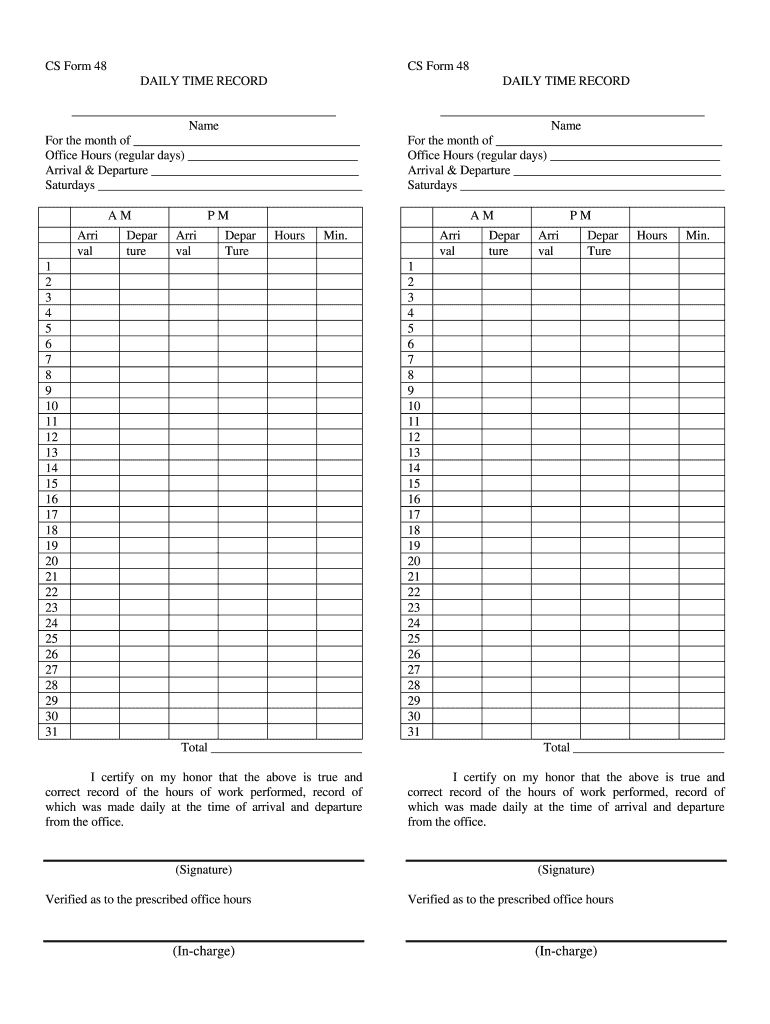







Definition and Meaning of DTR
The term DTR stands for Daily Time Record, a crucial document used in various industries to track employee attendance, including arrival and departure times throughout a specific period, usually a month. This record typically includes sections for regular work hours and additional fields for overtime or weekends. Understanding what DTR means in the workplace is essential as it provides a reliable reference for payroll, compliance, and human resources processes.
- Components of a DTR:
- Employee Identification: Name, position, and employee number.
- Dates: Space to log attendance for each workday within the specified timeframe.
- Time In and Time Out: Fields to record the start and end of each workday.
- Remarks or Comments: Space for any notes regarding absences, tardiness, or other relevant information.
The DTR serves not only as a record for compensatory purposes but also helps ensure that employees adhere to company attendance policies.
How to Use a DTR for Accurate Record-Keeping
Using a DTR effectively requires familiarity with its structure and consistent entry of accurate information. Here are essential steps for utilizing a Daily Time Record:
-
Set Up the Document:
- Begin with a blank DTR template, which can often be downloaded as a PDF or in an editable format such as Word.
- Ensure the document is properly dated for the period it covers.
-
Daily Entries:
- Each employee should fill in their time in and time out daily.
- It is important to adjust for any late arrivals or early departures accordingly.
-
Monthly Summary:
- At the end of the month, review entries for completeness and accuracy.
- Tally the total hours worked, including regular and overtime hours if applicable.
-
Submission Process:
- Submit the completed DTR to the relevant department, such as HR or payroll, at specified intervals, often monthly.
- Ensure that the form is signed off by the employee and a supervising manager to validate accuracy.
-
Maintain Confidentiality:
- Store the completed DTR securely, as it contains sensitive employee information that must be protected.
Examples of Using the DTR in Practice
DTRs are commonly used in various professional environments. Here are a few examples illustrating their application:
- Corporate Offices: Employees log their work hours which helps HR manage payroll and benefits.
- Educational Institutions: Teaching staff may use DTRs to document attendance for compliance with licensing or funding requirements.
- Healthcare Facilities: Medical professionals track their hours to ensure compliance with work hour regulations.
Each scenario demonstrates the importance of accurate time records for efficient operational management.
Legal Considerations for DTR Usage
The use of a Daily Time Record must comply with labor laws and regulations, which vary by state. Here are some legal aspects to consider:
- Compliance with Labor Laws: Ensure that the DTR aligns with Fair Labor Standards Act (FLSA) requirements regarding employee hours and pay.
- Record Keeping: Maintain records for the legally mandated period, often three years, to protect against disputes.
- Data Privacy Regulations: Be mindful of state-specific privacy laws concerning employee records and ensure secure handling of DTR data.
Failing to adhere to these legal requirements can result in penalties for non-compliance, underscoring the importance of accurate and secure record-keeping.
Variations and Alternatives of DTR Forms
There are several versions and alternatives to the traditional DTR that can cater to different organizational needs.
- Digital DTR Options: Many companies now utilize online DTR systems which allow for real-time updates and access from multiple devices.
- Shift-Specific DTRs: Some organizations have tailored DTRs for shifts that require logging multiple attendance records within a single day, suitable for industries with flexible scheduling.
- Editable Templates: Many organizations offer editable DTR templates in formats like Word or Excel, which allow for customization according to company-specific requirements.
These variations help provide flexibility and efficiency in tracking employee attendance effectively.
Summary of Key Elements Related to DTR
When considering the implementation or usage of a Daily Time Record, several key elements are vital:
- Accuracy and Timeliness: Ensuring that entries are made promptly and reflect actual working hours.
- Compliance and Legal Documentation: Keeping in line with labor laws and maintaining thorough records for auditing purposes.
- Usability for Payroll Processing: Facilitating payroll departments with clear, concise, and organized attendance records.
- Technology Integration: Exploring the potential for software systems to minimize human error and enhance tracking capabilities effectively.
In understanding these key elements, organizations can optimize their attendance tracking processes and improve operational efficiency.