






Definition and Meaning
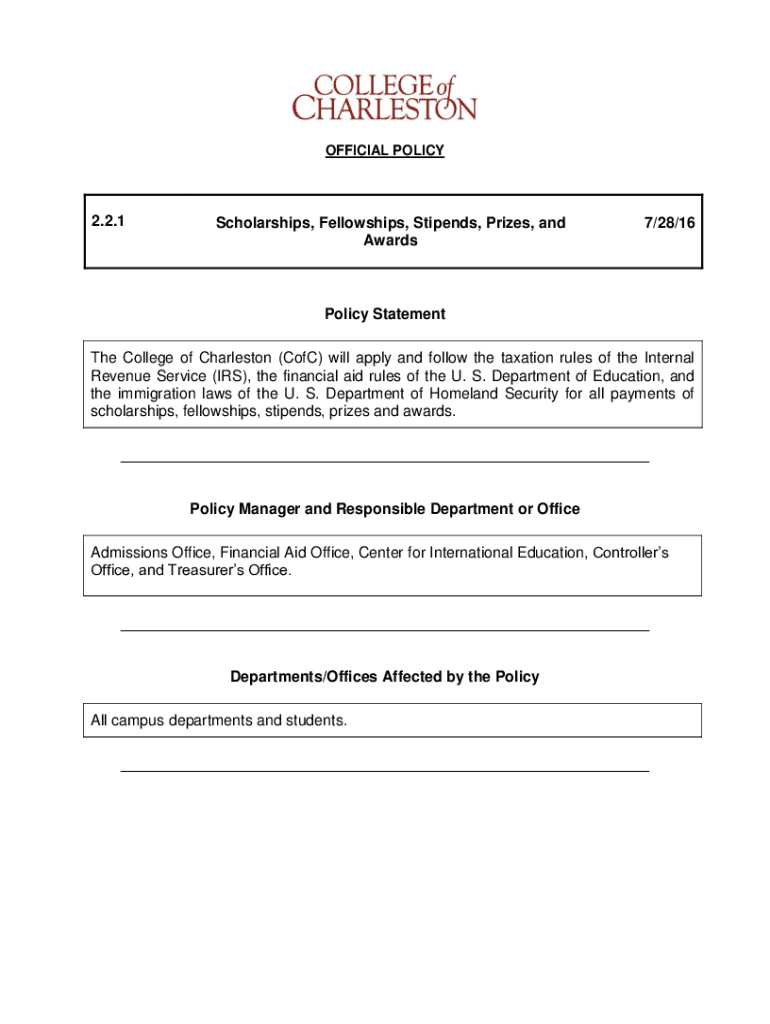
The form "Scholarships, Fellowships, Stipends, Prizes, and Awards - 051413" serves as a documentation guide used by academic institutions, such as the College of Charleston, to outline procedures for processing financial awards. These awards can take the form of scholarships, fellowships, stipends, prizes, and other monetary rewards given to students, faculty, and staff. The document emphasizes understanding the tax implications, eligibility criteria, and the necessary documentation for legitimate processing.
Key Elements Explained
- Scholarships: Typically refer to financial aid awarded to students based on academic or other achievements. These are usually non-repayable.
- Fellowships: Often granted to graduate students or professionals for advanced study or research, often including a stipend.
- Stipends: Regular financial support awarded in exchange for service or work, typically for interns or apprentices.
- Prizes and Awards: Recognitions for accomplishments or skills in a specific area, sometimes with tax implications.
Steps to Complete the Form
Completing the "Scholarships, Fellowships, Stipends, Prizes, and Awards - 051413" form involves multiple steps to ensure accuracy and compliance.
-
Gather Personal Information: Collect your identification details, including your full name, student or employee ID, and contact information.
-
Document Financial Details: Specify the type and amount of each financial award received or expected, along with any requirements or conditions.
-
Review IRS Guidelines: Consult IRS regulations concerning tax liabilities for each form of financial aid, determining which awards may be taxable.
-
Complete Applicable Sections: Fill out the sections relevant to the type of financial award being documented, whether it is scholarships, fellowships, or stipends.
-
Attach Required Documentation: Ensure all supporting documents such as award letters, tax forms (if required), and proof of enrollment or participation are included.
-
Submit Via Preferred Method: Depending on instructions, submit the completed form either online or in-person to the appropriate college office.
Important Terms Related to the Form
A comprehensive understanding of terminologies is crucial for accurate form processing.
Definitions:
- Taxable vs. Non-Taxable: Determines whether the financial aid received is subject to taxation.
- Financial Aid Regulations: Guidelines provided by the U.S. Department of Education relating to eligibility and reporting requirements.
- Immigration Laws Impact: For international students, understanding how receiving financial aid affects their visa status is crucial.
IRS Guidelines and Tax Implications
Understanding IRS guidelines is essential for correctly processing and reporting financial awards on the "Scholarships, Fellowships, Stipends, Prizes, and Awards - 051413" form.
- Tax Reporting Obligations: Scholarships used for tuition and qualified education expenses are typically non-taxable, whereas stipends might be taxed.
- Example Considerations: Include any outside funding or awards that may need to be reported as income.
- Financial Documentation: Maintain records of all educational expenses and awards for tax filing purposes.
Required Documents
The form requires specific documentation to be comprehensive and compliant with federal regulations.
- Award Letters: Verification of scholarships, fellowships, and prizes.
- Proof of Enrollment or Employment: Confirmation of student status or professional engagement.
- Tax Forms: Depending on taxability, forms such as 1098-T might be necessary.
Legal Use and Compliance
Ensuring legal compliance when using the form is paramount.
Compliance Steps:
- Understand Federal Regulations: Abide by IRS and Department of Education rules.
- Ensure Accurate Reporting: Misreporting of taxes or financial aid may lead to penalties.
- Maintain Confidentiality: Follow FERPA guidelines for student privacy.
Who Typically Uses the Form
Primarily used by academic entities and individuals associated with educational institutions.


Typical Users Include:
- Students: Both undergraduate and graduate levels receiving scholarships or stipends.
- Faculty and Staff: Awarded fellowships or stipends for research or administrative roles.
- Financial Departments: Ensuring all awards are documented and reported accurately.
Penalties for Non-Compliance
Understanding the consequences of non-compliance with "Scholarships, Fellowships, Stipends, Prizes, and Awards - 051413" requirements is crucial.
- Financial Penalties: Misreporting can lead to fines for underpaid taxes.
- Academic Penalties: Potential disqualification from future financial aid.
- Legal Repercussions: Non-compliance with federal regulations may result in legal action.
Examples of Using the Form
Practical scenarios where the form is applicable include:
- Case Study 1: A graduate student receiving a research fellowship should report both the stipend and applicable tuition waiver.
- Case Study 2: An undergraduate student awarded a scholarship for academic excellence must document the award on this form to ensure proper processing.
- Scenario Analysis: Review typical scenarios such as working students receiving stipends for practical exposure alongside academics.