






Understanding the Adult ASAM Placement Criteria Crosswalk
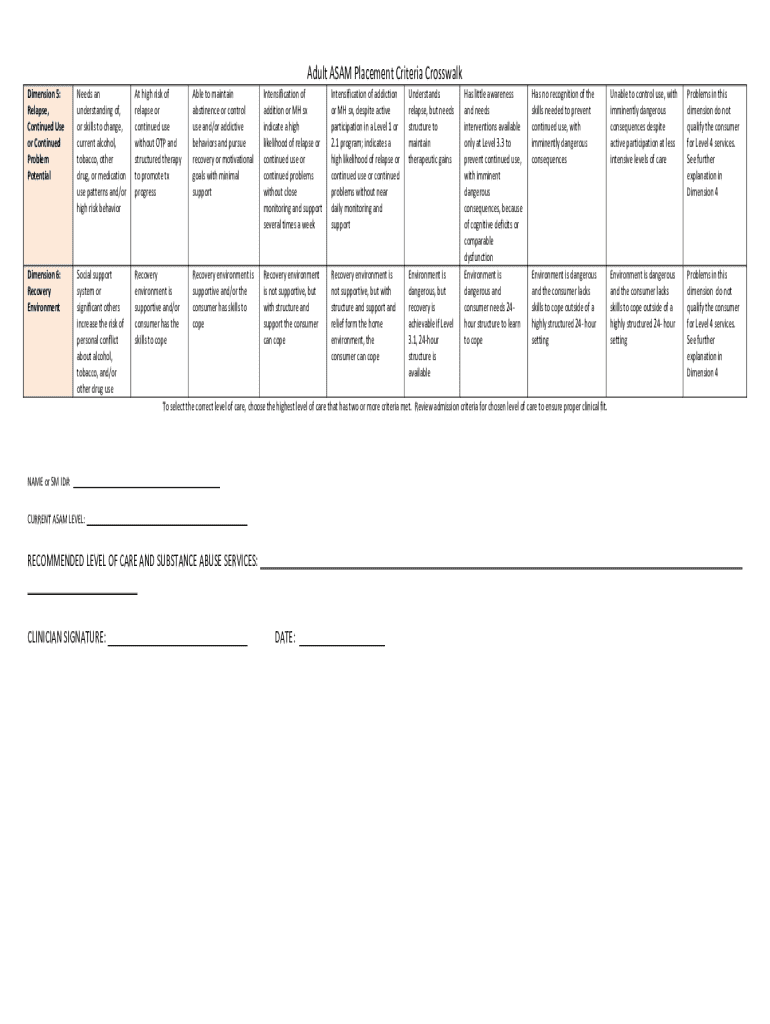
The Adult ASAM Placement Criteria Crosswalk is essential for understanding various treatment options for individuals with substance use disorders. It serves as a reference tool that aligns the ASAM (American Society of Addiction Medicine) criteria with different levels of care, facilitating effective treatment planning.
ASAM Criteria Overview
The ASAM criteria provide a standardized framework for assessing individuals with substance use disorders. This framework categorizes treatment options based on:
- Withdrawal Potential: Evaluates the risk and severity of withdrawal symptoms.
- Biomedical Conditions: Considers any co-occurring medical issues that may complicate treatment.
- Emotional and Cognitive Issues: Addresses psychological health and cognitive functioning in determining treatment needs.
- Readiness to Change: Assesses an individual’s motivation for engaging in treatment programs.
- Relapse Potential: Estimates the likelihood of relapse based on personal and environmental factors.
- Recovery Environment: Reviews the social and environmental context that could support or hinder recovery.
The information from each dimension helps clinicians determine the most appropriate level of care for effective treatment planning.
Levels of Care in the Crosswalk
The Adult ASAM Placement Criteria Crosswalk outlines several levels of care, including:
- Early Intervention: Targeted for individuals who may be at risk but do not yet meet the criteria for substance use disorders.
- Outpatient Services: Ideal for individuals needing support while maintaining daily responsibilities.
- Intensive Outpatient Programs (IOP): Designed for those requiring more structured treatment than standard outpatient services.
- Residential Treatment: Recommended for individuals who need 24-hour support and a structured environment.
- Medically Managed Inpatient Services: Suitable for individuals with severe medical or psychiatric issues requiring constant medical supervision.
Each level of care is accompanied by specific clinical indicators that support treatment decisions, aligning therapy approaches with patient needs.
Utilizing the ASAM Crosswalk in Practice
Healthcare providers can effectively use the Adult ASAM Placement Criteria Crosswalk by following these guidelines:
- Assessment: Conduct comprehensive assessments to understand the patient’s needs based on the ASAM dimensions.
- Treatment Matching: Use the crosswalk to match the diagnosed needs to the appropriate level of care.
- Continuous Monitoring: Regularly evaluate patient progress to adjust the level of care as needed. This ensures that treatment plans remain relevant and effective.
Practitioners can leverage the crosswalk to facilitate discussions with clients regarding their treatment options, enhancing understanding and engagement.
Practical Examples of Application
Consider a scenario involving an individual presenting with addiction and co-occurring mental health issues. The clinician may assess the individual under the ASAM dimensions and identify a high potential for withdrawal and significant emotional challenges. Based on the crosswalk’s recommendations, the clinician would likely suggest a medically managed inpatient service, ensuring the patient receives the necessary support immediately.
Conversely, an individual with stable support and motivation might be appropriate for outpatient services, enabling them to address their substance use in a less restrictive environment. The crosswalk thus provides the flexibility to tailor treatment approaches based on individual circumstances.
Compliance and Documentation Requirements
When utilizing the Adult ASAM Placement Criteria Crosswalk, it’s vital to maintain compliance with relevant regulatory guidelines. Providers must ensure accurate documentation of assessments, treatment plans, and ongoing evaluations. Proper record-keeping aids in demonstrating the justification for the selected level of care, especially during audits or insurance reviews.
- Documentation Should Include:
- Initial assessment findings aligned with ASAM criteria.
- Treatment plan outlining specific interventions based on the selected level of care.
- Progress notes to track the effectiveness and any adjustments made to the treatment plan.
Maintaining detailed records not only reinforces compliance but also fosters better outcomes through continuous care management.
Accessibility and Resources
The Adult ASAM Placement Criteria Crosswalk is widely accessible through multiple platforms, including various PDF formats. Healthcare facilities often distribute these resources during training sessions to ensure familiarity among staff. Additionally, many organizations provide access to training on utilizing ASAM criteria effectively, enhancing overall provider competency in managing substance use disorders.
Staying updated with the latest editions and revisions of the ASAM criteria is also crucial for maintaining the relevance of the crosswalk as treatment paradigms evolve.
Employing the Adult ASAM Placement Criteria Crosswalk empowers clinicians to deliver tailored, evidence-based treatment, ultimately enhancing the likelihood of positive patient outcomes in the realm of substance use disorders.