
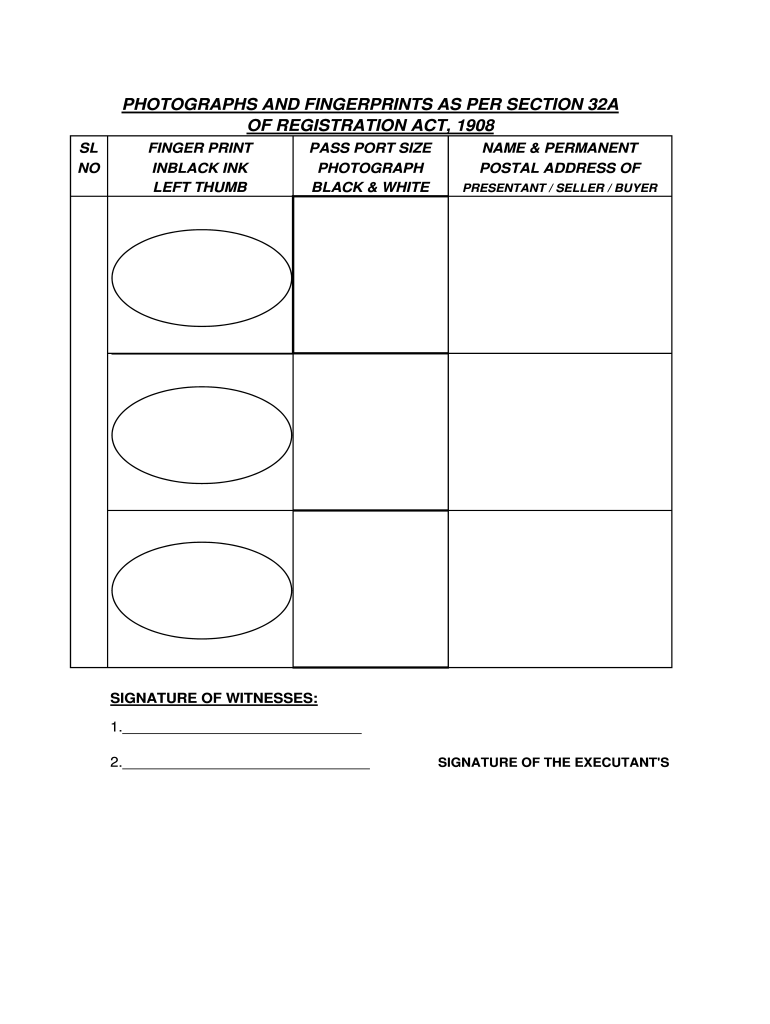







Definition and Meaning of Photographs and Fingerprints as per Section 32A
Photographs and fingerprints as per Section 32A of the Registration Act, 1908, serve essential roles in identity verification and record-keeping within property transactions. This section mandates the collection of biometric data—specifically, a left thumbprint and a passport-sized photograph—during certain legal registrations. This requirement enhances the integrity of property transfers by ensuring that the identities of the parties involved are accurately documented.
The purpose of requiring photographs and fingerprints is to prevent fraud in property dealings. By capturing a unique thumbprint, authorities can trace back any fraudulent activities or disputes that may arise over property ownership. The necessity of both biometric identification and visual confirmation through photographs solidifies the legal framework protecting real estate transactions.
Key Components
- Thumbprint: Recorded using black ink on the designated form.
- Photograph: A current black-and-white passport-sized image.
- Identification: Additional fields require the name and permanent address of the individual submitting the documents.
The details collected via this mandate are crucial for maintaining an accurate public registry of property ownership, thus facilitating legal processes in the event of disputes.
How to Use the Photographs and Fingerprints as per Section 32A
Utilizing the photographs and fingerprints as per Section 32A requires a structured approach to ensure compliance with legal standards. To successfully submit these requirements, parties must follow specific guidelines.
Steps for Successful Submission
- Understand the Requirements: Familiarize yourself with the specifics of the form, which includes exact dimensions for the photograph and the method for thumbprint collection.
- Collect the Necessary Materials: Gather the required items, namely, a black ink pad, suitable paper for the thumbprint, and a printed version of your passport-sized photograph.
- Complete the Form Accurately: Fill in all prescribed fields, including your name, address, and any other requested information.
- Submit to the Appropriate Authority: Depending on local regulations, submit the completed form either online, by mail, or in person.
By adhering to these steps, individuals can ensure their submissions are compliant and minimize the risk of delays or rejection due to incomplete documentation.
Steps to Complete the Photographs and Fingerprints as per Section 32A
Completing the photographs and fingerprints requirements involves several key steps that ensure everything is accurately recorded. Here is a detailed breakdown of the process.
Step-by-Step Process
- Prepare the Required Materials:
- Obtain a black ink pad for thumbprint collection.
- Ensure you have a passport-sized photograph taken within the last six months.
- Fill Out Form Section:
- Start by writing your full name and permanent address in the designated fields.
- Be explicit and double-check for spelling errors to avoid complications.
- Collect the Thumbprint:
- Press your left thumb onto the ink pad and then onto the form, ensuring a clear print is visible.
- Attach the Photograph:
- Place the black-and-white photograph in the specified area of the form, ensuring it is securely affixed without wrinkles or folds.
- Review the Completed Form:
- Go through the form to confirm all sections are filled out correctly, including signature fields if required.
- Submit the Form:
- Deliver the form to the appropriate registrar or authority, ensuring compliance with any local or state-specific submission guidelines.
Taking these steps systematically will help ensure that all requirements as mandated by Section 32A are met accurately.
Legal Use of the Photographs and Fingerprints as per Section 32A
The legal framework surrounding photographs and fingerprints as per Section 32A holds significant importance in property registration and ownership assertion. Section 32A serves as a protective mechanism against fraudulent property claims and ensures the authenticity of registered transactions.
Importance in Legal Context
- Fraud Prevention: By requiring biometric identification, this section minimizes the risk of identity theft and fraudulent registrations.
- Record Traceability: The thumbprint serves as a unique identifier, allowing authorities to trace transactions back to the individual in case of a dispute.
- Compliant Transactions: Legal adherence is essential for the enforceability of contracts related to property dealings. Non-compliance could lead to invalidation of claims.
The incorporation of these measures underscores the seriousness with which property registration is treated in legal contexts, reflecting a broader commitment to maintaining integrity within the real estate market.
State-Specific Rules for the Photographs and Fingerprints as per Section 32A
Different states can have varying rules and guidelines concerning the implementation of photographs and fingerprints as per Section 32A. Familiarizing oneself with these nuances is critical for compliance and ensuring that all local regulations are followed diligently.
Variations in State Regulations
- Utilization of Technology: Some states may permit electronic submission of photographs and fingerprints, simplifying the process for applicants.
- Specific Photographic Standards: Requirements for the size and quality of the photograph can differ, necessitating a review of local guidelines to avoid submission issues.
- Registration Fees: Various states may impose different fees for submitting these documents, potentially impacting transaction costs.
Understanding these state-specific distinctions is essential for ensuring that all submissions meet legal requirements and that registrants avoid potential penalties or complications.




