




01. Edit your ky tax exempt form pdf online
Type text, add images, blackout confidential details, add comments, highlights and more.

Type text, add images, blackout confidential details, add comments, highlights and more.

Draw your signature, type it, upload its image, or use your mobile device as a signature pad.

Send kentucky tax exempt form via email, link, or fax. You can also download it, export it or print it out.
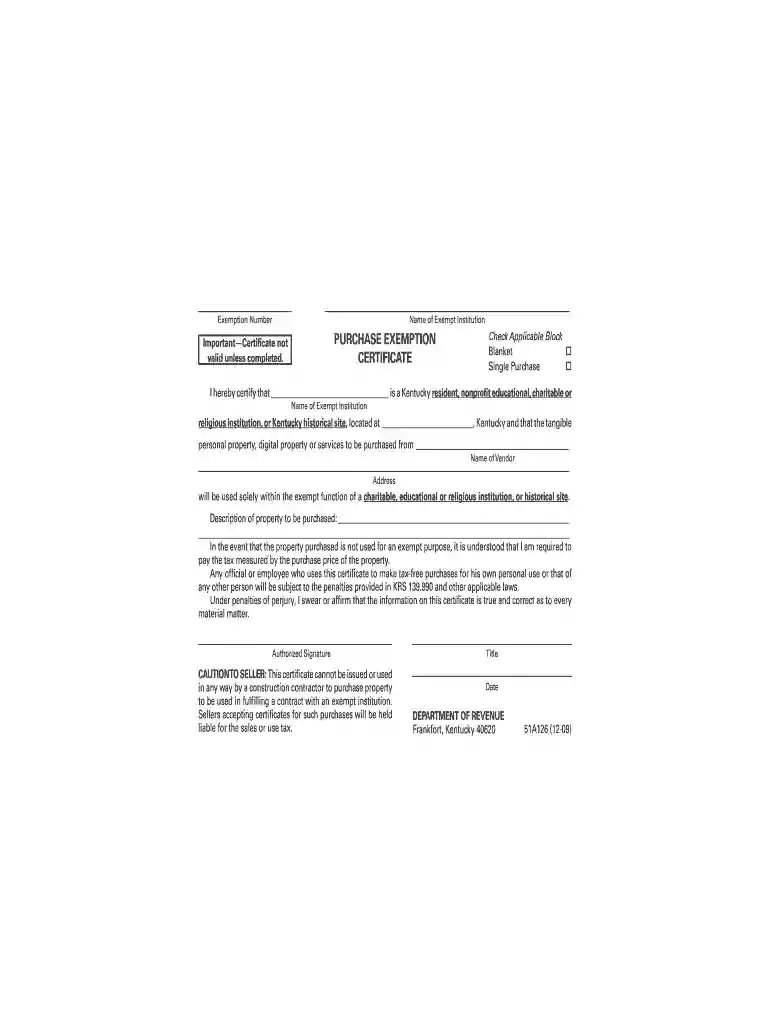
The Kentucky tax exempt form is an official document used by eligible organizations to claim exemption from sales and use taxes in the state of Kentucky. It allows qualifying entities, such as nonprofit educational, charitable, or religious institutions, to purchase tangible personal property or services for exempt purposes without incurring sales tax. This certificate certifies that the purchases will be utilized solely for activities that align with the organization’s mission and are thus exempt from taxation.
Using the Kentucky tax exempt form correctly is important to avoid tax liability. When an organization presents this form to a vendor, it asserts that they meet the necessary criteria for tax exemption. Misuse of the form can lead to penalties, including the requirement to pay the tax plus interest and potential fines. It is essential for users to fully understand the legal implications and responsibilities associated with the use of this certificate.
Organizations seeking the Kentucky tax exempt form can typically obtain it through the Kentucky Department of Revenue's website. The form is available for download in multiple formats, including pdf, ensuring that users can easily access and complete it. Additionally, some organizations may provide printed copies of the form upon request.
Organizations must ensure that the form is the latest version, as updates may occur periodically, affecting eligibility requirements or completion guidelines.
Completing the Kentucky tax exempt form requires careful attention to detail to ensure compliance and validity. Follow these steps to fill out the form correctly:
Provide Organization Information: Include the name, address, and tax identification number of the entity requesting the exemption. This information must match official documentation to avoid rejection.
Specify the Reason for Exemption: Indicate the specific exemption category under which your organization qualifies. Common categories include educational, religious, and charitable purposes.
Identify the Vendor: Include the name and address of the vendor from whom purchases will be made. This helps to establish the legitimacy of transactions.
Detail Purchases: Clearly outline the type of tangible personal property or services that will be exempt from sales tax. Specificity in this section is crucial to avoid misunderstandings.
Signature and Date: The form must be signed and dated by an authorized agent of the organization. Ensure that this individual has the authority to bind the organization to the terms of the exemption.
Upon completing the form, it should be kept on file for records and presented to applicable vendors at the time of purchase to secure the exemption.
Understanding key terminology related to the Kentucky tax exempt form can provide clarity and prevent misuse. Familiar terms include:
Familiarity with these terms can enhance the effectiveness of using the Kentucky tax exempt form, ensuring that users understand their rights and responsibilities.
Practical examples can help illustrate how the Kentucky tax exempt form functions in real-world scenarios. Here are a few typical use cases:
A Nonprofit Educational Institution: A college purchases books and supplies using the tax exempt form, asserting that these items will be used in classrooms and not for resale. Presenting the completed form at the time of purchase allows the school to avoid paying sales tax.
A Religious Organization: A church buying materials for a community service project may utilize the tax exempt form to purchase supplies tax-free, demonstrating that these items will be used for exempt purposes as part of their outreach programs.
Charitable Contributions: A nonprofit organization conducting a fundraising event may use the form when purchasing items necessary for the event, ensuring that all expenses directly related to their mission remain tax-exempt.
These examples showcase how different organizations leverage the Kentucky tax exempt form to engage in tax-efficient purchasing, facilitating their operations while adhering to legal requirements.
To be eligible for the Kentucky tax exempt form, organizations must meet specific criteria set forth by the state. Criteria generally include the following:
An organization failing to meet these criteria may not qualify for the exemption and could be subject to sales tax on applicable purchases, reducing funds available for their primary purpose.


Proper use of the Kentucky tax exempt form is governed by state regulations, which detail how and when it can be applied. Legal usage includes:
Understanding these legal parameters is vital to prevent any unintended violations of tax laws and maintain the organization's good standing.
We've got more versions of the ky tax exempt form pdf form. Select the right ky tax exempt form pdf version from the list and start editing it straight away!
| Versions | Form popularity | Fillable & printable |
|---|---|---|
| 2009 | 4.9 Satisfied (40 Votes) |
At DocHub, your data security is our priority. We follow HIPAA, SOC2, GDPR, and other standards, so you can work on your documents with confidence.
Any official or employee who uses this certificate to make tax-free purchases for his own personal use or that of any other person will be subject to theRead more
Jan 31, 2012 Tax-exempt income. Do not include. Certain dispositions of timeshares. Sales not Reported on Line any tax-exempt income on lines 1a andRead more
The Out-Of-State Exemption Certificate,. Revenue Form 51A127, must be provided to sellers to substantiate the exempt status of each purchase in this state.Read more


