

The curious researcher 9th edition pdf 2026

Get Form
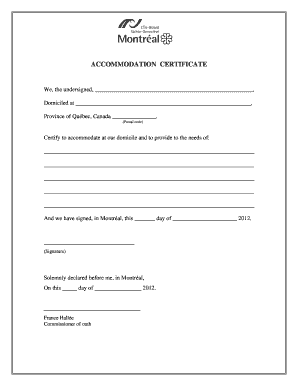
the curious researcher 9th edition pdf free Preview on Page 1

Here's how it works

01. Edit your the curious researcher 9th edition pdf free online
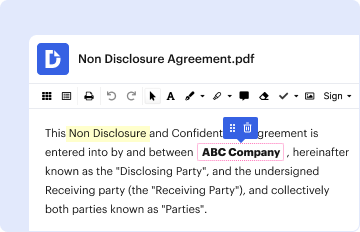
Type text, add images, blackout confidential details, add comments, highlights and more.
02. Sign it in a few clicks
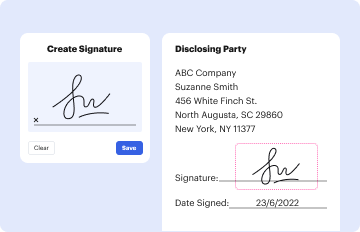
Draw your signature, type it, upload its image, or use your mobile device as a signature pad.
03. Share your form with others
Send the curious researcher 9th edition pdf via email, link, or fax. You can also download it, export it or print it out.

How to use or fill out the curious researcher 9th edition pdf with our platform

Form edit decoration
9.5
Ease of Setup
DocHub User Ratings on G2
9.0
Ease of Use
DocHub User Ratings on G2
  1. Click ‘Get Form’ to open the Curious Researcher 9th Edition PDF in the editor.
  2. Begin by reviewing the introductory section, which outlines the importance of curiosity in research writing. This will help you understand the context as you fill out any related fields.
  3. Navigate to the sections that require input, such as your research topic and thesis statement. Use our platform's text boxes to type directly into these fields, ensuring clarity and conciseness.
  4. Utilize the comment feature for any notes or questions you may have about specific sections. This allows for easy reference later on.
  5. Once all fields are completed, review your entries for accuracy. You can easily edit any part of your document using our intuitive editing tools.

Start using our platform today to enhance your experience with The Curious Researcher!

be ready to get more

Complete this form in 5 minutes or less

Get form

Got questions?

We have answers to the most popular questions from our customers. If you can't find an answer to your question, please contact us.
Contact us

If you frequently deal with documents stored in your Google Drive, DocHub is a superb option for you to easily and quickly complete, edit, and approve them. This editor integrates well with Google services, so you can export your the curious researcher pdf from your Google Drive to the editor without the need of downloading and re-uploading it. Right-click on your file, select Open With → DocHub PDF Sign and Edit. In our editor, add and assign Signature Fields for all people involved, then click on the Menu button above → Send → select how you want to share your form.

If you store your paperwork in Google Drive, there is no need to download your the curious researcher 9th edition on the computer and upload it back to our editor. A much simpler way is to set up a browser extension created by DocHub to streamline this flow. The extension allows editing PDFs in your web browser. Alternatively, you may integrate your DocHub and Gmail accounts for more efficient editing.

It discusses 8 key stages: 1) identifying the problem, 2) reviewing literature, 3) setting research questions, objectives, and hypotheses, 4) choosing a study design, 5) deciding on a sample design, 6) collecting data, 7) processing and analyzing data, and 8) writing the report.
Step 1: Identifying and Limiting the Topic. Step 2: Gathering Information. Step 3: Reviewing the Related Literature. Step 4: Developing a Research Plan. Step 5: Implementing the Plan and Collecting Data. Step 6: Analyzing the Data. Step 7: Developing an Action Plan. Step 8: Sharing and Communicating the Results.
That procedure is commonly called the scientific method and consists of the following eight steps: observation, asking a question, gathering information, forming a hypothesis, testing the hypothesis, making conclusions, reporting, and evaluating.

Security and compliance

At DocHub, your data security is our priority. We follow HIPAA, SOC2, GDPR, and other standards, so you can work on your documents with confidence.

Learn more
ccpa2
pci-dss
gdpr-compliance
hipaa
soc-compliance
be ready to get more

Complete this form in 5 minutes or less

Get form

People also ask

The Eight Steps of Research Step I: Getting organized for research. Step II: Selecting a topic. Step III: Background reading for historical content. Step IV: Narrowing the topic. Step V: Gathering and recording information. Step VI: Analyzing and interpreting sources. Step VII. Developing a thesis statement. Step VIII.

curious researcher 9th edition