




01. Edit your volunteer fire department incident report template online
Type text, add images, blackout confidential details, add comments, highlights and more.

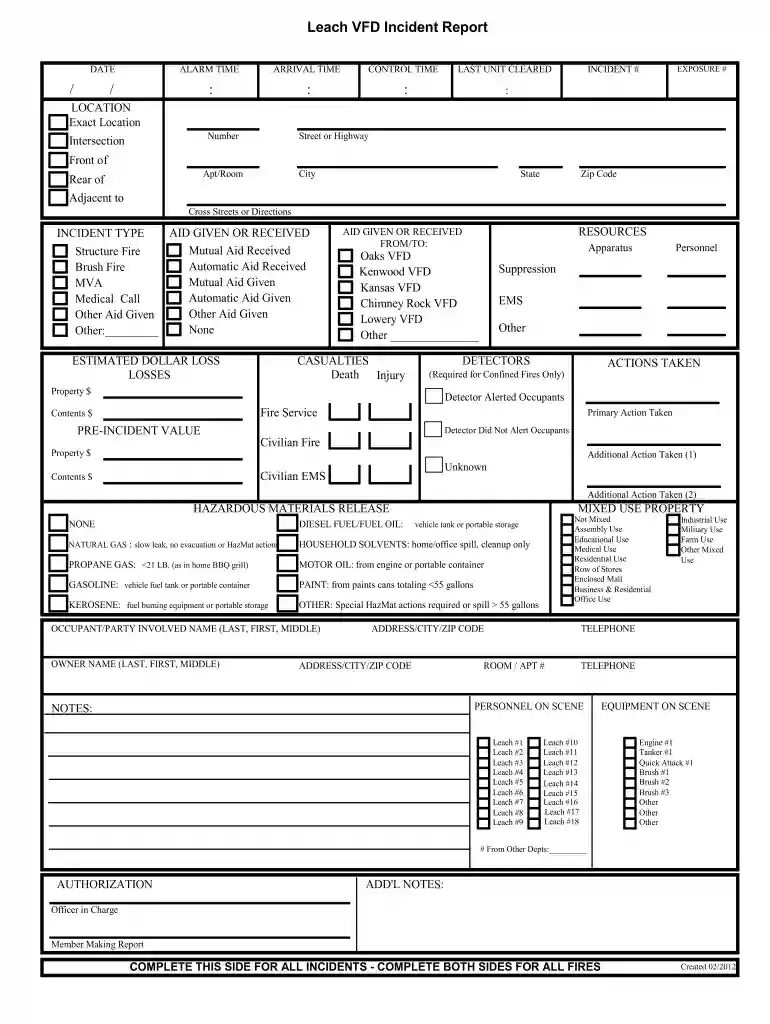
Type text, add images, blackout confidential details, add comments, highlights and more.

Draw your signature, type it, upload its image, or use your mobile device as a signature pad.

Send fire department run report template via email, link, or fax. You can also download it, export it or print it out.
Fire department run sheet templates serve as essential documentation tools that enable fire departments to accurately capture and report details from emergency response incidents. This structured record is crucial for operational efficiency, accountability, and compliance purposes.
A well-structured fire department run sheet template typically includes the following components:
Each component is vital for a comprehensive understanding of the response and post-incident analysis.
Utilizing a fire department run sheet template ensures that all necessary information is captured in a systematic manner. Here are the steps to follow:
Following these steps ensures that the template serves its purpose effectively.
The use of standardized run sheets provides numerous advantages, including:
Several fire departments have successfully implemented run sheet templates and reported significant improvements in operational efficiency.
Case Study 1: A volunteer fire department adopted a run sheet template to enhance their documentation processes. The standardized format allowed them to reduce reporting time by thirty percent, which facilitated quicker debriefing sessions and strategy adjustments.
Case Study 2: An urban fire department noted that using a digital run sheet template enabled them to gather real-time data, improve response times, and enhance interdepartmental communication during multi-agency responses.
These examples illustrate the effectiveness and adaptability of fire department run sheet templates in various emergency scenarios.
Customization of run sheet templates can help tailor documentation to meet specific departmental needs. Consider the following elements for customization:
This flexibility ensures that the template remains relevant and useful in a variety of situations.
To maximize the utility of fire department run sheet templates, consider these practices:
By adhering to these best practices, fire departments can enhance documentation integrity and operational performance.
It is essential for fire departments to understand the legal implications of incident reporting.
Understanding these factors is vital for maintaining compliance and protecting the department from potential liabilities.
A fire department run sheet template is a critical tool that standardizes incident documentation, improves communication and collaboration among responders, and enhances overall operational efficiency. By effectively utilizing customizable run sheets, departments can streamline their workflow while ensuring accuracy and compliance in reporting, ultimately leading to improved public safety outcomes.
We've got more versions of the volunteer fire department incident report template form. Select the right volunteer fire department incident report template version from the list and start editing it straight away!
| Versions | Form popularity | Fillable & printable |
|---|---|---|
| 2012 | 4.5 Satisfied (39 Votes) |
If you frequently work with documents stored in your Google Drive, DocHub is a perfect option for you to easily and quickly complete, edit, and approve them. This editor integrates properly with Google apps, so you can export your fire department run report from your Google Drive to the editor without downloading and re-uploading it. Right-click on your file, select Open With → DocHub PDF Sign and Edit. In our editor, add and assign Signature Fields for all parties involved, then click on the Menu button above → Send → decide on how you want to share your paperwork.
If you are looking for a state-specific ems run sheet sample, you can find it in our DocHub Forms & Templates catalog. Use the search field, enter your form’s name, and search through the results for your state. You may also filter out irrelevant results while exploring our catalog by groups.
At DocHub, your data security is our priority. We follow HIPAA, SOC2, GDPR, and other standards, so you can work on your documents with confidence.
A safety orientation program describing the fire departments safety program includes, but is not limited to, the following: a. How and when to report injuriesRead more
PRE-FIRE PLAN CONTROL SHEET. Purdue University Fire Department. GENERAL. Date Revised: Building: Address: Building Type: # of Stories: Sub/Basement: BldgRead more
Introduction. FIRST cares about the safety and welfare of everyone involved in FIRST programs. This. Emergency Response Template outlines some possibleRead more


