
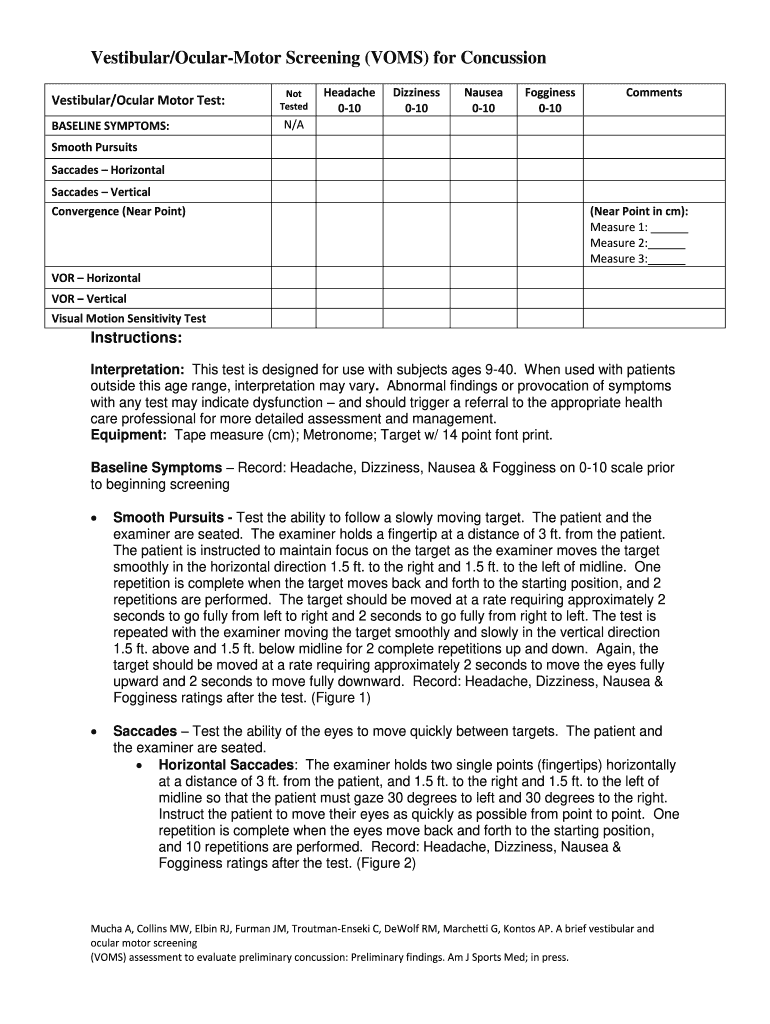






Overview of the VOMS Assessment
The Vestibular/Ocular-Motor Screening (VOMS) assessment is a vital tool used for evaluating individuals aged nine to forty who may have sustained a concussion. It is a comprehensive protocol that accentuates the impact of concussive injuries on visual and vestibular functions, which are critical for balance and coordination. The assessment aids healthcare professionals in identifying dysfunctions related to eye movements and can guide further diagnostic and treatment processes.
Key Components of the VOMS Test
The VOMS assessment typically includes several specific tests that evaluate various aspects of ocular motor function:
- Smooth Pursuits: This test assesses the ability to smoothly follow a moving target. Patients track a stimulus without losing focus.
- Saccades: This evaluates the speed and accuracy of eye movements between two points. Quick, jerky movements can indicate dysfunction.
- Convergence: This tests the ability to focus on a near target and assess if the individual can maintain bifocal vision without blurring.
- Vestibular-Ocular Reflex (VOR): This evaluates eye stability during head movement. It measures if the eyes can maintain a fixed position on a target while the head moves.
- Visual Motion Sensitivity: This test checks sensitivity to moving environments, which can be exacerbated following a concussion.
These tests are crucial for identifying the extent of impairment that a concussion may cause to visual and vestibular systems.
Documentation and Scoring of the VOMS Test
A standardized scoring sheet accompanies the VOMS assessment to document results systematically. The scoring sheet provides a clear method for recording baseline symptoms and the results of each test. Key elements typically include:
- Patient Information: Basic demographics and baseline symptom recording.
- Test Results: Outcomes of each of the VOMS components, indicating whether results are within normal limits or demonstrate dysfunction.
- Symptom Monitoring: Documenting specific symptoms experienced during the tests (e.g., headaches, dizziness) to provide insight into the patient's condition and response to the evaluation.
This documentation serves not only as a record of the assessment but also aids in tracking improvement or deterioration over time.
Administration Guidelines for the VOMS Test
Administering the VOMS assessment requires a systematic approach to ensure accuracy and reliability. Key steps include:
- Preparation: Ensure that the testing environment is quiet and free from distractions.
- Baseline Symptom Assessment: Before initiating the tests, gather initial symptom data to ascertain any changes post-assessment.
- Conducting the Tests: Follow the specific instructions associated with each test to maintain consistency in execution.
- Recording Results: Utilize the VOMS scoring sheet to note observations and any symptoms reported throughout the assessment.
- Post-Assessment Review: Discuss the results with the patient and provide recommendations for potential follow-up care or further evaluation if necessary.
Adhering to these guidelines helps to ensure the evaluation is valid and that results can be effectively interpreted.
Interpretation of VOMS Scores
Interpreting the scores from the VOMS assessment is critical for understanding the implications of the results. Typically, outcomes are evaluated based on:
- Normal Limits: Results that fall within accepted ranges suggest no significant dysfunction.
- Dysfunctional Results: Scores indicating difficulties in any of the tests warrant further investigation and possibly interventions.
- Symptom Correlation: It's essential to correlate the test results with any symptoms reported during the assessment, as this can significantly influence treatment decisions.
The thorough understanding of VOMS scoring is crucial for healthcare professionals to create appropriate management plans tailored to the individual’s needs.
Importance of the VOMS Assessment in Concussion Management
Utilizing the VOMS assessment is integral in the management of concussive injuries. It serves multiple purposes:
- Early Detection: The ability to identify visual and vestibular dysfunctions early can facilitate timely intervention, which is vital for recovery.
- Baseline Measurement: Establishing and monitoring baseline functioning is important for evaluating changes post-injury.
- Guiding Rehabilitation: Results from the VOMS test can inform rehabilitation strategies, ensuring focus on areas needing improvement.
- Communication Tool: The VOMS results provide clear data to communicate with patients, caregivers, and other healthcare professionals regarding the individual’s status and recovery progression.
Incorporating the VOMS assessment into concussion protocols enhances the overall care provided to patients and lays the groundwork for informed decision-making throughout recovery.