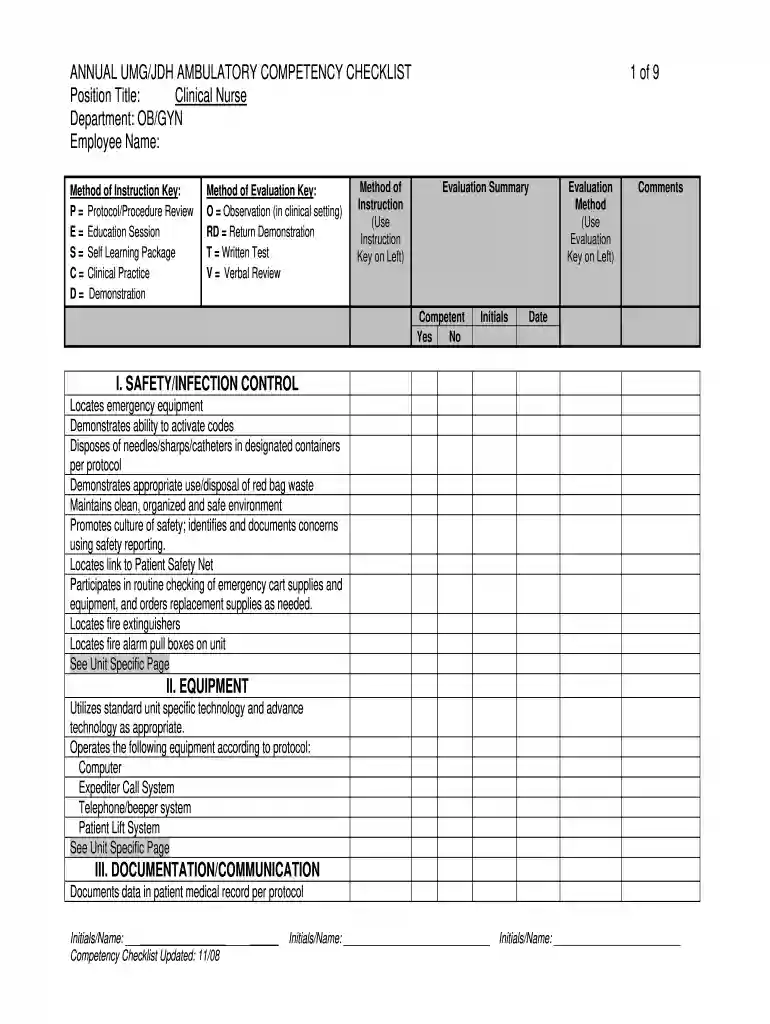
Triage checklist for nurse 2026

Get Form
triage checklist for nurse Preview on Page 1

Here's how it works

01. Edit your triage checklist for nurse online
Type text, add images, blackout confidential details, add comments, highlights and more.

02. Sign it in a few clicks
Draw your signature, type it, upload its image, or use your mobile device as a signature pad.

03. Share your form with others
Send triage competency checklist via email, link, or fax. You can also download it, export it or print it out.

Definition and Importance of the Triage Checklist for Nurses

The triage checklist for nurses is an essential tool designed to assist healthcare professionals in assessing the urgency of patient needs in various medical settings, particularly in emergency situations. By utilizing this checklist, nurses can prioritize patients based on their condition, enabling efficient resource allocation and timely care delivery. The checklist typically includes a series of questions and criteria that guide nurses in determining the severity of conditions, such as pain level, vital signs, medical history, and presenting symptoms.

Importance lies in the triage process itself, which aims to ensure that patients with life-threatening conditions receive immediate care while those with less severe issues are treated appropriately in due course. This is particularly vital in emergency departments (ED) where time is often of the essence. A well-structured triage checklist not only enhances patient outcomes but also streamlines medical workflows, reduces wait times, and optimizes the utilization of healthcare resources.

Key components often featured in a triage checklist include:

  • Patient identification and demographic information
  • Readiness indicators for critical interventions
  • Vital signs monitoring criteria
  • Specific symptom-related feedback mechanisms
  • Scoring systems to prioritize patient care

How to Use the Triage Checklist for Nurses

Using the triage checklist for nurses involves a systematic approach aimed at accurately assessing a patient's condition upon arrival. The steps below provide a guide on its effective implementation:

  1. Patient Assessment: Upon patient arrival, the nurse collects initial demographic data, including name, age, and medical history. This information forms the basis for further assessment.
  2. Vital Signs Measurement: The nurse measures vital signs such as blood pressure, heart rate, respiratory rate, and temperature. These values are crucial for evaluating the patient's baseline condition and identifying any abnormalities.
  3. Symptom Evaluation: Utilizing the checklist, the nurse asks about specific symptoms the patient is experiencing. Key areas to explore might include pain levels, duration of symptoms, and any accompanying factors (e.g., medication intake, prior treatments).
  4. Application of Scoring Systems: Many triage checklists incorporate scoring metrics (like the Emergency Severity Index) to categorize patients based on severity. Nurse-led assessments assign scores that help prioritize patients accordingly.
  5. Decision-Making: Based on the gathered data and scoring, the nurse decides on further care pathways. This includes recognizing if the patient requires immediate interventions or can safely wait.

A thorough understanding of the checklist’s structure enriches the nurse’s ability to make informed decisions swiftly.

Steps to Complete the Triage Checklist for Nurses

Completing a triage checklist involves clear steps to ensure all necessary data is gathered and evaluated. Below is a structured approach:

  1. Initiate: Greet the patient and ensure a calm environment. Start by collecting identification details.
  2. Assess Vital Signs:
    • Measure blood pressure, heart rate, respiratory rate, and temperature.
    • Record findings clearly for analysis.
  3. Evaluate Symptoms: Use open-ended questions and specific inquiries:
    • What brings you here today?
    • When did your symptoms begin?
    • Rate your pain on a scale of one to ten.
  4. Employ the Checklist: Consult the triage checklist, marking criteria that apply based on the patient's presentation and vital signs.
  5. Categorize the Patient: Based on the checklist outcomes, categorize the urgency (e.g., immediate, urgent, non-urgent).
  6. Document Findings: Ensure all details—including vital signs, symptoms, and any decisions made—are accurately documented in the patient’s medical record for continuity of care.
  7. Communicate Transfer of Care Needs: If in a team environment, share findings with relevant medical professionals (e.g., doctors or specialists) to facilitate follow-up care.

By following these steps, healthcare providers can ensure that all relevant information is documented, which aids in delivering appropriate patient care.

Key Elements of the Triage Checklist for Nurses

A comprehensive triage checklist for nurses contains several key elements that foster effective patient assessment and prioritization. These components emphasize critical details that must be consistently documented:

  • Patient Information: Essential demographic details (name, age, gender) for accurate medical record keeping.
  • Vital Signs Record: Capturing baseline vital signs is crucial for clinical decision-making.
  • Symptom Criteria: Clearly defined symptoms and their severity should be outlined, as specific questions help guide the assessment.
  • Emergency Severity Scoring: Involvement of scoring systems that categorize patients by urgency, such as the Emergency Severity Index (ESI), enhances prioritization.
  • Medical History Review: Incorporating the patient's medical history assists in understanding pre-existing conditions that may complicate their current presentation.

These elements ensure that the triage process is both thorough and effective, leading to improved patient care outcomes.

Legal Use of the Triage Checklist for Nurses

Legal implications surrounding the use of the triage checklist for nurses underscore the importance of accurate, timely assessments in clinical settings. Understanding relevant laws and regulations helps protect both healthcare providers and patients. Key aspects include:

  • Standard of Care: Nurses are expected to adhere to the standard of care which mandates comprehensive assessments utilizing the triage checklist. Inadequate documentation or failure to follow checklist protocols can result in legal liabilities.
  • Informed Consent: The process of triage includes obtaining informed consent for treatments and interventions, which necessitates clear communication with patients.
  • Liability Considerations: In cases where patient care is compromised due to failure in following the triage procedures, healthcare professionals may face malpractice claims.

To mitigate risks, organizations should provide training on the appropriate use of the triage checklist while ensuring access to updated protocols embedded in healthcare guidelines and statutes.

Examples of Using the Triage Checklist for Nurses

Real-world scenarios illustrate how a triage checklist functions effectively in various health care settings. Examples include:

  • Emergency Department: A patient presenting with chest pain may be assessed using the triage checklist, with vital signs revealing elevated heart rate and blood pressure. The nurse prioritizes this patient for immediate examination, using the checklist to document symptoms and score urgency.
  • Urgent Care Facilities: A mother brings her child with a high fever. The nurse utilizes the checklist to assess symptoms such as rash or breathing difficulties, categorizing the child’s need for care accordingly. This allows the staff to allocate appropriate resources quickly.
  • Non-urgent Situations: A patient arrives for a follow-up on a chronic condition. The nurse uses the checklist to verify vital signs and symptoms but determines that the patient does not require urgent interventions, ensuring a smooth flow within the facility by optimizing wait times for those needing immediate care.

These examples underscore the triage checklist's versatility and utility across various healthcare situations.

Who Typically Uses the Triage Checklist for Nurses

The triage checklist for nurses is employed by a variety of healthcare professionals primarily in emergency and urgent care settings:

  • Registered Nurses (RNs): They are usually responsible for conducting initial assessments and using the triage checklist to evaluate patients upon arrival.
  • Emergency Medical Technicians (EMTs): In pre-hospital settings, EMTs often utilize a triage checklist format to prioritize patient transport and care on-site.
  • Physician Assistants (PAs): PAs may manage patient assessments in collaboration with nursing staff, using the checklist for efficient decision-making.
  • Nurse Practitioners (NPs): In outpatient settings or urgent cares, NPs apply the triage checklist to guide clinical assessments and treatment plans.

This array of users highlights the significance of the checklist across various levels of healthcare delivery systems, ensuring improved patient outcomes through structured assessments.


decoration image ratings of Dochub

See more triage checklist for nurse versions

We've got more versions of the triage checklist for nurse form. Select the right triage checklist for nurse version from the list and start editing it straight away!
Versions Form popularity Fillable & printable
2008 4.8 Satisfied (125 Votes)
be ready to get more

Complete this form in 5 minutes or less

Get form

Security and compliance

At DocHub, your data security is our priority. We follow HIPAA, SOC2, GDPR, and other standards, so you can work on your documents with confidence.

Learn more
ccpa2
pci-dss
gdpr-compliance
hipaa
soc-compliance