




01. Edit your form online
Type text, add images, blackout confidential details, add comments, highlights and more.

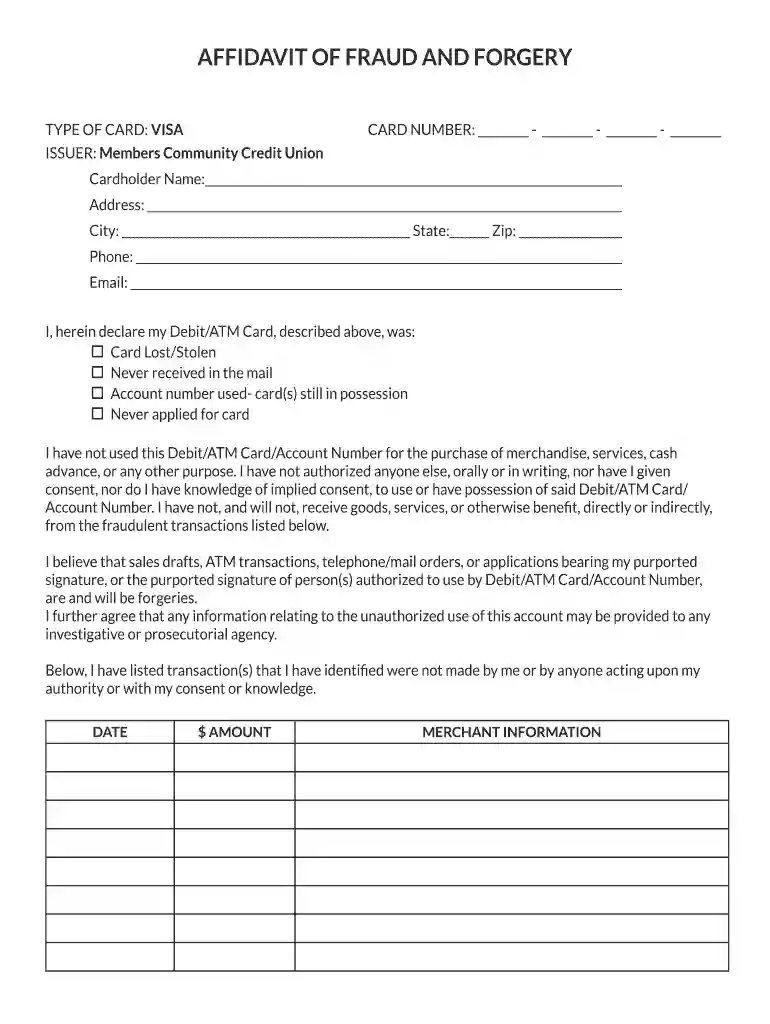
Type text, add images, blackout confidential details, add comments, highlights and more.

Draw your signature, type it, upload its image, or use your mobile device as a signature pad.

Send it via email, link, or fax. You can also download it, export it or print it out.
An Affidavit of Fraud and Forgery is a legal document used to formally declare that a particular document or transaction is suspected to involve fraudulent activities or forgery. This affidavit serves as a sworn statement made by an individual, affirming the existence of fraud or forgery, typically relating to financial transactions, credit card use, or the signing of contracts. By submitting this document, the affiant provides written testimony that can initiate an investigation or legal procedures to address the alleged fraudulent actions.
The process of using the Affidavit of Fraud and Forgery involves several key steps. It is important to follow these to ensure the affidavit is legally valid and effectively addresses the issue of fraud or forgery.
Identify the Fraudulent Activity: Clearly outline and document the details of the suspected fraud or forgery. This includes dates, amounts involved, and any parties believed to be responsible.
Gather Supporting Evidence: Collect relevant evidence that supports your claim of fraud or forgery. This could include transaction records, emails, or any document related to the suspected activity.
Complete the Affidavit: Use the affidavit form to provide a detailed account of the situation. Ensure all information is accurate and comprehensive.
Notarization: Once completed, the affidavit must be signed in the presence of a notary public who will then notarize the document, confirming the identity of the person signing it.
Submit the Affidavit: Send the notarized affidavit to the appropriate authority, such as a financial institution, law enforcement agency, or legal representative.
An individual notices unauthorized transactions on their bank statement. They would use the affidavit to declare these transactions as fraudulent, back their claim with bank records, and submit the document to their bank for investigation.
Completing the Affidavit of Fraud and Forgery entails adhering to the following steps to ensure that the sworn statement is valid and holds up in any subsequent legal procedures.
Information Collection: Gather all personal identification details and specifics of the fraudulent incident, including dates, transaction amounts, and descriptions.
Draft the Statement: Clearly articulate the suspected fraud or forgery within the affidavit, maintaining clarity and factual accuracy. Avoid ambiguous language.
Attach Evidence: Include copies of any supporting documents that provide proof of the fraudulent activity.
Review the Document: Double-check for mistakes or incomplete information which might cause delays or issues in processing the affidavit.
Notarize the Affidavit: Ensure the affidavit is signed in front of a notary public, providing a certified witness to the authenticity of the statement.
Certain elements are crucial for the affidavit to be considered complete and effective in a legal context. These include:
The affidavit plays a pivotal role in legal scenarios where fraudulent or forgery claims arise. Its primary objective is to initiate formal investigations and support potential civil or criminal proceedings.
Understanding the language specific to this affidavit can better equip individuals to navigate and complete the process accurately.
This affidavit is employed by a variety of individuals and entities who encounter fraudulent or forged activities.


Securing the affidavit form can usually be accomplished via several means, depending on the nature of the fraud or forgery case.
At DocHub, your data security is our priority. We follow HIPAA, SOC2, GDPR, and other standards, so you can work on your documents with confidence.
The employee completes the Affidavit of Forgery and has it DocHubd. The employee should not sign or complete the bottom portion until in front of the notary.Read more
This affidavit is for victims of identity theft. To avoid delays do not use this form if you have already filed a Form 14039 for this incident.Read more


