







Definition & Meaning
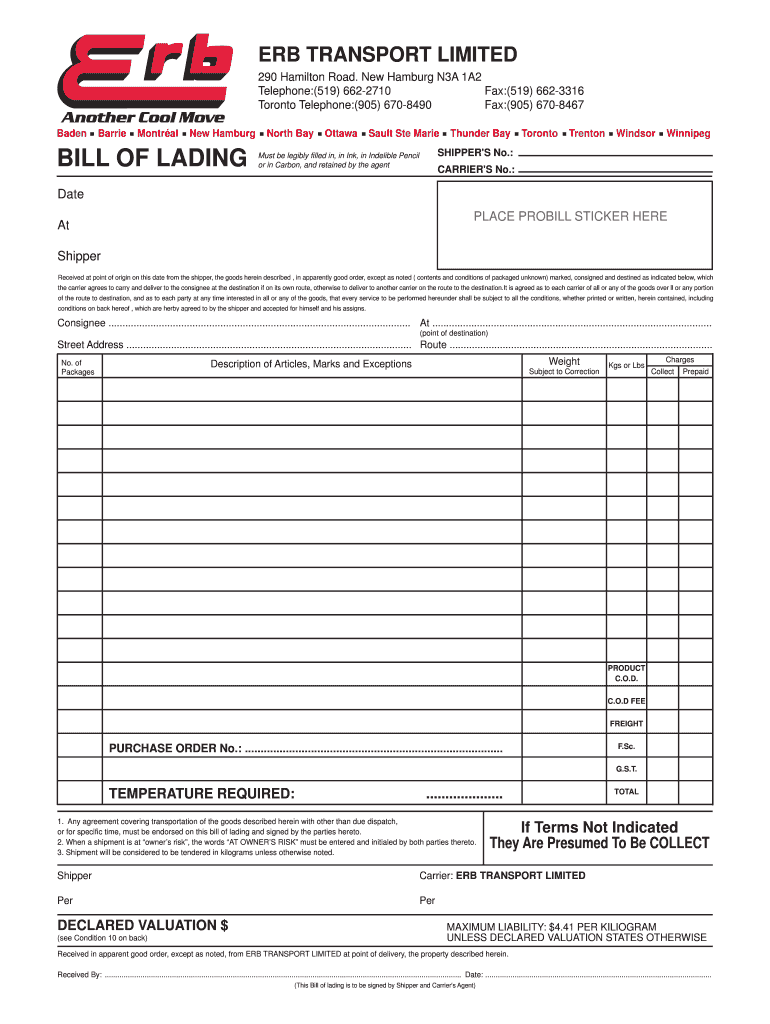
The "ERB Transport Bill of Lading" is a crucial legal document in the transport and logistics industry. It serves multiple purposes, acting as a receipt for goods being shipped, a document of title, and a contract between the shipper and carrier detailing the transportation terms. This document is essential for facilitating smooth transactions and ensuring all parties understand their responsibilities, thereby reducing disputes and enhancing operational efficiency.
How to Use the ERB Transport Bill of Lading
To effectively utilize the ERB Transport Bill of Lading, one must follow specific procedures to ensure all necessary information is captured accurately. This includes:
-
Detailing Shipper and Consignee Information:
- Clearly state the names, addresses, and contact information of both parties.
-
Describing Goods:
- Provide a detailed description of the goods, including quantity, weight, and dimensions.
-
Specifying Instructions:
- Include any special handling instructions or other relevant requirements for transport.
-
Signatures:
- Ensure that all parties involved - the shipper, the carrier, and the consignee - sign the document to validate the agreement.
How to Obtain the ERB Transport Bill of Lading
Securing an ERB Transport Bill of Lading requires coordination and preparation. Here's how to obtain one:
-
Contact a Freight Carrier:
- Reach out to your chosen transport company, such as ERA Transport Limited, to begin the process.
-
Provide Necessary Information:
- You must furnish all relevant details regarding the goods, including commercial invoices if applicable.
-
Review Carrier's Policies:
- Understand the carrier's terms and policies for issuing bills of lading to ensure compliance.
Steps to Complete the ERB Transport Bill of Lading
Completing the ERB Transport Bill of Lading requires attention to detail:
-
Enter Shipment Details:
- Record all essential shipment information including pickup and delivery locations.
-
Verify Party Information:
- Check that all party details match the actual identities involved in the shipment.
-
Document Goods:
- Use precise language to describe the shipped goods, adding any relevant codes or marks.
-
Include Additional Instructions:
- Insert any additional directions required for handling or transporting the goods.
Who Typically Uses the ERB Transport Bill of Lading
The ERB Transport Bill of Lading is a vital tool for various stakeholders in the logistics chain, including:
-
Freight Forwarders:
- Utilize it to document transport agreements and track shipments.
-
Business Owners and Manufacturers:
- Rely on it for verifying cargo details and ensuring compliance with delivery terms.
-
Importers and Exporters:
- Use it to facilitate international trade and ensure proper receipt and dispatch of goods.


Key Elements of the ERB Transport Bill of Lading
Critical components of the ERB Transport Bill of Lading include:
-
Carrier Details:
- Names and contacts of parties responsible for transportation.
-
Delivery Instructions:
- Specifics on where and how the consignment should be delivered.
-
Freight Charges:
- Information about the cost and who will bear these charges.
-
Date of Issue:
- The document's date of issuance, marking when the shipping terms take effect.
Legal Use of the ERB Transport Bill of Lading
The ERB Transport Bill of Lading is governed by legal frameworks ensuring its validity as a contract and a title document. This document is critical in:
-
Legal Disputes:
- Serving as evidence in cases where delivery terms or conditions are disputed.
-
Ownership Claims:
- Functioning as proof of ownership when goods are in transit.
-
Regulatory Compliance:
- Helping businesses meet legal requirements for shipping goods within and across borders.
Examples of Using the ERB Transport Bill of Lading
Various scenarios demonstrate the use of the ERB Transport Bill of Lading:
-
Bulk Shipping:
- When a manufacturer ships large quantities of goods to a retailer, the bill outlines the terms and serves as a receipt and proof of shipment.
-
International Trade:
- In cross-border transport, it acts as both a contract and a title document facilitating customs clearance and regulatory compliance.
-
Multimodal Transport:
- For shipments involving several transportation modes, the bill unifies terms and conditions across different carriers and stages of transit, ensuring seamless delivery.
Each of these examples illustrates the document's indispensable role in efficient and legally secure shipments.




