
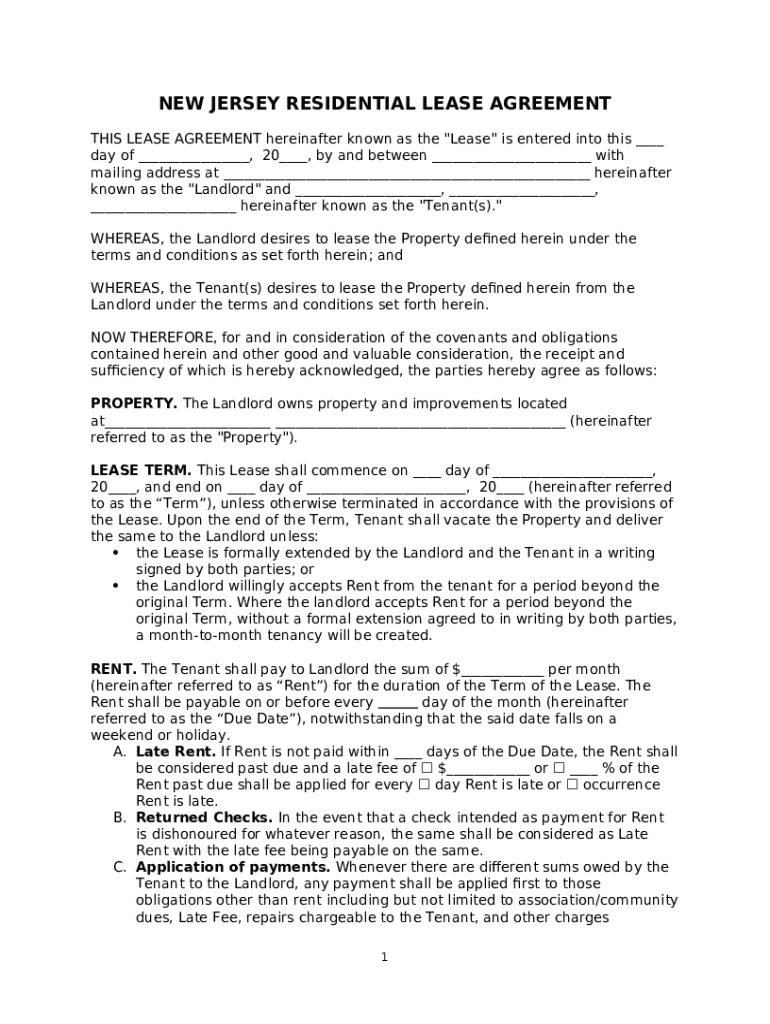







Definition and Meaning of New Jersey Residential Lease Agreement
A New Jersey Residential Lease Agreement is a legally binding contract between a landlord and a tenant that outlines the terms and conditions for renting residential property in New Jersey. This document serves to protect the rights and responsibilities of both parties, ensuring clarity in their relationship. Within the agreement, details such as rent amount, lease duration, maintenance responsibilities, and rules for property use are specified. It also sets expectations regarding payment deadlines and conditions for lease termination, thereby helping to prevent disputes. The agreement is adapted to adhere to New Jersey’s specific laws and regulations governing residential leases.
Key Components
- Rent Details: Specifies the monthly rent amount, due date, and acceptable payment methods.
- Lease Duration: Defines the start and end dates of the tenancy, including any renewal terms.
- Security Deposit: Outlines the required deposit amount and conditions for its return.
- Maintenance: Clarifies responsibilities for property repair and upkeep.
- Utilities: Details which party is responsible for utility payments.
How to Use the New Jersey Residential Lease Agreement
The New Jersey Residential Lease Agreement is designed to facilitate a transparent leasing process between landlords and tenants. When utilizing this form, both parties should carefully review all terms to ensure mutual understanding and agreement. The document is legally binding once signed, emphasizing the importance of thorough comprehension before signing.
Practical Recommendations
- Review Carefully: Both parties should read the agreement in detail to understand obligations.
- Seek Legal Advice: Consider consulting a lawyer for clarification of any legal terms or conditions.
- Negotiate Terms: Amendments can be negotiated; both landlord and tenant must agree to any changes.
- Keep Copies: Each party should retain a signed copy for reference throughout the lease term.
Obtaining the New Jersey Residential Lease Agreement
To acquire a New Jersey Residential Lease Agreement, both landlords and tenants have various options, ranging from online template services to professional legal assistance. Ensuring the form meets state-specific legal standards is crucial before finalizing any lease agreement.
Methods for Acquisition
- Online Legal Services: Platforms offer downloadable, customizable templates.
- Professional Legal Firms: Attorneys can provide tailored agreements that comply with New Jersey law.
- Real Estate Agencies: Many agencies offer pre-prepared lease forms as part of their property rental services.
Steps to Complete the New Jersey Residential Lease Agreement
Completing the New Jersey Residential Lease Agreement involves a series of steps that both parties should follow to ensure the document is legally enforceable and accurately reflects their agreement.
Step-by-Step Guide
- Complete Identifying Information: Include names and contact details of both landlord and tenant.
- Specify Property Details: Clearly describe the rental property, including address and unit number.
- Fill in Lease Terms: Insert details about the rent, deposit, lease duration, and payment terms.
- Detail Responsibilities: Enumerate maintenance duties and conditions for using the property.
- Review and Amend: Ensure all sections are correct; negotiate any necessary changes.
- Sign and Date: Both parties should sign in the presence of a witness if required.
Why Use a New Jersey Residential Lease Agreement
The New Jersey Residential Lease Agreement provides essential legal protections and establishes clear rules for the landlord-tenant relationship, minimizing the risk of disputes. Using a standardized agreement ensures compliance with state rental laws, promoting stability and clear communication.
Benefits of Using the Agreement
- Legal Clarity: Offers a legally sound document that outlines expectations and responsibilities.
- Dispute Prevention: Reduces the likelihood of conflicts over unclear or undocumented terms.
- Tenant Protection: Safeguards tenant rights through clearly defined lease terms.
- Landlord Security: Protects the landlord’s property interests and financial investments.
Important Terms Related to New Jersey Residential Lease Agreement
Understanding the terminology used within a New Jersey Residential Lease Agreement is critical for both landlords and tenants to grasp their rights and obligations fully. This section provides definitions for key terms commonly found in the lease.
Key Terms
- Premises: Refers to the physical residential property being rented.
- Lease Term: The duration for which the lease agreement is in effect.
- Security Deposit: A refundable amount held by the landlord as protection against potential tenant damages.
- Default: Occurs when a party fails to comply with the terms of the agreement.
Legal Use of the New Jersey Residential Lease Agreement
The legal enforceability of the New Jersey Residential Lease Agreement is rooted in state statutes, which govern landlord-tenant relationships. This section explains how adherence to legal requirements secures the validity of the lease.
Compliance Requirements
- State Laws: Adhering to New Jersey's landlord-tenant laws ensures the agreement’s enforceability.
- Disclosure Obligations: Landlords must disclose specific information, such as lead-based paint hazards, in compliance with legal standards.
- Notice Requirements: Proper notice must be given for changes in lease terms or termination.
State-Specific Rules for the New Jersey Residential Lease Agreement
New Jersey imposes specific rules and regulations that impact the formulation and execution of residential lease agreements. This section underscores the importance of adhering to these legal nuances.
Critical Regulations
- Rent Control: Some areas in New Jersey have rent control laws that limit rent increases.
- Eviction Protocols: New Jersey requires landlords to follow strict procedures for eviction to protect tenant rights.
- Security Deposit Cap: The state limits the maximum security deposit that can be charged.




