
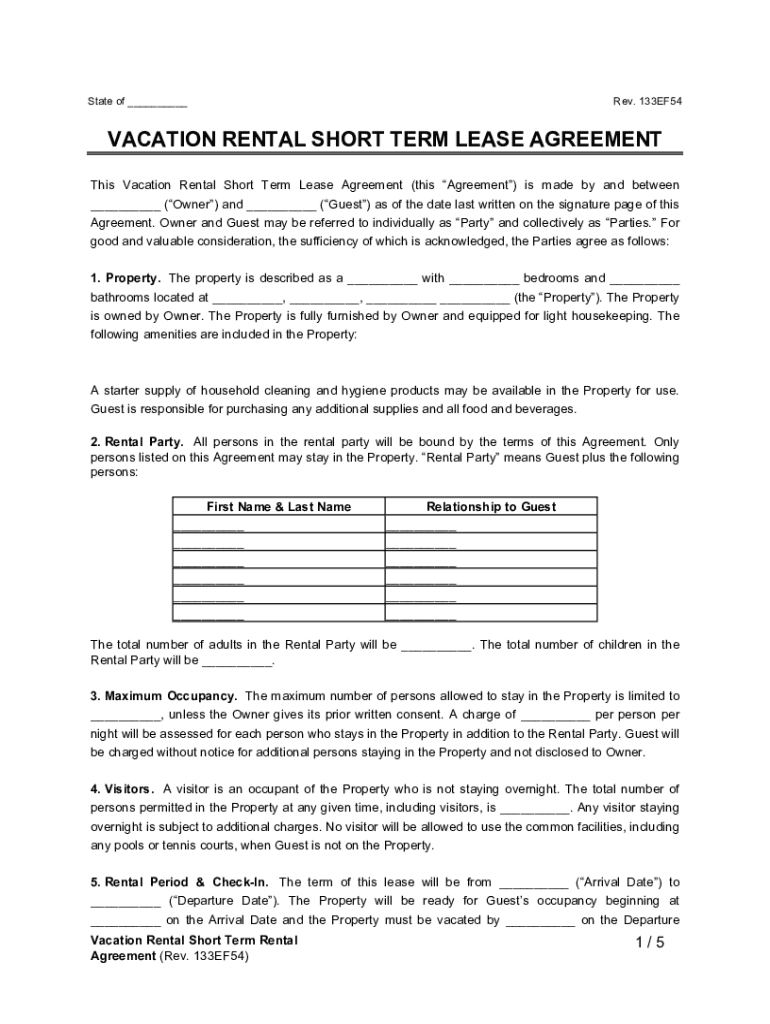







Definition and Meaning
A Vacation Rental Short Term Lease Agreement is a legally binding document designed to establish the terms and conditions under which a property owner (referred to as the Owner) rents out their property to a visitor (referred to as the Guest) for a short duration, typically from a few days to a couple of weeks. This agreement outlines the duration of the stay, rental fees, rules of the property, and other essential terms that govern the temporary use of the premises. It ensures both parties understand their rights and responsibilities, minimizing potential disputes during the rental period.
Key Elements of the Vacation Rental Short Term Lease Agreement
The agreement typically comprises several critical components that ensure clarity and legality. These include:
- Property Details: Description of the rented premises, including address and specific units or rooms included.
- Lease Term: Start and end dates of the rental period, along with check-in and check-out times.
- Payment Terms: Total rent amount, payment schedule, and acceptable payment methods.
- Security Deposit: Amount required as a deposit, conditions for its return, and potential deductions.
- House Rules: Guidelines for the Guest’s conduct, such as noise restrictions and pet policies.
- Cancellation Policy: Terms under which the Guest can cancel the booking and any applicable fees.
Each element should be clearly defined to prevent misunderstandings and ensure both parties’ interests are protected.
Steps to Complete the Lease Agreement
Completing a Vacation Rental Short Term Lease Agreement involves several key steps:
- Identify Parties: Clearly state the full legal names of both the Owner and the Guest.
- Define Terms: Detail the rental period, payment terms, and specific property rules.
- Review Terms: Both parties should thoroughly review all terms and seek clarification if needed.
- Sign the Agreement: Both the Owner and the Guest should sign the document, acknowledging mutual consent.
- Retain Copies: Ensure both parties keep a copy of the signed agreement for future reference.
Following these steps helps ensure the agreement is comprehensive and enforceable.
Legal Use of the Agreement
This agreement is a legally enforceable contract under U.S. law when executed with mutual consent, a defined consideration (e.g., rental payment), and lawful terms. It provides legal recourse for both parties should disputes arise, covering issues from non-payment to property damage. Compliance with state-specific real estate laws is crucial, as these can affect aspects such as security deposit handling and disclosure requirements.
Who Typically Uses the Agreement
The Vacation Rental Short Term Lease Agreement is commonly used by:
- Individual Property Owners: Who rent out their residential properties.
- Property Management Companies: Handling short-term rental properties on behalf of owners.
- Guests: Seeking temporary lodging accommodations for vacations or business trips.
This agreement provides clarity and protection across varying scenarios of short-term renting.


Important Terms Related to the Agreement
Understanding certain terms can be integral to fully comprehending the agreement:
- Lessor and Lessee: Alternative terms for Owner and Guest, respectively.
- Premises: The rented property or space.
- Force Majeure: Clause covering unforeseen events preventing either party from fulfilling the contract.
- Default: Failure to meet contractual obligations, such as payment defaults.
These terms can affect the interpretation and execution of the contract, underscoring the importance of clarity.
State-Specific Rules for Lease Agreements
Though the fundamental structure of these agreements is similar, state-specific laws can impact certain aspects:
- Security Deposit Limits: Some states impose a maximum limit on security deposits.
- Advance Notice Requirements: Vary by state for terminating a lease or making amendments.
- Tax Obligations: States may have different requirements for collecting and remitting lodging taxes.
Being aware of these nuances is important for compliance with local regulations.
Examples of Using the Agreement
Consider practical situations where this agreement serves various purposes:
- Vacation Homes: Used for tourists renting beach or mountain homes.
- Urban Apartments: Ideal for short-term business travelers needing downtown lodging.
- Event Accommodations: Renting properties for short-term use during local events like music festivals or conferences.
These examples illustrate the flexibility and necessity of having a detailed lease agreement in place.
Software Compatibility and Integration with DocHub
While developing this agreement, it’s beneficial to know the available digital tools like DocHub to streamline the process:
- Direct integration with cloud services such as Google Drive for document access.
- Tools for editing and annotating agreements for clarity and modification.
- Features to digitally sign documents, ensuring all parties can confirm their consent from any location.
These capabilities highlight how digital solutions enhance the management and execution of rental agreements.




