






Definition & Meaning
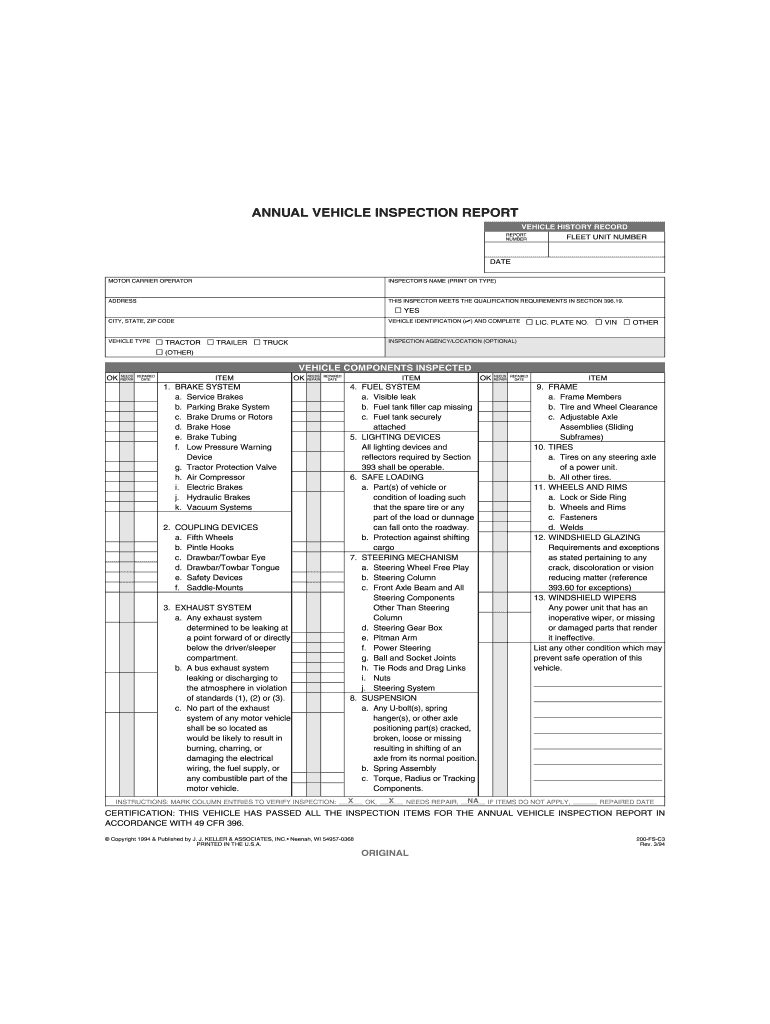
The "Annual Vehicle Inspection Report" (AVIR) is a form typically used to document the compliance and condition of vehicles, especially those involved in commercial transportation. It serves as a record of an annual inspection required to ensure that vehicles meet safety standards and are roadworthy. This report is a critical component in maintaining a vehicle's operational status within regulatory frameworks, ensuring safety for drivers and the public.
The AVIR includes a comprehensive checklist that evaluates various components of a vehicle, from brakes and tires to emission controls. Failure to maintain an accurate and up-to-date AVIR can result in regulatory penalties or operational restrictions, impacting the efficiency and legality of transport activities.
How to Use the Annual Vehicle Inspection Report
Utilizing the AVIR involves engaging a qualified inspector to assess your vehicle. The inspector will systematically go through every item on the checklist, examining components such as:
- Tires and wheels
- Steering mechanism
- Brake system
- Lights and reflectors
- Exhaust system
The findings are then documented in the report, noting any defects or compliance issues. If required, repairs must be conducted and verified as part of the report to deem the vehicle safe for continued operation. The finalized AVIR should be maintained in the vehicle’s records and is available for review by regulatory bodies during audits or compliance checks.
Steps to Complete the Annual Vehicle Inspection Report
- Schedule an Inspection: Arrange for a certified inspector to evaluate your vehicle.
- Prepare Necessary Information: Have vehicle-related documents on hand, such as registration and previous inspection reports.
- Conduct the Vehicle Inspection: The inspector will check each item on the AVIR checklist.
- Document Inspection Results: Record the condition of each inspected item, including any repairs or maintenance performed.
- Sign and Date the Report: Both the inspector and the vehicle owner/manager must authenticate the report with their signatures and dates.
- Maintain and Submit the Report: Store the report in your vehicle’s compliance records, ready for regulatory checks.
Why You Should Use the Annual Vehicle Inspection Report
Ensuring vehicles are regularly inspected and compliant protects against operational disruptions and enhances safety. Here's why the AVIR is indispensable:
- Legal Compliance: Aligns with federal and state safety regulations.
- Safety Assurance: Proactively identifies and addresses potential safety hazards.
- Operational Efficiency: Prevents delays or fines that could arise from non-compliance.
- Risk Management: Minimizes liability by maintaining a record of vehicle condition.
Important Terms Related to the Annual Vehicle Inspection Report
- Compliance: Refers to meeting the regulatory and legal standards required for vehicle operation.
- Defects: Issues identified during inspection that must be addressed before the vehicle can be deemed roadworthy.
- Inspector Certification: Ensures the inspector is qualified and authorized to conduct vehicle inspections.
Understanding these terms helps in interpreting the contents of the AVIR and the actions required post-inspection.
Key Elements of the Annual Vehicle Inspection Report
The AVIR is structured to cover all critical components necessary for vehicle safety. Key elements include:
- Inspector Information: Name, certification details, and contact information.
- Vehicle Identification: Make, model, VIN, and fleet unit number.
- Inspection Date: When the inspection took place.
- Detailed Checklist: Covers components from brakes to safety belts.
- Repair Documentation: Notes repairs completed and verified.
These elements ensure comprehensive documentation of the vehicle’s condition and any maintenance necessary for compliance.
Legal Use of the Annual Vehicle Inspection Report
The AVIR holds legal significance as evidence of a vehicle’s compliance with safety standards. It routinely accompanies other legal and operational documents during audits by regulatory bodies, supporting due diligence efforts and mitigating liability in the event of litigation.
Vehicles involved in accidents or legal disputes regarding safety standards can present the AVIR as proof of adherence to required maintenance procedures, thereby acting as a protective legal measure.
State-by-State Differences
Although AVIR requirements are generally governed by overarching federal guidelines, specific states may have additional regulations or amendments. Some states impose stricter emissions regulations or additional safety requirements for certain types of vehicles. It's essential to familiarize yourself with:
- State-specific Safety Standards: Variations can exist in safety equipment requirements.
- Emission Regulations: May differ, affecting how inspections are conducted, especially in states with environmental concerns.
By understanding and adhering to these variations, vehicle operators can ensure full compliance across all jurisdictions in which their vehicles operate.