




Definition & Importance of the OSHA 300 Log
The OSHA 300 log is integral to workplace safety reporting in the United States. Formally known as the Log of Work-Related Injuries and Illnesses, it is mandated by the Occupational Safety and Health Administration (OSHA) for documenting serious work-related injuries and illnesses. By maintaining this log, employers can better understand the types of incidents occurring in the workplace and take proactive steps for prevention. Ensuring meticulous record-keeping helps in legal compliance and promotes a culture of safety within organizations.
Key Components of the OSHA 300 Log
Basic Information
The log requires documentation of specific details for each qualifying incident, such as:
- Employee's name and job title
- Date and location of the incident
- Specific injury or illness description
This structured data collection aids occupational health professionals and employers in identifying patterns that might indicate potential hazards.
Detailed Incident Overview
For each entry, employers need to specify:
- Number of days away from work
- Restricted or transferred job days
- Classification of injuries, ranging from minor injuries to severe cases such as fatalities
These details support accurate tracking and corrective actions for risk management.
How to Obtain the OSHA 300 Log
Employers can access copies of the OSHA 300 log directly from OSHA's website. Most workplaces are notified of record-keeping obligations, ensuring businesses understand how to maintain and submit these logs effectively. Companies should regularly check their eligibility for electronic submission through OSHA's Injury Tracking Application (ITA).
Steps to Complete the OSHA 300 Log
Preparation
- Gather Initial Documentation: Collect all records of workplace injuries and illnesses.
- Verify Eligibility: Determine if your business is required to keep an OSHA 300 log.
Recording Data
- Entry for Each Incident: Create a separate line entry for each qualifying event.
- Detail Explanation: Accurately describe the injury or illness and any contributing factors.
Finalization
- Review for Accuracy: Ensure all details are complete and correct before submission.
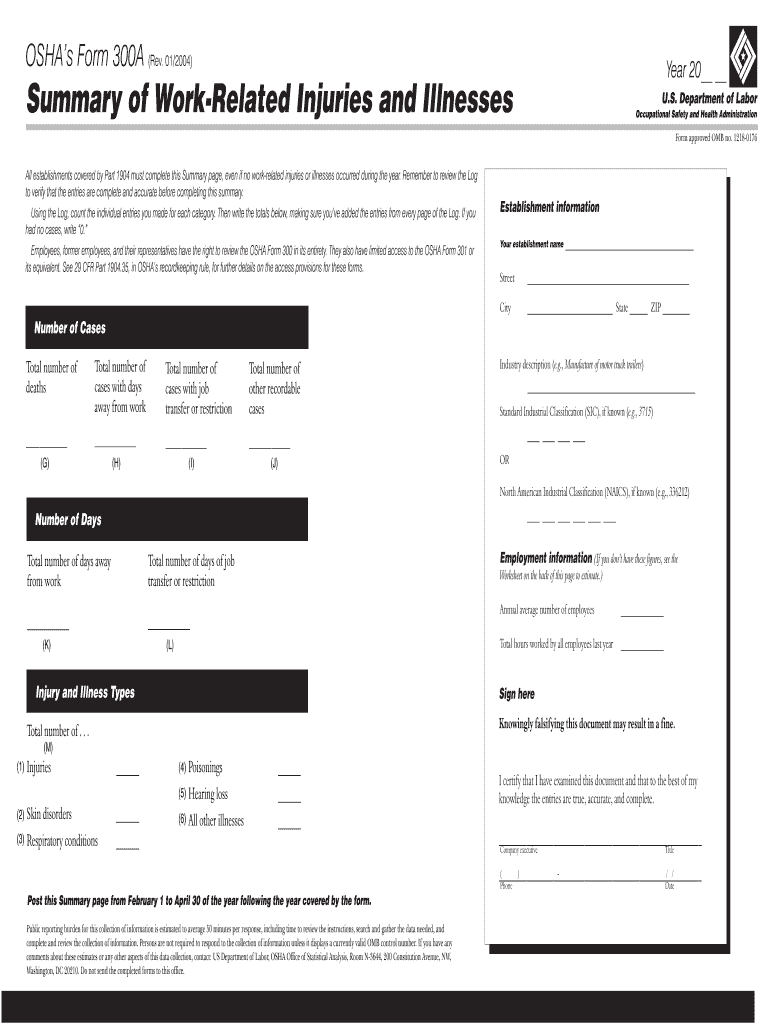
- Annual Summation: Prepare an annual summary using OSHA Form 300A.
Legal Significance of the OSHA 300 Log
Maintaining the OSHA 300 log is a legal requirement for many businesses under U.S. federal law. Non-compliance can lead to significant penalties, including fines and heightened scrutiny during inspections. Accurate logs are also pivotal if workplace conditions need defense in potential legal proceedings. They support claims by demonstrating compliance and preventative measures taken by the organization.
Who Needs to Use the OSHA 300 Log?
Typical Users
- Employers: Especially those in high-risk industries like construction and manufacturing.
- Safety Officers: Responsible for company-wide safety compliance.
- HR Departments: Overseeing employee-related documentation.
Companies with ten or more employees and engaging in specific industries must maintain this log unless exempt based on size or industry classification.
State-Specific Considerations
Some states operate their OSHA programs, requiring adherence to additional rules beyond federal requirements. Employers should remain informed of both state and federal obligations, as these can vary significantly. For example, California has its Cal/OSHA, mandating similar but potentially broader reporting standards.
Digital vs. Paper Version of the OSHA 300 Log
Advantages of Digital
- Efficiency: Electronic logs facilitate quicker entry, review, and amendment.
- Accessibility: Easier retrieval and sharing with relevant authorities or stakeholders.
- Automation: Reduces human error through automation features available on platforms like DocHub.
Considerations with Paper Logs
While traditional paper logs might still be in use, digital versions offer superior advantages in terms of accessibility and compliance. Many businesses transition to electronic records for better management and integration with systems like OSHA’s ITA.
Examples and Scenarios of Using the OSHA 300 Log
Practical Uses
- Identifying Trends: Recognizing patterns in workplace injuries can lead to heightened safety measures.
- Safety Trainings: Logs provide concrete examples to illustrate dangers and the importance of adhering to safety protocols.
In real-world applications, construction companies might use log analysis to implement better safety gear and increasingly stringent guidelines based on past incident observations.