






Definition & Meaning
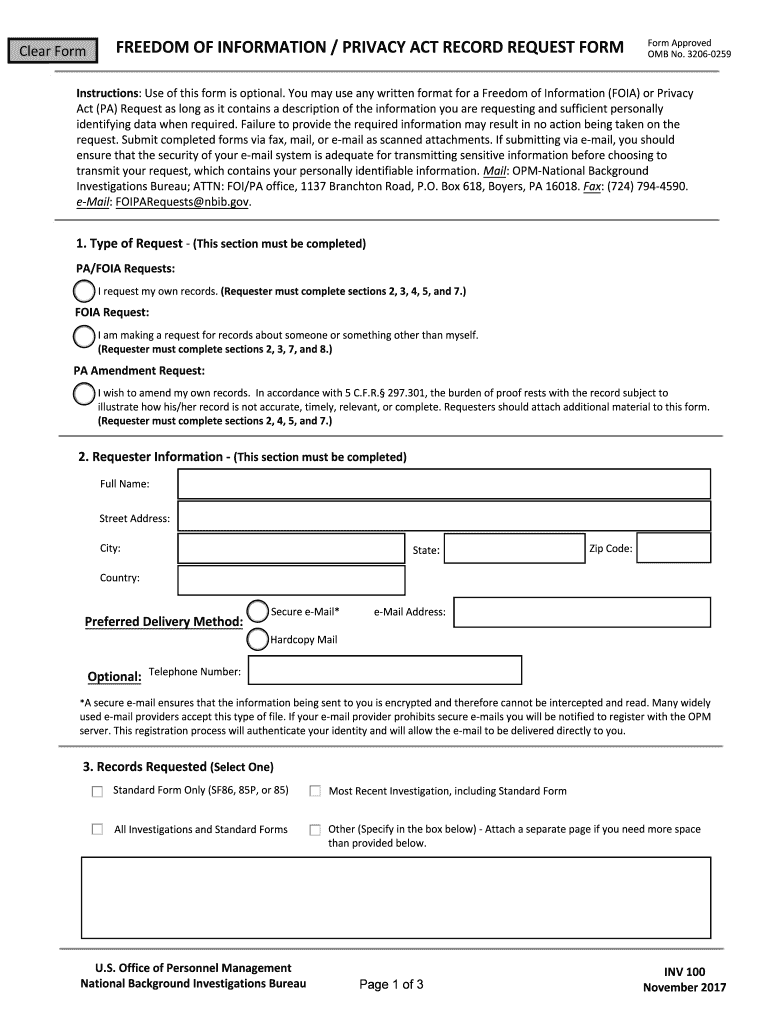
The Freedom of Information Privacy Act Record Request Form, often referred to under its abbreviated terms, is a tool designed to request access to records held by federal agencies in the U.S. It operates under the stipulations of the Freedom of Information Act (FOIA) and Privacy Act, facilitating transparency and accountability by enabling citizens to obtain federal records.
- Freedom of Information Act (FOIA): Guarantees public access to records from any federal agency, except those exempted for reasons such as national security or personal privacy.
- Privacy Act: Relates to personal information held by federal agencies, granting individuals rights to access their records.
- Request Form Usage: Typically employed by individuals, researchers, journalists, or organizations seeking information for various purposes from federal bodies.
Both acts aim to ensure that government operations remain transparent while safeguarding sensitive personal data.
How to Use the Freedom of Information Privacy Act Record Request Form
Filing a FOIA/Privacy Act Record Request form involves several steps:
-
Identify the Record: Clearly specify the record you are seeking. Include as much detail as possible to assist the agency in locating the document.
-
Choose the Right Form: While the use of a specific form is optional, formats designed for this purpose streamline the process. Most agencies provide downloadable forms on their websites.
-
Completing the Form:
- Requester Details: Fill in personal information, including name, address, and contact details.
- Description of Information: Provide a detailed and accurate description of the requested record.
- Consent for Release: If requesting records on someone else's behalf, include their written consent.
-
Submission: Submit the form according to the agency's guidelines, usually via mail, email, or an online portal.
The agency is tasked with responding to requests within the statutory timeline, typically 20 business days, subject to extensions.
Steps to Complete the Freedom of Information Privacy Act Record Request Form
-
Download the Form: Access the form through the specific agency’s website.
-
Personal Information Section:
- Fill in your full legal name, contact number, and address.
- Optionally include an email address to receive electronic correspondence.
-
Description of Records:
- Clearly articulate the records needed, including any relevant dates, subjects, or reference numbers.
-
Purpose of Request: While not mandatory, explaining the purpose can assist the agency in processing your request more efficiently.
-
Signature: Ensure the form is signed; this is crucial, especially for Privacy Act requests where personal data is involved.
-
Submission: Follow the agency-specific instructions to submit the completed form. Retain a copy of the submission for your records.
Legal Use of the Freedom of Information Privacy Act Record Request Form
- Personal Information Protection: The form cannot be used to obtain private information about individuals without their consent, in compliance with the Privacy Act.
- Regulatory Compliance: Agencies are bound by legal requirements to process and provide data unless a justified exemption applies.
- Exemptions: Certain records may be withheld to protect national security, law enforcement, or personal privacy.
Failure to comply with legal stipulations can result in denial of request or legal repercussions.
Important Terms Related to the Freedom of Information Privacy Act Record Request Form
- FOIA Exemptions: Categories under which information can be legally withheld, including classified national security matters and internal personnel rules.
- Administrative Appeal: A process to challenge a denied or incomplete response from an agency.
- Records: Any data maintained by an agency in any format, including digital files and physical documents.
Understanding these terms helps improve the precision and outcome of requests.
Examples of Using the Freedom of Information Privacy Act Record Request Form
- Journalists: May use the form to gather information on government operations or public sector spending.
- Researchers: Often employed in academic or scientific research to access archived data.
- Individuals: Can request to view their records maintained by an agency, such as the Department of Homeland Security, for privacy routines.
These examples illustrate the form’s diverse applicability across fields and purposes.
Required Documents
When submitting a Freedom of Information Privacy Act Record Request, the following documents may be necessary:
- Proof of Identity: Especially for Privacy Act requests where personal records are being sought. A photocopy of an official ID often suffices.
- Consent Form: If applicable, a signed consent from the individual whose records are being requested.
- Form Support Documents: Any additional paperwork that might assist the agency in locating the requested records.
Providing all required documents in initial submissions can help prevent delays in processing.
Form Submission Methods (Online / Mail / In-Person)
Freedom of Information Privacy Act Record Requests can be submitted through various channels:
- Online Portals: Some agencies, like the Department of Justice, offer online submission forms.
- Email: Attach the completed form and required documents.
- Mail: Send hard copies to the designated agency address.
- In-Person: Less common but possible at some agency locations.
Each method has specific procedural guidelines, and not all agencies offer every option, so confirm with the respective agency before submission.