
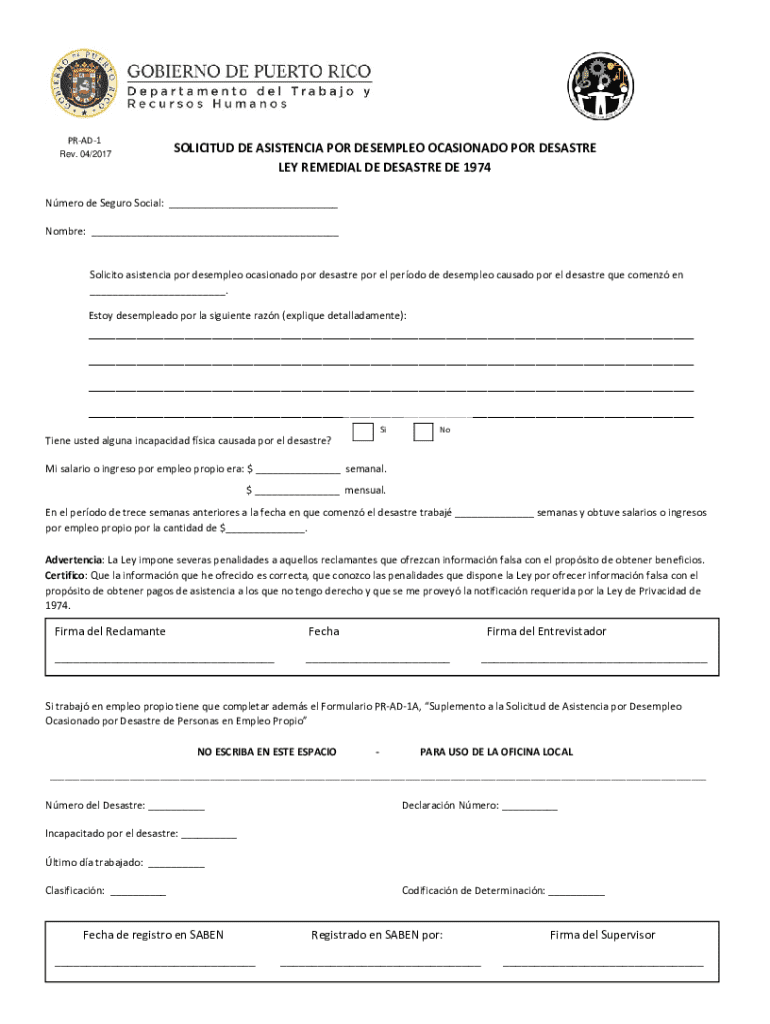







Definition & Meaning
Disaster Unemployment Assistance (DUA) is a federal program that provides financial assistance to individuals who have become unemployed as a direct result of a major disaster. Administered by the U.S. Department of Labor, it is designed to support those not eligible for standard unemployment benefits, such as the self-employed, farmers, and those who have not earned sufficient wages to qualify for regular unemployment compensation. This assistance helps individuals maintain financial stability during the recovery period following a disaster.
Key Components of DUA
- Eligibility: Unlike standard unemployment benefits, DUA is available to individuals who are not typically eligible, such as independent contractors or those who have used up their regular benefits.
- Funding: The assistance is federally funded and can cover lost income directly related to a declared disaster.
- Duration: Benefits can be extended up to 26 weeks, beginning from the date the disaster struck, contingent on ongoing eligibility.
Eligibility Criteria
Understanding who qualifies for DUA is critical to ensure proper application and benefit receipt. Eligibility is not universal and requires specific criteria to be met:


Basic Eligibility Requirements
- Disaster Impact: Must show that unemployment was a direct consequence of a declared disaster.
- Non-Standard Workers: Priority is given to self-employed individuals, those with insufficient work history, or those who would not otherwise qualify for regular state unemployment benefits.
- Proof of Employment: Affected individuals must provide documents confirming their employment or self-employment status at the time of the disaster.
Special Circumstances
- Interruption of Commute: If the disaster has impaired the ability to commute to work, leading to a loss of employment, the individual may qualify.
- Disaster-Related Injury: Workers injured as a result of the disaster and therefore unable to work may also be eligible.
Steps to Complete the Disaster Unemployment Assistance Application
Completing the DUA application involves a series of sequential steps closely linked to proving eligibility and ensuring adherence to guidelines. Here's a step-by-step breakdown:
Initial Application Steps
- Identify Eligibility: Assess disaster impact on your employment to determine eligibility.
- Gather Required Documentation: Collect proof of your employment or self-employment, such as pay stubs, tax returns, or business records.
- Fill Out Application: Access and complete the DUA application, typically available through your state unemployment office.
Submission and Verification
- Submit Application: Package the completed application alongside supporting documents to the designated state unemployment office—check for specific mailing addresses or online submission portals depending on your location.
- Verification Process: Your state agency will verify the information provided. You may be required to attend an interview or submit additional information if questions arise.
Benefit Receipt
- Receive Benefits: Once approved, benefits will be disbursed typically through direct deposit or a mailed check.
- Weekly Claims: Continual filing may be necessary to receive further benefits, dependent on the state regulations and ongoing eligibility.
Required Documents
When applying for DUA, several documents are vital to substantiating eligibility:
- Identity Proof: Government-issued identification such as a driver's license or passport.
- Employment Records: Previous W-2 forms, quarterly earnings statements, or tax documentation validating prior employment or self-employment.
- Disaster Impact Evidence: Documents like a layoff notice citing the disaster as the reason or a statement from an employer verifying how the disaster affected operations.
Important Terms Related to Disaster Unemployment Assistance Application
To support your understanding of the application process, some terms are essential:
- Declared Disaster: An official recognition by the federal government that triggers eligibility for DUA.
- Base Period: The timeframe used to determine wage eligibility for unemployment benefits.
- Weekly Benefit Amount (WBA): The calculated sum payable to an eligible individual based on their earnings.
State-Specific Rules for the Disaster Unemployment Assistance Application
Each state in the U.S. may have slight variations in the administration of DUA based on federal guidelines and local conditions:
Key Variations
- Application Deadlines: Timing for applications can vary by state, often dependent on the declared end date of the disaster.
- Weekly Reporting: States might require different procedures for continued certification of claims (e.g., online portals vs. mailed forms).
- Documentation Requirements: Additional forms or proofs of residency may be mandated beyond federal guidelines.
By understanding these nuances and preparing in advance, applicants can ensure a more streamlined experience and avoid common delays associated with application errors or missing information.
Why You Should Apply for Disaster Unemployment Assistance
Applying for DUA can be crucial for individuals facing financial uncertainties resulting from a disaster. The assistance provided is more than just monetary relief; it offers stability and a chance to rebuild without immediate financial pressures detracting from recovery efforts. It also means that essential bills and expenses can continue to be paid, easing stress during challenging times.




