




Definition & Meaning
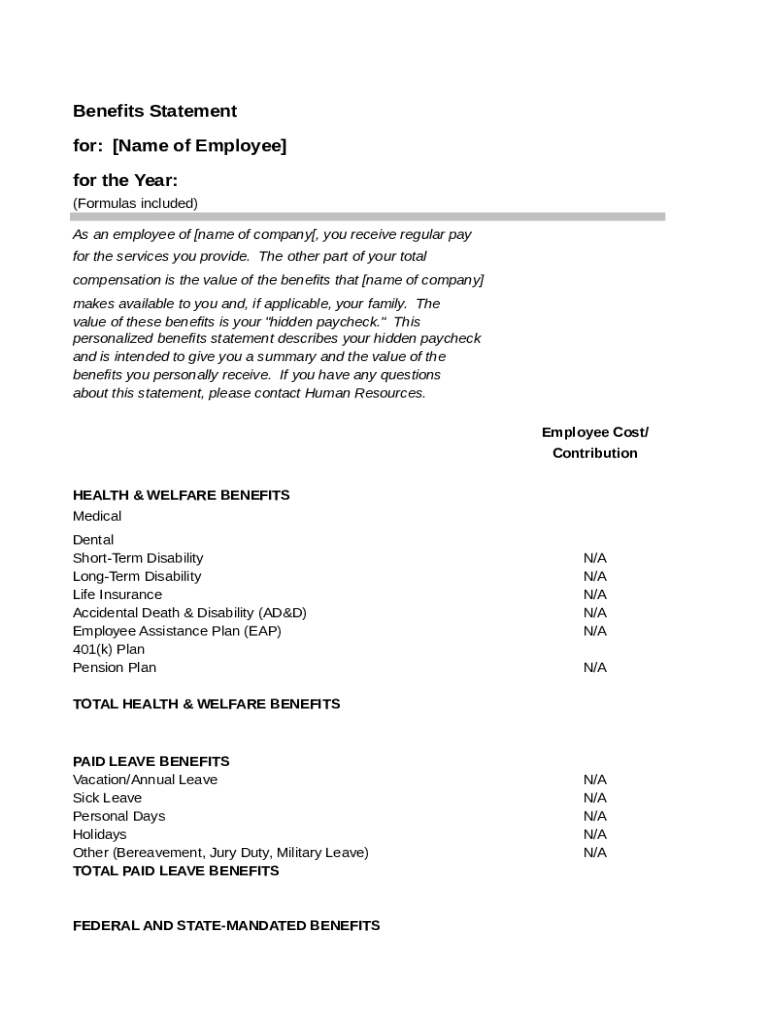
The Employee Benefits Statement is a comprehensive document that offers a detailed summary of the benefits an employee receives as part of their employment package. Beyond regular salary, this statement includes information about health insurance, retirement plans, paid time off, and other perks. This document provides clarity on total compensation value, aiding employees in understanding the complete landscape of their remuneration and benefits offered by their employer.
Important Terms Related to Employee Benefits Statement
- Compensation Package: Represents the total financial value of salary and benefits provided to an employee. It integrates direct salary with indirect benefits.
- Health Insurance: Typically includes medical, dental, vision coverage that the employer contributes to, partially or fully.
- Retirement Plan: Often a 401(k) or similar plan where employers may offer matching contributions to boost savings for employee retirement.
- Paid Time Off (PTO): Includes vacation days, personal leave, and sick days an employee is entitled to.
Understanding these terms helps employees fully grasp the components of their compensation.
How to Obtain the Employee Benefits Statement
To obtain your Employee Benefits Statement, start by contacting your human resources (HR) department, as they are generally responsible for distribution. These statements are typically provided annually, but you can request a copy anytime if needed. Some companies distribute these electronically through email or an employee portal, while others may prefer paper copies.
Steps to Complete the Employee Benefits Statement
- Review Personal Information: Ensure all personal and employment details are correct.
- Assess Benefits Offered: Carefully read through each section that lists the benefits.
- Verify Enrollment: Confirm that you are enrolled in the benefits outlined or understand procedures to opt-in if necessary.
- Calculate Total Compensation: Add up the value of all benefits to see how they supplement your salary.
- Reach Out for Clarification: Contact HR if any part of the statement is unclear or seems incorrect.
This meticulous review ensures you are benefiting as much as possible from your employer's offerings.
Key Elements of the Employee Benefits Statement
- Salary Details: Clear outline of base salary, bonuses, and other financial incentives.
- Health Benefits: Specifics about insurance plans, covered dependents, and employer contributions.
- Retirement Savings: Description of 401(k) matching or pension plans offered by the company.
- Additional Perks: Information on gym memberships, tuition assistance, or travel reimbursements.
Each of these elements contributes to understanding the true value of the compensation package.
Examples of Using the Employee Benefits Statement
- Career Planning: Utilize the statement to negotiate for better benefits or a higher salary in alignment with industry standards.
- Financial Planning: Assess overall compensation for budgeting, ensuring you account for all income and savings streams.
- Healthcare Choices: Use it to compare healthcare offerings when deciding on treatment plans or medical services.
These scenarios highlight how the statement aids in making informed life and career choices.
Who Typically Uses the Employee Benefits Statement
Employees, HR professionals, and financial advisors typically use this statement. Employees use it for personal insight into compensation, HR professionals for structuring competitive packages, and financial advisors for helping clients make informed financial decisions. This diverse range demonstrates the statement's utility beyond individual use.

Legal Use of the Employee Benefits Statement
The Employee Benefits Statement serves as a legal representation of the benefits offered by an employer but is not legally binding. It ensures transparency between employers and employees, allowing employees to confirm if the company meets its documented obligations. Exercising diligence in issuing accurate statements can protect companies from potential disputes regarding employee compensation.
State-Specific Rules for the Employee Benefits Statement
Some states, like California, may have specific mandates for what needs to be included in an Employee Benefits Statement, reflecting state labor laws. These could include minimum wage adjustments, mandated health coverages, or specific disclosures. Employers operating in multiple states should tailor statements to meet these localized legal requirements.