
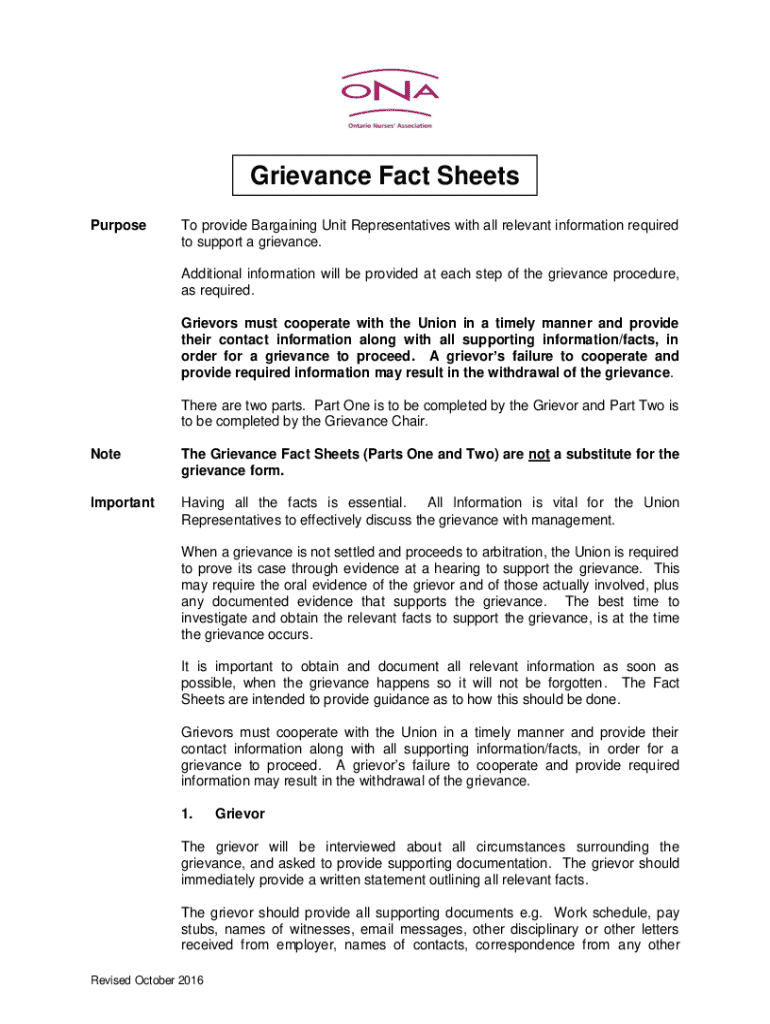







Definition and Meaning
ONA Grievance Fact Sheets are comprehensive documents designed to provide Bargaining Unit Representatives with all the necessary information to support a grievance effectively. These sheets serve as an essential resource, detailing the procedures, important terms, and relevant laws for addressing and resolving grievances. They ensure representatives are well-equipped with factual details and specific guidelines imperative for successful grievance management.
How to Use the ONA Grievance Fact Sheets
Utilizing the ONA Grievance Fact Sheets involves several key steps to maximize their effectiveness:
-
Review the Document Thoroughly: The first step is to read the entire fact sheet to understand the scope and depth of the grievance process it covers. Pay close attention to each section to comprehensively grasp the protocols and best practices.
-
Identify Relevant Sections: Focus on parts contiguous to the specific grievance you are handling. This may include particular lingo, procedural timelines, and relevant case laws.
-
Annotate and Highlight: Use annotation tools to mark important points or directives within the sheets that are crucial for your case. This ensures quick reference during discussions or when preparing documentation.
-
Apply Information Strategically: Implement the strategies and advice from the fact sheet when preparing your case. This includes framing arguments, setting evidence parameters, and ensuring all procedural steps are adhered to.
Examples and Real-World Scenarios
- Case Preparation: A union representative preparing for a grievance hearing might use the fact sheet to formulate questions and identify necessary witnesses.
- Informative Sessions: During orientation sessions for new representatives, extracts from the fact sheet can be used to illustrate grievance procedures effectively.
Key Elements of the ONA Grievance Fact Sheets
The fact sheets encompass various critical components necessary for effective grievance handling:
- Terminology and Definitions: Explains key terms and phrases specific to the grievance procedure.
- Procedural Guidelines: Outlines the steps required from filing the grievance to its resolution.
- Legal Context: Provides an overview of relevant laws and regulations that govern the grievance process.
Detailed Context and Background
- Case Laws and Precedents: Where applicable, the sheets might reference previous cases or precedents that can inform current grievance handling strategies.
- Legal Updates: Inclusion of recent updates in employment law that might impact grievance processing.
Steps to Complete the ONA Grievance Fact Sheets
Successfully completing the ONA Grievance Fact Sheets requires precise attention to detail:
-
Gather Required Information: Assemble all necessary facts, documentation, and evidence relevant to the grievance. This may include contracts, previous correspondence, and witness statements.
-
Follow Structure Rigorously: Adhere to the structured format of the sheets to ensure all fields and sections are correctly filled. Each section corresponds to specific grievance aspects, from primary details to supporting evidence.
-
Verify Information Accuracy: Double-check entries for accuracy and completeness. Any discrepancies or missing information can jeopardize the grievance process.
-
Seek Peer Review: Before submission, have another representative review the fact sheet to catch errors or omissions that may have been overlooked.
Variations and Exceptions
- Complex Grievances: Additional sections may be necessary for more intricate cases, including supplementary documentation or extended explanation texts.
- State-specific Requirements: Adapt fact sheets to accommodate state-specific regulations that might impact grievance procedures.
Who Typically Uses the ONA Grievance Fact Sheets
The primary users of the ONA Grievance Fact Sheets are:
- Bargaining Unit Representatives: As principal users, they leverage the sheets for advocating during negotiations.
- Labor Union Leaders: Utilize the sheets to ensure comprehensive understanding and strategic alignment of grievance policies.
- Legal Advisors: May consult these documents to provide legal counsel aligning with union grievances.


Business Types that Benefit Most
- Corporate Employers: Companies with significant unionized workforces often rely on these fact sheets to navigate employee grievances.
- Public Institutions: Agencies and public sector employers use these documents to ensure compliance with organizational policies.
Legal Use of the ONA Grievance Fact Sheets
Adhering to legal protocols is crucial for the effective use of grievance fact sheets:
- Filing Compliance: Ensures that all grievance submissions are compliant with existing laws and labor agreements.
- Confidentiality Assurance: Emphasizes maintaining the confidentiality of documents and processes involved in the grievance procedure.
Penalties for Non-Compliance
Failing to strictly adhere to grievance protocols can result in:
- Legal Repercussions: Non-compliance can lead to legal challenges or sanctions against the party at fault.
- Loss of Credibility: Mishandling grievances diminishes a representative's credibility and effectiveness in future cases.
Examples of Using the ONA Grievance Fact Sheets
Illustrative scenarios where ONA Grievance Fact Sheets are applied:
- Dispute Resolution: In a scenario where a worker alleges inappropriate workplace conduct, the fact sheet helps substantiating claims trough detailed submissions and timelines.
- Policy Reevaluation: When reviewing company policies, grievances fact sheets can guide necessary adjustments or reforms.
By incorporating these aspects into the process, the fact sheets serve as invaluable tools, ensuring grievances are handled with precision and adherence to legal standards.




