






Definition & Meaning
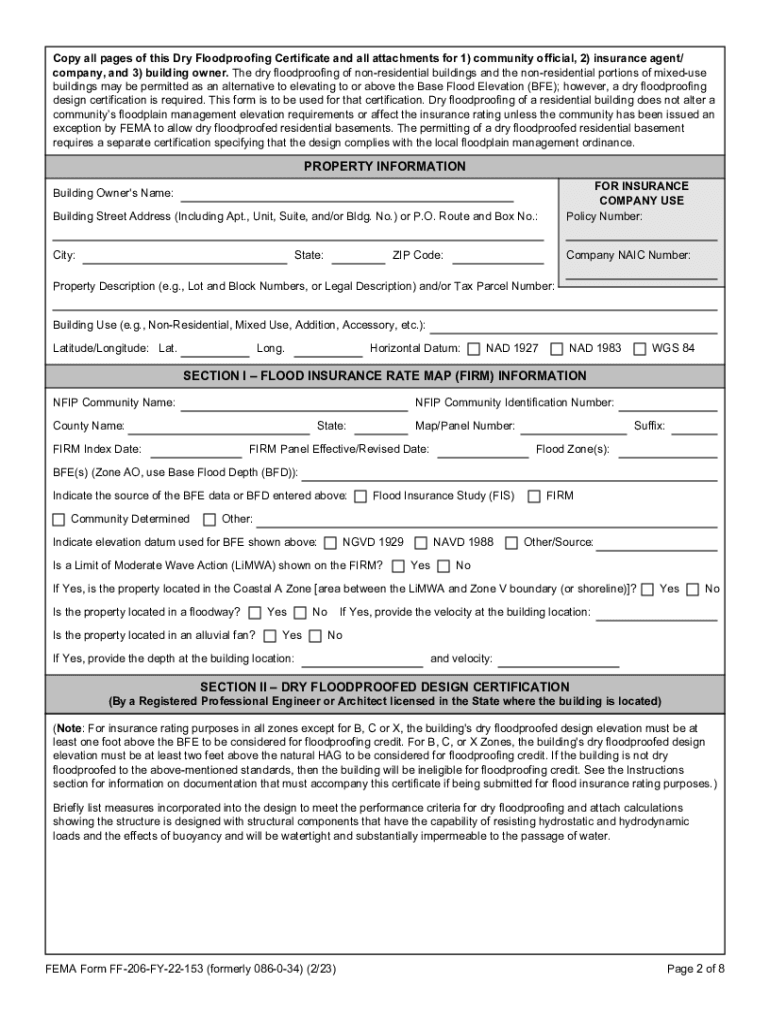
The "Dry Floodproofing Certificate for Non-Residential Structures" is a specialized document that confirms the implementation of dry floodproofing measures in buildings not used for residential purposes. These protective measures are designed to prevent water ingress during flood events, thus safeguarding the structural integrity and contents of non-residential buildings. The certificate serves as proof that the structure meets specific federal, state, and local regulations for floodproofing, potentially affecting insurance premiums and eligibility for certain programs.
Key Aspects
- Non-Residential Focus: Applies exclusively to buildings such as commercial properties, industrial units, and public facilities, excluding any residential structures.
- Floodproofing Standards: Verification that the building meets minimum standards for dry floodproofing, which includes barriers, sealants, and drainage modifications.
- Insurance Implications: May influence the cost and availability of flood insurance under programs like the National Flood Insurance Program (NFIP).
How to Use the Dry Floodproofing Certificate for Non-Residential Structures
This certificate is primarily used to demonstrate compliance with floodproofing standards. Building owners or responsible parties submit it to insurance companies, government agencies, and other relevant entities to confirm adherence to flood mitigation practices.
Practical Usage
- Flood Insurance: Submit the certificate to an insurer to qualify for reduced flood insurance premiums.
- Regulatory Compliance: Present the certificate during inspections or audits to verify compliance with local flood protection regulations.
- Property Transactions: Use in property sales or leasing agreements to demonstrate floodproofing measures in place.
How to Obtain the Dry Floodproofing Certificate for Non-Residential Structures
Securing this certificate involves several steps and adherence to designated guidelines and standards.
Steps to Acquire
- Consultation: Engage with a licensed engineer or architect to undertake a flood risk assessment of the building.
- Implementation: Based on assessment results, implement necessary floodproofing measures.
- Inspection and Verification: Ensure an inspection by a certified professional to verify that all required measures are adequately in place.
- Documentation: The professional will prepare the documentation required to validate compliance.
- Submission: Submit the completed certificate to relevant authorities or insurers.
Required Documentation
- Detailed floodproofing plans
- Inspection reports and compliance verification
- Any permits or approvals acquired during the floodproofing process
Steps to Complete the Dry Floodproofing Certificate for Non-Residential Structures
The completion of this certificate requires thorough attention to detail and adherence to regulations.
- Fill Personal and Building Information: Provide accurate data about the building owner and the non-residential structure.
- Detail Floodproofing Measures: Describe each floodproofing technique used in the building.
- Include Professional Endorsement: Ensure a licensed professional’s signature is affixed to verify all documented measures.
- Attach Supporting Documents: Compile all necessary reports, plans, and verification documents to accompany the certificate.
- Review and Finalize: Double-check all entries for accuracy before submission to avoid rejection or delays.
Who Typically Uses the Dry Floodproofing Certificate for Non-Residential Structures
Various stakeholders use this certificate, each with distinct objectives related to flood risk management and compliance.


Common Users
- Property Owners: To manage insurance risks and confirm regulatory compliance.
- Insurers: To assess eligibility and rates for flood insurance coverage.
- Local Authorities: To monitor compliance with local building codes and floodplain management regulations.
- Developers and Architects: During planning to ensure designs meet required standards prior to project approval.

Key Elements of the Dry Floodproofing Certificate for Non-Residential Structures
Several critical components must be accurately completed to validate this certificate.
Core Components
- Building Identification: Includes address, usage type, and details of ownership.
- Floodproofing Description: Specific techniques, materials used, and any structural adaptations.
- Certification Details: Professional credentials of the certifier and date of inspection.
- Attachments and Appendices: Supporting documents like engineering plans, inspection reports, and compliance checklists.
Legal Use of the Dry Floodproofing Certificate for Non-Residential Structures
The certificate has several legal applications, ensuring buildings meet federal and state mandates regarding flood damage prevention.
Legal Applications
- Regulatory Compliance: Demonstrates adherence to regulations set by agencies such as FEMA and state-level environmental protection agencies.
- Litigation Defense: Can be used in legal defenses if disputes arise regarding flood protection measures.
- Contractual Requirements: May be a prerequisite in contracts involving construction, leasing, or purchasing of non-residential properties in flood zones.
State-Specific Rules for the Dry Floodproofing Certificate for Non-Residential Structures
Rules and requirements for the Dry Floodproofing Certificate can vary significantly by state, reflecting geographic and legislative differences.
Notable Variations
- Flood Zone Designations: States have different classifications for flood zones, impacting the requirements for certification.
- Building Codes: State-specific building codes can dictate unique standards for floodproofing strategies.
- Environmental Considerations: Some states require additional environmental impact assessments as part of the certification process.
By addressing these blocks, the content provides a comprehensive understanding of the Dry Floodproofing Certificate for Non-Residential Structures, enhancing clarity, utility, and depth for stakeholders involved in managing flood risks for non-residential buildings.