






Definition & Purpose of the Records Transfer Agreement
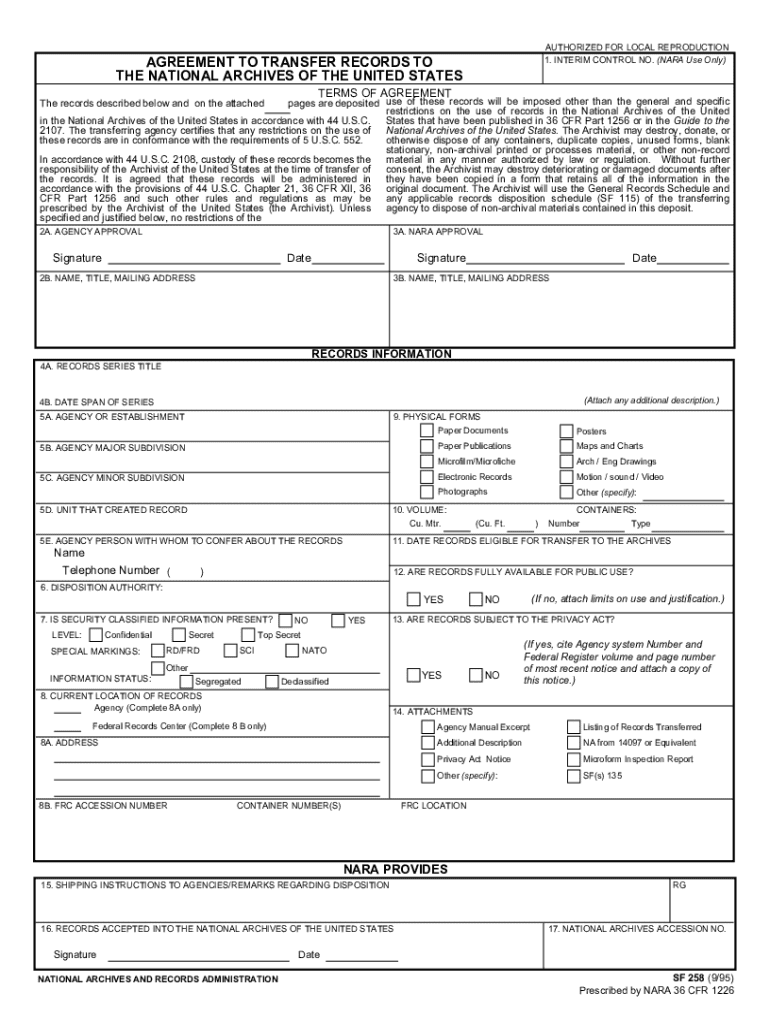
The Records Transfer Agreement is a formalized document that governs the transfer of records between parties. This agreement typically outlines the terms under which records are transferred to the National Archives of the United States. Its primary function is to ensure a seamless transition of records while safeguarding the integrity and security of the data involved.
- Types of Records: Commonly transferred records include historical documents, government files, or organizational archives. Each category has specific handling and documentation requirements.
- Standard Provisions: These agreements generally contain clauses related to data confidentiality, transfer procedures, and responsibilities of each party involved in the process.
Use Cases for Records Transfer
Organizations often use the Records Transfer Agreement when reorganizing or archiving historical data. For example, government agencies transferring records to the National Archives involve using this agreement to define expectations and responsibilities. Educational institutions may also use it to archive important scholarly records for preservation and research purposes.
How to Use the Records Transfer Agreement
Using a Records Transfer Agreement involves carefully preparing documents and ensuring proper authorization before initiating the transfer.
- Preparation of Documents: Collate all records intended for transfer, ensuring they are complete and organized.
- Authorization: Obtain necessary approvals from relevant authorities within the organization, such as legal or compliance departments.
- Agreement Execution: Have the agreement signed by representatives of both parties, ensuring all terms are clear and mutually agreed upon.
Collaboration in Execution
Many organizations engage multiple stakeholders in executing the agreement. This includes legal advisors to review terms, IT personnel to handle data security, and administrative staff to oversee logistics.
How to Obtain the Records Transfer Agreement
Requesting the Form
The Records Transfer Agreement can typically be obtained directly from the agency managing the transfer process. This may involve:
- Contacting the National Archives: Organizations intending to transfer records there should contact the archives for guidance and obtain the requisite forms.
- Utilizing Existing Templates: Many organizations have templates that can be adapted for specific transfers, particularly if they routinely engage in records transfers.
Online Accessibility
Many agencies provide digital versions of the agreement on their websites. This allows for easy access and ensures that the most current version of the document is used.
Steps to Complete the Records Transfer Agreement
Completing the Records Transfer Agreement involves several key steps and requires attention to detail to ensure compliance with all requirements.
- Details of the Transfer: Specify the nature of records and the scope of the transfer.
- Parties Involved: Clearly outline the parties involved, ensuring all contact details are accurate.
- Security Measures: Define the security protocols to be implemented during the transfer process.
- Approval and Signatures: Obtain necessary signatures from authorized personnel to finalize the agreement.
Avoiding Common Mistakes
- Incomplete Information: Ensure all sections of the agreement are filled out accurately.
- Omitting Approvals: Confirm that all necessary internal approvals are obtained before submitting the form.
Key Elements of the Records Transfer Agreement
A comprehensive Records Transfer Agreement typically includes several critical components to ensure effective management of the transfer process.
- Timeline: Outline the schedule for the transfer, including start and end dates.
- Cost Considerations: Define any financial responsibilities associated with the transfer, including potential fees.
- Responsibilities: Clearly delineate the responsibilities of each party involved in the transfer process.
Security Protocols
Security is a fundamental aspect of records transfer. The agreement should specify encryption standards, data protection measures, and access control during the transfer process.
Legal Use and Compliance
Ensuring legal compliance is crucial when using the Records Transfer Agreement. It is essential to adhere to relevant regulations and standards.
Regulations and Standards
- Federal Guidelines: Adhere to federal regulations governing the transfer of government records to the National Archives.
- Data Protection: Implement procedures that comply with data protection laws to safeguard sensitive information.
Legal Advice
Many organizations seek legal counsel to review the terms of the agreement to ensure full compliance and to avoid potential legal issues.
Penalties for Non-Compliance
Failing to comply with the terms of the Records Transfer Agreement can result in significant penalties.
- Financial Penalties: Organizations may face fines for failing to adhere to the agreement's terms.
- Administrative Consequences: Non-compliance can lead to administrative actions, including revocation of permissions to transfer future records.
Mitigating Risks
To mitigate the risk of non-compliance, organizations should conduct regular audits and reviews of their records transfer processes to ensure ongoing adherence to the agreement.
Submission and Processing Methods
The Records Transfer Agreement provides flexibility in how documents can be submitted and processed.
Submission Methods
- Online Submission: Many agencies facilitate online submission processes, ensuring quick and efficient processing.
- Mail-In Options: For those preferring traditional methods, physical submission via mail is often available.
Processing Time
Processing times can vary depending on the method of submission and the agency's workload. However, organizations are encouraged to plan for adequate lead time to facilitate a smooth transfer process.