







Definition & Purpose of Ontario Small Claims Court Defendant's Claim Form 10A
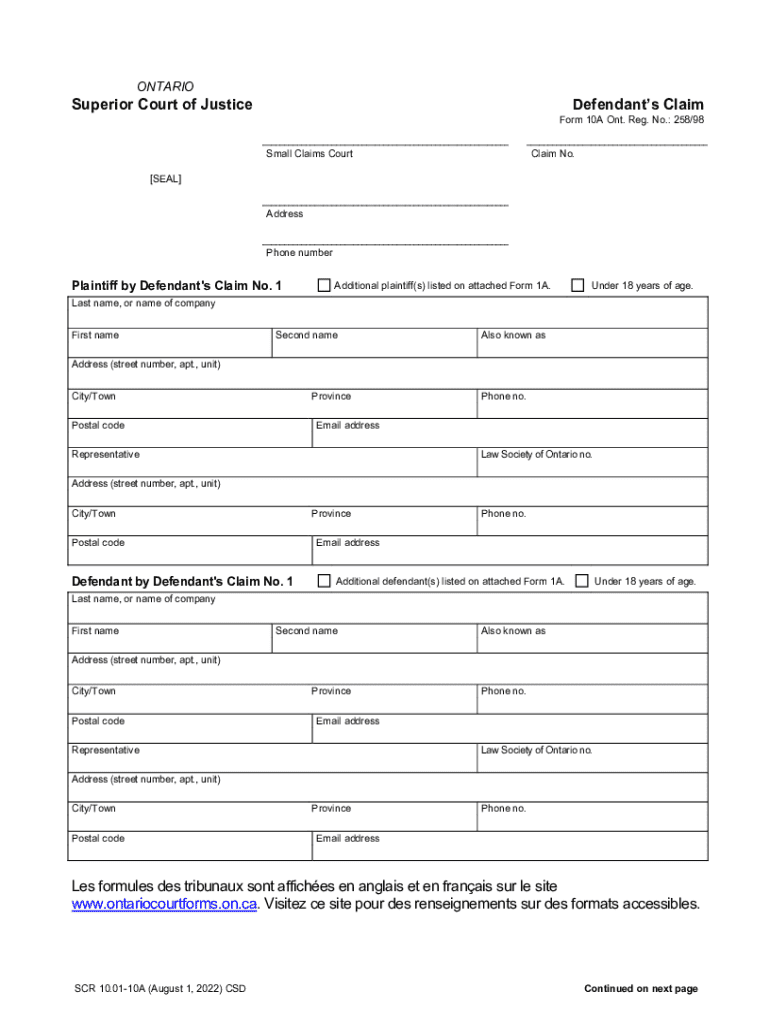
The Ontario Small Claims Court Defendant's Claim Form 10A is a legal document used primarily within the Small Claims Court system in Ontario. This form enables a defendant in a small claims proceeding to file a counterclaim against the plaintiff or introduce claims against another party involved in the legal matter. The form lays out specific details about the defendant’s claim, providing a structured method for presenting additional legal claims that relate to the initial proceeding. Understanding its use is essential for engaging in a comprehensive and legally binding resolution of disputes within the small claims framework.
Types of Claims Covered by Form 10A
- Counterclaims: When the defendant seeks to assert that the plaintiff owes them money or valuable consideration in return.
- Crossclaims: In cases where multiple defendants are involved, one defendant may use this form to claim against another defendant.
- Third-Party Claims: Used to bring in another party who is believed to be liable for part or all of the original claim.
How to Use the Ontario Small Claims Court Defendant's Claim Form 10A
Using Form 10A requires precision and a clear understanding of the defendant's claims. It typically involves the following steps:
- Identify the Parties Involved: Clearly indicate your status as the defendant and list the names and contact details for any additional parties included in your claim.
- Summarize the Basis of the Claim: Provide a concise yet comprehensive description of the facts leading to your counterclaim or third-party claim.
- Specify the Relief Sought: Clearly articulate the specific compensation or remedy you are seeking through the claim. Be precise about monetary amounts or other valuable considerations.
- Affirm Legal Basis: State the legal justification for your claim, referencing any contracts, laws, or precedents that support your position.
Example Scenarios
- Counterclaim Scenario: If a defendant believes that the plaintiff owes them money due to a breached service contract, Form 10A can formalize this claim.
- Third-Party Claim Example: If a defendant wishes to hold a subcontractor liable for faulty work that led to the plaintiff's dissatisfaction, this form facilitates that legal action.
How to Obtain the Ontario Small Claims Court Defendant's Claim Form 10A
Accessing Form 10A can be done through several channels:
- Online Download: The Ontario Court's website provides downloadable PDF versions of all necessary court forms, including Form 10A. Ensure you have an updated version to avoid processing issues.
- In-Person Pickup: Forms are also available at local court offices where small claims are filed. It is advised to call ahead to ensure availability.
- Legal Aid Clinics and Libraries: Some jurisdictions offer access to legal forms through local libraries or legal aid offices, catering to individuals without internet access.
Cost Considerations
- While the form itself might be free to download, be aware of any filing fees associated with submitting it to the court.
Steps to Complete the Ontario Small Claims Court Defendant's Claim Form 10A
Completing Form 10A involves several detailed steps, each necessitating careful documentation:
- Fill Out Party Information: Accurately enter both the plaintiff’s and the defendant’s names and addresses. This ensures clear identification of involved parties.
- Outline the Claim: In the dedicated section, provide a detailed account of the counterclaim or third-party claim facts.
- Detail the Relief Sought: Specify the exact nature of the compensation or legal remedy being pursued.
- Signature and Date: The form must be signed and dated to verify the authenticity and intent behind the counterclaim.
Tips for Accuracy
- Double-Check Information: Ensure that contact information and claim details are correct to prevent delays.
- Consult Legal Guidance: If uncertain about any sections, seek legal advice to ensure accuracy and completeness.
Legal Considerations for Using Form 10A
Understanding the legal implications of using Form 10A is critical for proper utilization. Key legal aspects include:
Responsibility Upon Filing
- Upon filing the Defendant's Claim, the defendant assumes legal responsibility for the facts presented within it. Misrepresentation or false claims can result in penalties.
Jurisdictional Limits
- Small Claims Court has a monetary limit on the claims that can be filed. Ensure that the amount sought does not exceed this threshold, which is subject to periodic adjustments.
Who Typically Uses the Ontario Small Claims Court Defendant's Claim Form 10A
Form 10A is commonly used by individuals and business entities involved in disputes that fall under the jurisdiction of the Small Claims Court. Typical users include:
- Individuals: Often involved in disputes regarding personal loans or property damage.
- Small Business Owners: Frequently utilize the form in cases of service disputes or breach of contract.
- Landlords and Tenants: Commonly engaged in claims related to rental agreements and property maintenance issues.
Understanding who uses this form can provide insight into its function and the typical legal landscape within which it operates.


Key Elements of the Ontario Small Claims Court Defendant's Claim Form 10A
Form 10A comprises several essential elements that facilitate an effective legal claim. These include:
Information Sections
- Parties Involved: Detailed fields for the names and addresses of both the original claimant and the defendant.
- Claim Details: Sections dedicated to explaining the counterclaim’s facts, supporting evidence, and the legal justification for the claim.
Additional Fields
- Document Checklist: Space provided for listing additional documents that substantiate the claim, such as receipts, contracts, or correspondence.
By comprehensively understanding each of these key elements, users of Form 10A can more effectively navigate the small claims process and ensure that their legal rights and responsibilities are fully protected.




