







Definition & Meaning
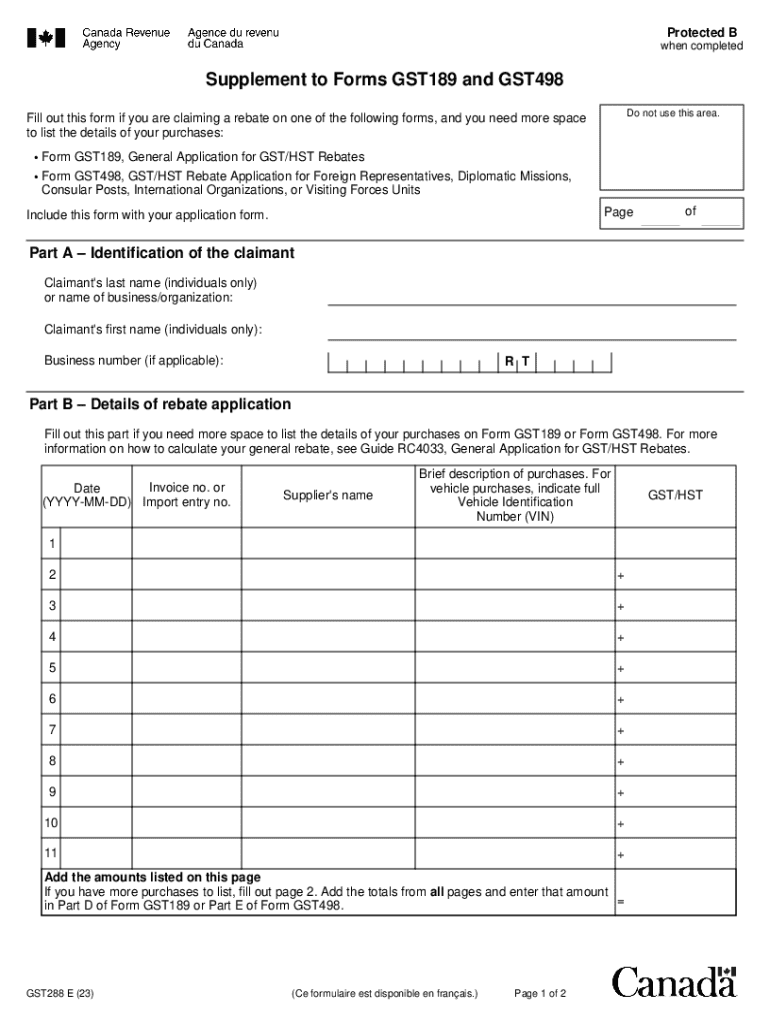
The GST288 Form Supplement for GST HST Rebate Application is an essential document tailored for individuals or entities seeking rebates under the Goods and Services Tax (GST) and Harmonized Sales Tax (HST) in the United States. This form acts as an extension to the primary rebate application forms GST189 and GST498, primarily when additional space is required to list detailed transactions. The form is designed to support applicants by capturing comprehensive information critical for rebate processing, ensuring that all relevant data is documented for accurate rebate calculations.
This supplement form plays a pivotal role in streamlining rebate applications by providing a structured format to itemize every transaction or item for which a rebate is claimed. This meticulous documentation aids tax authorities in verifying rebate claims, thus expediting approval processes.
How to Use the GST288 Form Supplement
Using the GST288 Form Supplement involves specific steps to ensure that all required information is captured accurately:
-
Identify Necessity: Determine if the GST288 Supplement is required for your application by reviewing whether the standard forms GST189 or GST498 lack sufficient space for your transactions.
-
Detailed Transaction Listing: Use the form to comprehensively list all eligible transactions or invoices under GST and HST criteria. Ensure details such as dates, transaction values, and relevant parties are included.
-
Integration with Primary Forms: Attach the completed GST288 supplement to the primary rebate application form. Ensure it is securely fastened and properly referenced within the main application.
-
Review and Verification: Double-check the entries for completeness and correctness against original invoices or purchase records to avoid errors that could delay rebate approvals.
-
Submission: Submit the form as per the acceptable methods, ensuring alignment with submission guidelines specified by the issuing authority.
Understanding these steps can help avoid processing delays and ensure a comprehensive rebate application.
Steps to Complete the GST288 Form Supplement
To effectively complete the GST288 Form Supplement, follow these step-by-step instructions:
-
Read Instructions: Begin by reviewing any guidelines or instructions provided with the form. Familiarity with the required details can aid in accurate completion.
-
Populate Fields: Start by filling out the basic identification information such as taxpayer name, identification number, and contact information.
-
List Transactions: Methodically enter each transaction that qualifies for the rebate, including specific details such as transaction date, description, and amount.
-
Categorize Appropriately: Ensure each transaction is appropriately classified under the correct rebate category, aligning with the criteria outlined by the tax authority.
-
Validate Information: Cross-reference the entered details with associated invoices and receipts. Consistencies will help avoid discrepancies during processing.
-
Organize and Attach: Once completed, organize the form along with any supplementary documents and attach them to the primary GST rebate application.
Being diligent through each step ensures compliance and facilitates a smoother rebate approval process.
Legal Use of the GST288 Form Supplement
The GST288 Form Supplement must be used legally and appropriately in accordance with U.S. tax regulations:
- Compliance with Rules: Ensure all information provided is true and accurate, as misrepresentation can lead to penalties or legal action.
- Documentation Support: Maintain a thorough record-keeping system with supporting documentation to back the claims listed on the form.
- Timely Submission: Adhere to all stated deadlines for submission to avoid complications with rebate processing or penalty assessments.
Legal adherence helps maintain the integrity of the rebate application process and fosters trust with tax authorities.
Key Elements of the GST288 Form Supplement
This supplement form contains several key elements that contribute to its function:
- Transaction Details Section: This block allows for detailed entries of each transaction pertinent to the rebate claim.
- Taxpayer Information Area: Essential identification data for the rebate claimant to establish the source of the application.
- Certification Statement: The form typically ends with a declaration or certification by the applicant that all information is correct and accurate to the best of their knowledge.
These elements ensure a comprehensive capture of necessary information for rebate validation and processing.
Examples of Using the GST288 Form Supplement
Practical applications of the GST288 Form Supplement can be seen in various scenarios:
- Large Organizations: Corporations with multiple branches needing to list numerous transactions individually due to volume.
- Contract-Based Enterprises: Companies in construction or event management with high-value, detailed purchases that exceed basic form capacities.
- Cross-Border Transactions: Businesses engaged in international transactions requiring special entries to comply with both local GST and HST dynamics.
Real-world use cases underscore the versatility of this form in accommodating expansive rebate claims.
Form Submission Methods
Applicants have several options when it comes to submitting the GST288 Form Supplement:
- Online Submission: Preferred for speed and convenience, providing a digital receipt of application.
- Mail Submission: Suitable for those preferring physical documentation, though it may involve longer processing times.
- In-Person Delivery: Available at designated offices, offering direct submission albeit requiring physical presence.
Choosing the appropriate submission method can significantly affect processing times and the subsequent receipt of rebates.
Penalties for Non-Compliance
Understanding the penalties for non-compliance with the GST288 Form Supplement's requirements is critical. Possible repercussions include:
- Fines and Penalties: Monetary fines for incomplete or inaccurate submissions that mislead authorities.
- Application Rejection: Incomplete or improperly filled forms may lead to immediate rejection of rebate applications.
- Legal Consequences: Severe cases of fraud or misrepresentation could lead to legal action from tax authorities.
Being aware of these penalties emphasizes the importance of accuracy and diligence in the rebate application process.




