







Definition & Meaning
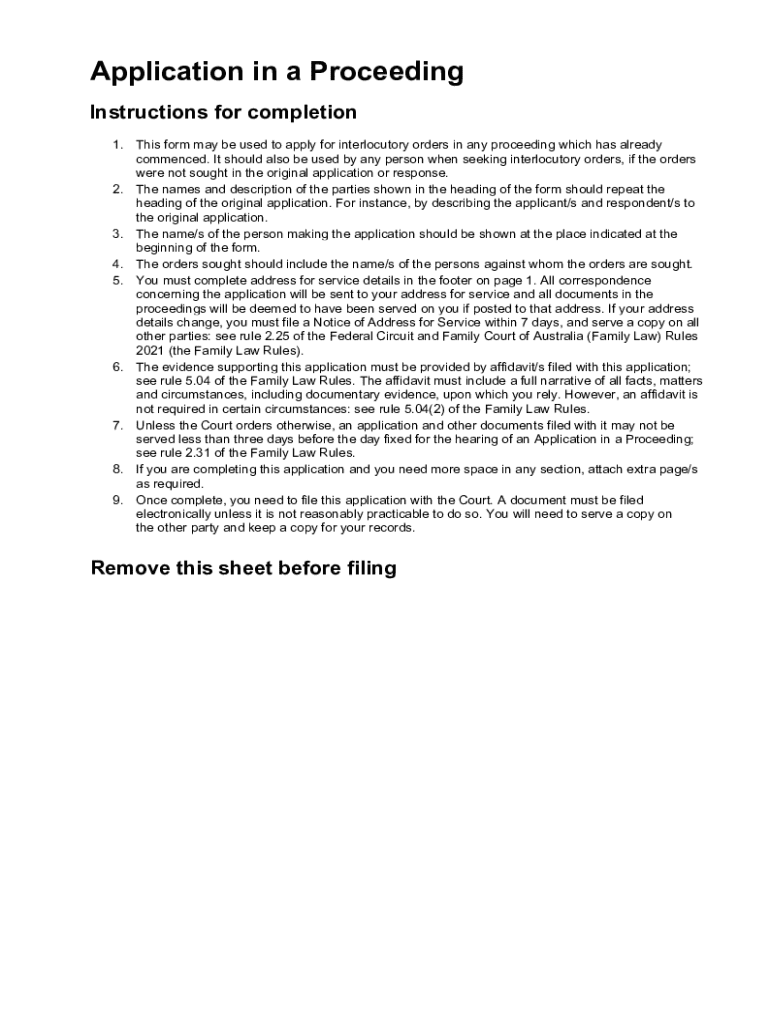
The term "Application in a Proceeding" refers to a legal document that is used to formally request a court order or relief in a legal case that is already underway. This application can involve various motions such as interlocutory orders, which address specific legal issues during the course of a proceeding. It is a critical part of the judicial process, allowing parties to seek immediate court intervention on specific matters before the final resolution of the case.
Examples of Applications
- Interlocutory injunction: A temporary order to protect interests until a final decision is made.
- Motion to dismiss: A request to terminate the proceeding on specific legal grounds.
- Application for interim costs: A request for financial support to continue the legal process.
Steps to Complete the Application in a Proceeding
Completing an "Application in a Proceeding" involves several precise steps to ensure accuracy and compliance with legal standards.
- Identify the Need: Determine if your situation requires an application and what type of order is needed.
- Gather Information: Collect all relevant case facts, legal grounds, and supporting evidence.
- Complete the Form: Accurately fill out your application, including applicant details, case information, and the requested order.
- Add Supporting Documentation: Attach relevant documents such as affidavits, statutory declarations, and evidence.
- Review and Verify: Ensure all information is correct and complies with court rules.
- File the Application: Submit the application to the appropriate court registry through the specified method, such as electronic filing or in-person submission.
Practical Tips
- Consult legal guidance for complex applications.
- Verify requirements and fees with the court.
- Use clear and concise language to improve comprehension.
Important Terms Related to Application in a Proceeding
Understanding the terminology associated with an "Application in a Proceeding" is essential for clarity and proper execution.
- Interlocutory Order: Temporary court order issued during proceedings.
- Affidavit: A written statement confirmed by oath for use as evidence in court.
- Motion: A formal request made to a judge for an order or judgment.
- Petitioner: The individual or party filing the application.
Clarification Examples
- Petition: Used interchangeably with application in certain courts.
- Respondent: The party opposing the application in a proceeding.
Legal Use of the Application in a Proceeding
This form is utilized within the legal framework to make formal requests related to ongoing proceedings. Its use is tightly regulated and follows specific procedural rules and legal precedents.
Legal Context Scenarios
- Domestic Relations: An application for custody arrangements during divorce proceedings.
- Commercial Litigation: A request for temporary cessation of business operations during a dispute.
Key Elements of the Application in a Proceeding
An effective application includes comprehensive and accurate information that forms the basis for the court to make a decision.
- Parties Involved: Specific details about the applicant and the respondent.
- Nature of the Order: Clearly outlined type of relief or order requested.
- Factual Background: A concise summary of relevant facts necessitating the application.
- Legal Grounds: Base the request on statutory provisions or case law.
- Supporting Documentation: Includes affidavits, exhibits, or any pertinent data substantiating the application.
Typical Scenarios
- Dispute resolution: Necessitating swift judicial intervention.
- Injunctions: Requires immediate court attention to prevent irreparable harm.
State-Specific Rules for the Application in a Proceeding
Each U.S. state may have differing rules and requirements regarding applications in proceedings, making it essential to understand localized legal nuances.
Examples of State Variations
- Filing Procedures: Differences in electronic submission systems or in-person mandates.
- Templates and Formats: Distinct form templates or statutory forms required by state courts.
- Jurisdictional Limits: Variations in the powers of state courts to issue certain orders.
How to Obtain the Application in a Proceeding
Accessing the application form involves a straightforward process, tailored to meet the procedural norms of specific jurisdictions.
- Online Portals: Many state courts provide downloadable forms via their official websites.
- Local Court Offices: Paper copies are often available at court registries.
- Legal Assistance Services: Attorneys can provide specific forms as part of legal representation.
Additional Information
- Always verify that the form version is up-to-date and compliant with current legal standards.
- Look for state-specific guides to assist with correct completion.
Filing Deadlines / Important Dates
Applications in proceedings have strict deadlines that must be adhered to, as missing these can critically impact the case.
Timely Filing
- Notice Requirements: Ensure adequate notice is provided to all parties before filing.
- Specific Deadlines: Assess if the application needs to be filed within a set number of days as dictated by court rules.
- Hearing Schedules: Align your filing with scheduled hearings to meet all court protocols.




