







Definition & Meaning of the DC5-166 Donation Form
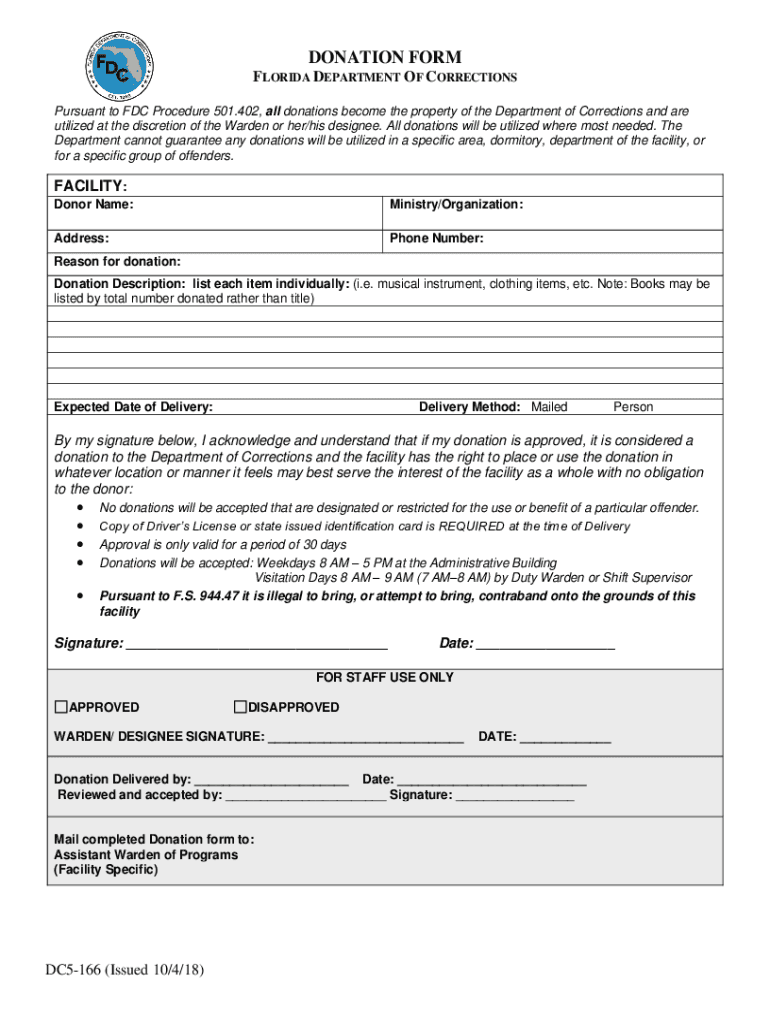
The DC5-166 Donation Form (Issued 10 4 18) is an official document utilized by the Florida Department of Corrections. This form is specifically designed for individuals and organizations that wish to make charitable contributions to the department. Understanding its purpose is paramount for potential donors interested in supporting correctional facilities within Florida.
Key Characteristics
- Ownership of Donations: Once a donation is made, it becomes the property of the Florida Department of Corrections. The use of the donated items or funds is determined solely by the Warden, who assesses needs based on institutional policies and regulations.
- Restrictions on Donations: Donors cannot designate specific offenders or provide donations intended for only selected individuals. This policy ensures that all contributions are distributed equitably and according to institutional guidelines.
- Legal Framework: The form includes certain disclaimers outlining how donations may be used and the limitations imposed by facility regulations. This transparency is crucial in maintaining compliance with both state and federal guidelines regarding charitable contributions.
Steps to Complete the DC5-166 Donation Form
Filling out the DC5-166 Donation Form requires specific information to be accurately reported by the donor. Properly completing this form is essential to ensure donations are processed without delays.
Step-by-Step Guide
-
Donor Information: The form will request the donor’s personal or organizational information, including name, address, and contact details. This information is vital for communication and any necessary follow-ups regarding the donation.
-
Donation Details: Here, donors must describe the nature of the donation. This section should specify whether the contribution is monetary or an in-kind gift (e.g., books, educational materials, toiletries). Accurate descriptions help the department assess the suitability of the gifts.
-
Value Assessment: Donors may be required to estimate the value of their contributions. This valuation can assist in fiscal planning and managing the department's resources more effectively.
-
Signatures: Finalizing the form will necessitate signatures from the donor and potentially a witness, depending on the form's requirements. These signatures serve to authenticate the donation and ensure all parties agree to the terms.
-
Submission: After completing the form, it must be submitted as outlined in the instructions. Submission can occur via mail, electronically (if allowed), or directly in person at designated offices.
Key Elements of the DC5-166 Donation Form
Understanding the primary components of the DC5-166 Donation Form is essential for any donor looking to contribute to the Florida Department of Corrections. Key elements ensure clarity and compliance throughout the donation process.
Core Components
- Donation Type: Clearly categorized sections for monetary and in-kind donations allow donors to choose the appropriate option.
- Contact Information: Accurate contact information is important for follow-up communications and acknowledgment of donations.
- Legal Disclaimers: Sections detailing the legal disclaimers and restrictions help protect all parties involved.
- Acknowledgment of Terms: This section requires donors to confirm understanding of the conditions under which the donation will be made.
Legal Use of the DC5-166 Donation Form
The legal framework surrounding the DC5-166 Donation Form is built to uphold ethical and regulatory standards in the donation process. Understanding these legal aspects is crucial for both donors and the Florida Department of Corrections.
Legal Compliance
- Adherence to Regulations: Donations made through this form must comply with Florida’s regulations regarding charitable contributions. This includes restrictions on the types of items that can be donated and the requirement for donor transparency.
- Audit Trail: Maintaining accurate records of donations through the use of the DC5-166 ensures an audit trail, which is essential for accountability and legal compliance.
Who Typically Uses the DC5-166 Donation Form
The DC5-166 Donation Form is commonly utilized by various groups looking to support the Florida Department of Corrections. Understanding the typical users can provide insight into the form’s broader purpose.


Target Users
- Individuals: Concerned citizens or community members interested in supporting correctional facilities.
- Non-Profit Organizations: Charitable groups seeking to make bulk donations of resources or funds.
- Business Entities: Companies and corporations looking for opportunities to give back to the community through philanthropic efforts.
Important Terms Related to the DC5-166 Donation Form
Familiarity with specific terminology associated with the DC5-166 Donation Form can enhance the understanding of the donation process.
Key Terms to Know
- In-Kind Donation: Refers to non-monetary contributions such as goods or services provided to the Florida Department of Corrections.
- Warden Discretion: The authority held by facility wardens to determine how donations are allocated and utilized within their institutions.
- Tax Deductibility: While donations made through this form may be eligible for tax deductions, it is important for donors to consult current IRS guidelines to ensure compliance.
Examples of Using the DC5-166 Donation Form
Applying the DC5-166 Donation Form in practical situations showcases its utility and importance in facilitating donations to the Florida Department of Corrections.
Scenarios of Utilization
- Individual Donations: A local resident completes the form to donate books for educational programming within a correctional facility. Following proper submission, these resources are evaluated and distributed by the Warden.
- Organizational Contributions: A non-profit organization submits the form with items collected during a fundraising event, such as toiletries and clothing for inmates, adhering to facility restrictions.
Conclusion
The DC5-166 Donation Form serves a critical role in the donation process for the Florida Department of Corrections. Understanding its components, usage, legal implications, and the types of individuals and organizations that typically utilize it can lead to more effective and meaningful contributions.




