






Definition and Purpose of Form MT-903
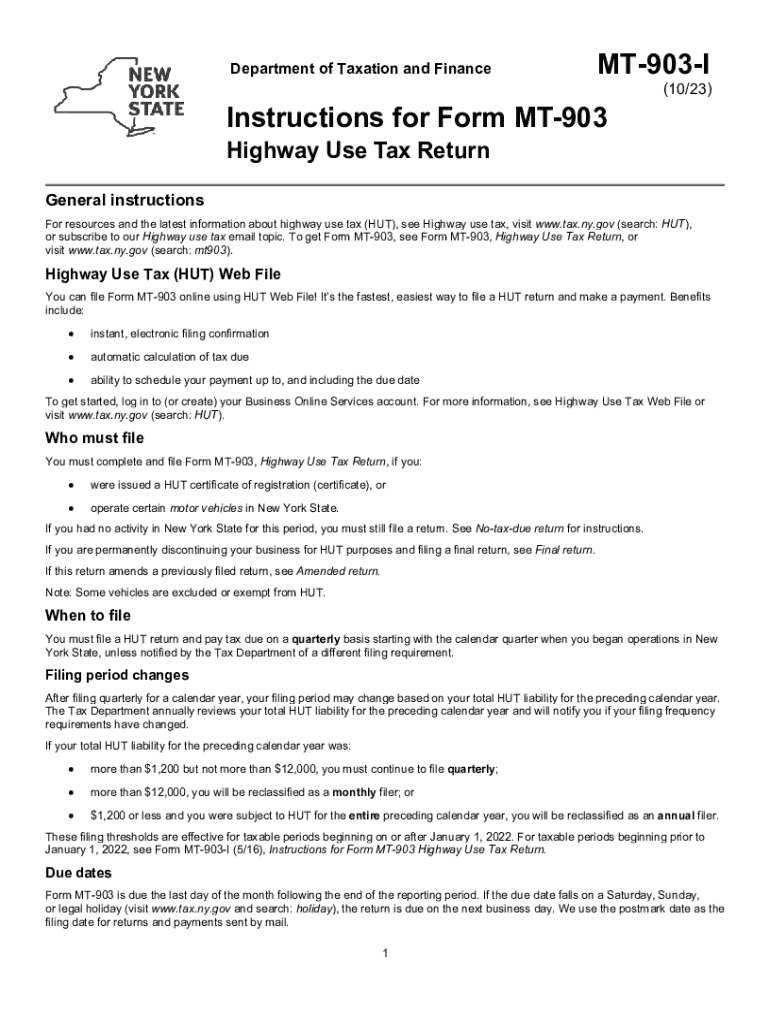
Form MT-903, known as the Highway Use Tax Return, is utilized by businesses to report and pay the highway use tax in New York State. This tax applies primarily to motor carriers operating certain vehicles on state highways. The form is critical for ensuring compliance with state tax obligations related to road usage.
- Who Needs to File: Businesses operating vehicles with a gross weight over 18,000 pounds in New York must complete Form MT-903.
- Tax Objective: The tax collected supports the maintenance and improvement of the state’s highway infrastructure.
How to Use the Instructions for Form MT-903
The instructions for Form MT-903 guide taxpayers through the process of completing the form accurately. This resource aids in understanding how to calculate the tax due and avoid errors.
- Step-by-Step Guidance: Each section of the form corresponds to a part in the instructions, providing line-by-line details.
- Calculation Assistance: The instructions clarify how to compute the taxable miles and apply the appropriate tax rate.
Common Mistakes to Avoid
Inaccuracies in mileage calculation and tax rate application are frequent errors. The instructions emphasize double-checking all numbers for precision and comprehending the vehicle-specific tax rates.
How to Obtain the Instructions for Form MT-903
Instructions for Form MT-903 are readily accessible online through the New York State Department of Taxation and Finance website. They may also be available in physical form at local tax offices.
- Online Access: Digital versions can be downloaded directly, ensuring you have the latest updates.
- Physical Copies: Some businesses may prefer obtaining hard copies for record-keeping.
Steps to Complete Form MT-903
Completing Form MT-903 involves several key steps detailed in the instructions. Accurate completion ensures compliance and prevents potential penalties.
- Gather Mileage Data: Collect information on all miles traveled on New York highways by each qualifying vehicle.
- Determine Taxable Miles: Subtract exempt miles to calculate taxable mileage.
- Apply Tax Rate: Use the instructions to identify the correct tax rate for your vehicle category.
- Calculate Tax Due: Multiply taxable miles by the applicable rate.
- Submit Form: File the form and remit payment via the methods outlined in the instructions.
Key Elements of the Instructions
The instructions for Form MT-903 include several critical components that provide clarity on filing requirements.
- Definitions and Terms: The document defines terms like "taxable miles" and "qualified vehicles" to eliminate confusion.
- Exemption Criteria: Lists specific exemption criteria to help determine if any mileage can be excluded.
- Record-Keeping Requirements: Details the documentation that must be maintained, such as trip sheets and tax receipts.
Important Dates and Filing Deadlines
Timely submission of Form MT-903 is crucial to avoid penalties and interest charges. The instructions clearly outline the appropriate filing schedule.
- Quarterly Filing: Typically required to file quarterly, with specific due dates listed for each period.
- Extensions and Amendments: Guidance on how to request an extension or amend a filed return if necessary.
Penalties for Non-Compliance with Form MT-903
Failure to comply with the filing requirements of Form MT-903 can result in significant penalties.
- Late Filing Penalties: Fees imposed for returns filed past the deadline.
- Penalty for Underreporting: Additional charges may apply if mileage is inaccurately reported.
Avoiding Penalties
Adhering to the instructions and maintaining detailed records are key strategies to avoid incurring fines.
Software Compatibility and Digital Filing Options
The instructions highlight compatibility with various tax software to facilitate an easier filing process.
- Compatible Platforms: Many users employ software like TurboTax or QuickBooks, which may support integration with Form MT-903.
- Electronic Filing: The form can often be submitted electronically, streamlining the process compared to traditional methods.
Benefits of Digital Filing
Digital submission offers advantages in terms of speed, convenience, and confirmation of receipt, providing peace of mind that the return has been filed correctly.
Required Documents and Supporting Evidence
Taxpayers must have supportive documentation when completing Form MT-903, as outlined in the instructions.
- Vehicle Records: Information on vehicle registration and any leased equipment.
- Mileage Records: Detailed logs of all miles driven, both taxable and exempt.
Importance of Documentation
Having the required documents readily available reduces errors and ensures the form is filled out correctly, minimizing the risk of audits or disputes.