






Definition & Meaning
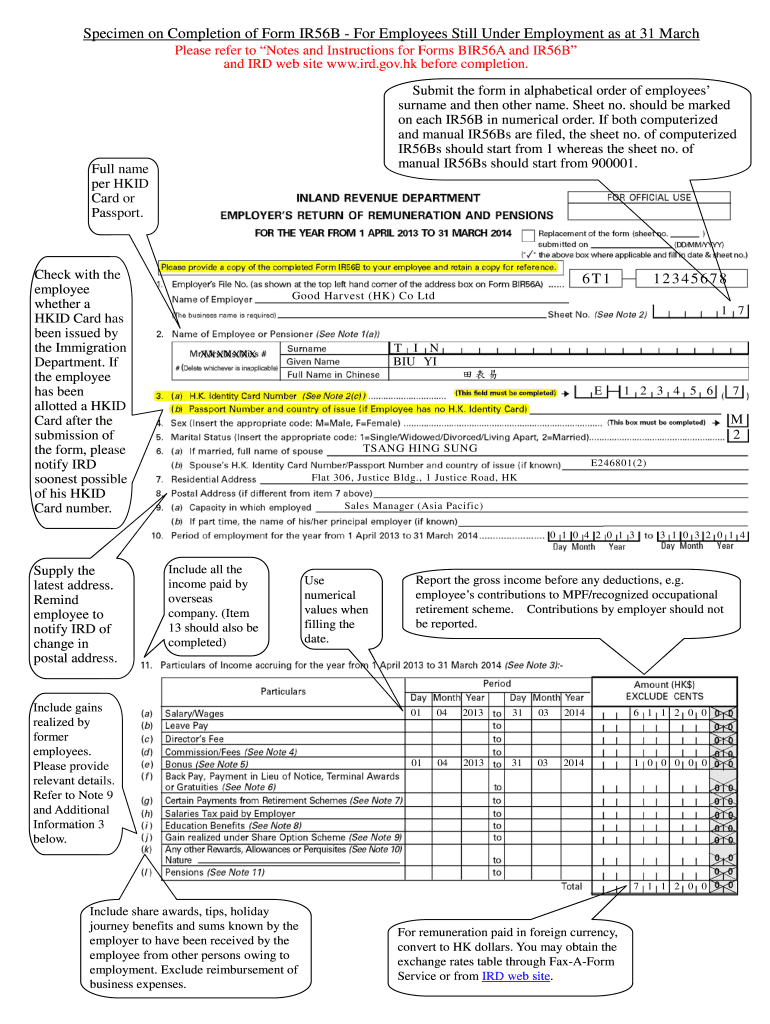
The IR56B Form for Employees is an annual tax form issued by employers to report the income and allowance details of their employees to the Inland Revenue Department (IRD) of Hong Kong. It is essential for calculating employees' salaries, bonuses, and assesses tax liabilities accurately. The form plays a crucial role in the tax reporting process by ensuring that all employee remuneration details are captured comprehensively and submitted for tax purposes. Understanding the IR56B is vital for both employers and employees, as it affects the tax assessment of all parties involved.
How to Use the IR56B Form for Employees
To utilize the IR56B Form effectively, employers must gather precise information on each employee’s earnings within the fiscal year. Begin with collating data on total income, including salaries, wages, leave pay, and any other benefits. Ensure that all relevant categories, such as bonuses, housing allowances, and fringe benefits, are included accurately. The form should also consider deductions such as pension contributions or donations if applicable. Employers need to verify all information before submitting to the IRD to avoid discrepancies that could lead to tax complications or penalties.
Steps to Complete the IR56B Form for Employees
- Gather Employee Information: Collect detailed income and benefits information for each employee over the fiscal year.
- Enter Basic Information: Begin by filling out the employee's personal data, including their name, identification number, and job title.
- Input Remuneration Details: Clearly outline all types of earnings the employee received, ensuring accuracy to avoid legal or financial issues.
- Review with Employee: Consult with each employee to verify that all income details are correct and agreed upon.
- Finalize and Submit: After ensuring all entries are complete and accurate, submit the form electronically through the IRD's online portal or via mail before the stipulated deadline.
Who Typically Uses the IR56B Form for Employees
Typically, employers based in Hong Kong use the IR56B Form to report the income details of employees under their payroll to the IRD. The form is primarily utilized by human resources departments, payroll specialists, and accounting teams responsible for handling company taxation and employee remuneration reporting. Employees do not directly fill out this form but may need to verify their financial details as reported by their employers.


Filing Deadlines / Important Dates
The IR56B Form must generally be submitted to the Inland Revenue Department shortly after the end of the tax year, which is usually around the end of April each year. Employers should be aware of these deadlines to ensure timely submission and avoid possible penalties. It is advisable to double-check submission dates each tax year, as any changes in legislation or department policy could affect deadlines.
Key Elements of the IR56B Form for Employees
- Employee's Personal Information: Includes name, identification number, and contact details.
- Income Details: Comprehensive report of annual income, including wages, bonuses, and allowances.
- Benefits and Deductions: Accurate listing of housing, travel, or any other work-related benefits received, as well as mandatory pension contributions.
- Employer Signature: Affirmation that the details provided are true to the best of the employer's knowledge, adding a layer of legal responsibility.
Legal Use of the IR56B Form for Employees
The IR56B Form serves as a legal document used by employers to report employee income to the IRD, which is crucial for ensuring compliance with Hong Kong's tax regulations. It must be filled accurately and truthfully to preempt potential legal action or financial penalties. Employers must ensure the security of employee data in accordance with privacy laws during the handling and submission of this form.
Penalties for Non-Compliance
Failing to submit the IR56B Form for Employees in a timely manner can result in penalties from the IRD. These penalties might include fines or further investigations, potentially leading to more severe legal repercussions. It is crucial for employers to adhere to all submission guidelines, including deadlines and accuracy requirements, to avoid such outcomes.