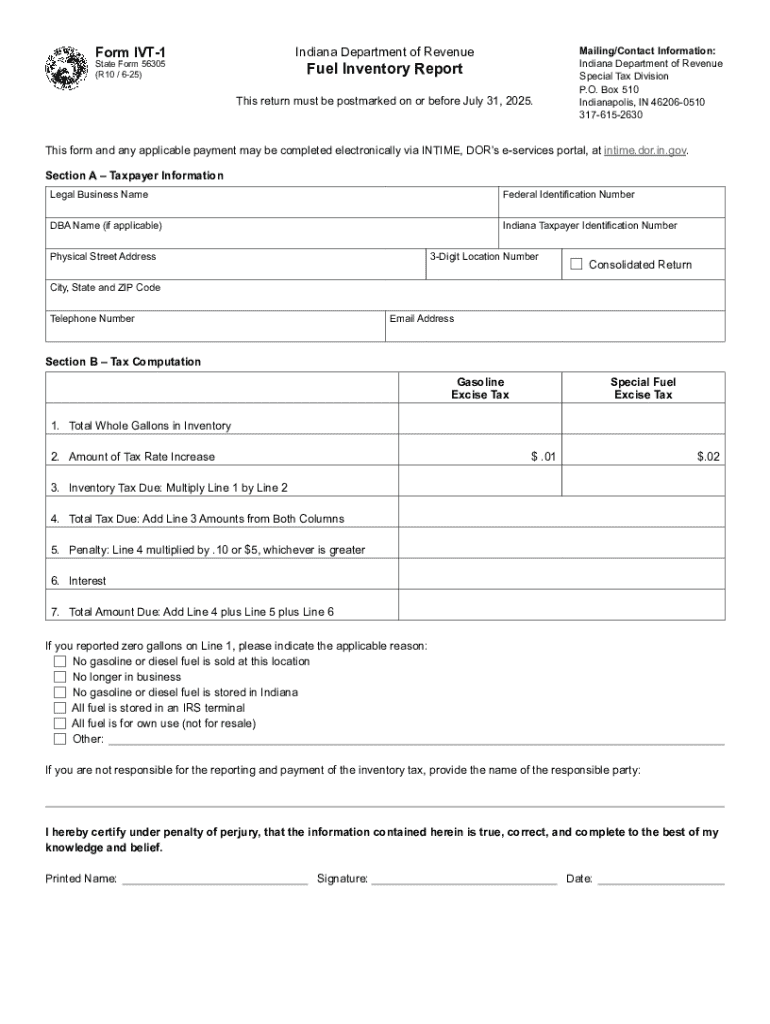







Definition & Importance of the Indiana Fuel Inventory Report Form IVT-1
The Indiana Fuel Inventory Report Form IVT-1, commonly known as Form IVT-1, is a critical document utilized by businesses and individuals involved in the distribution of fuel within the state of Indiana. It serves as a formal report to the Indiana Department of Revenue for documenting fuel inventory levels and transactions. This form is part of the state's regulatory framework to monitor and manage fuel distribution, ensuring compliance with state taxation and environmental regulations.
- Purpose: The primary function of Form IVT-1 is to provide the state with accurate records of fuel inventories, facilitating tax collection and regulatory oversight.
- Recipients: Typically used by fuel distributors, wholesalers, and retailers operating within Indiana.
Understanding the purpose and utility of this form is essential for entities in the fuel industry to remain compliant with Indiana state laws.
How to Use the Indiana Fuel Inventory Report Form IVT-1
Using Form IVT-1 involves several steps centered around documenting and reporting accurate inventory data.
- Collecting Data: Begin by gathering detailed records of your fuel inventory, including quantities at the start and end of a reporting period.
- Completing the Form: Enter all relevant data into the form, ensuring accuracy in the reported figures. This includes details of fuel received, sold, and remaining in storage.
- Review: Double-check entries for errors or discrepancies, as incorrect information might lead to compliance issues.
- Submission: Submit the completed form to the Indiana Department of Revenue by the specified deadline.
Ensuring timely and accurate completion of Form IVT-1 helps avoid penalties and maintains good standing with state authorities.
Steps to Complete the Indiana Fuel Inventory Report Form IVT-1
Successfully completing Form IVT-1 requires attention to detail and adherence to procedural steps:
- Gather Necessary Information: Compile data on beginning and ending inventories and fuel transactions.
- Accurate Data Entry: Fill in the sections of the form with precise data, avoiding estimates.
- Validation: Ensure all calculations are correct and confirm that totals reconcile with your records.
- Sign and Date: The person responsible for the inventory must sign and date the form, affirming the accuracy of the data.
- File Submission: Deliver the form by mail or electronically as permitted by the Indiana Department of Revenue by the relevant deadline.
Following these steps ensures the form is completed correctly and submitted without issues.
Key Elements of the Indiana Fuel Inventory Report Form IVT-1
Form IVT-1 comprises several critical elements that must be completed accurately:
- Identification Information: Includes business name, address, and tax identification number.
- Inventory Details: Start and end inventory levels, incoming and outgoing fuel quantities.
- Transaction Records: Details of fuel purchased and sold during the reporting period.
- Certification: A declaration of accuracy and completeness, requiring a signature from the responsible party.
Each section must be filled with precise and honest data to prevent compliance issues and facilitate state tax assessments.
Filing Deadlines and Important Dates
Timely filing of Form IVT-1 is crucial to avoid penalties:
- Deadline: Form IVT-1 must be postmarked or submitted to the Indiana Department of Revenue by July 31 each year.
- Notification: Businesses should note the deadline in their fiscal calendars to ensure on-time compliance.
- Late Filing Penalties: Failing to submit by the due date can result in fines and additional scrutiny from tax authorities.
Meeting submission deadlines helps maintain compliance and avoids unnecessary penalties.
Who Typically Uses the Indiana Fuel Inventory Report Form IVT-1
Form IVT-1 is primarily used by:
- Fuel Distributors: Entities that handle large quantities of fuel across multiple locations.
- Wholesalers: Businesses involved in selling fuel to retail establishments.
- Retailers: Stores and stations selling fuel directly to consumers who need to report inventory levels.
These entities utilize Form IVT-1 to ensure regulatory compliance with Indiana's tax laws and regulations.


Penalties for Non-Compliance
Failure to adequately complete and submit Form IVT-1 can result in:
- Fines: Financial penalties may be imposed for incorrect or late submissions.
- Legal Action: Persistent non-compliance might lead to further legal implications and potential business disruptions.
- Increased Scrutiny: Non-compliance increases the likelihood of audits or additional monitoring by state authorities.
Maintaining compliance with Form IVT-1 requirements is essential to avoid these negative consequences.
Form Submission Methods (Online / Mail / In-Person)
Form IVT-1 can be submitted through several channels:
- Mail: Traditional submission through postal services, requiring enough time for delivery by the deadline.
- Online: Electronic submissions are available for more streamlined processing and confirmation.
- In-Person: Direct delivery to designated state offices, if applicable, for immediate acknowledgment.
Choosing the most efficient submission method ensures timely and traceable delivery to state authorities.