






Definition & Meaning
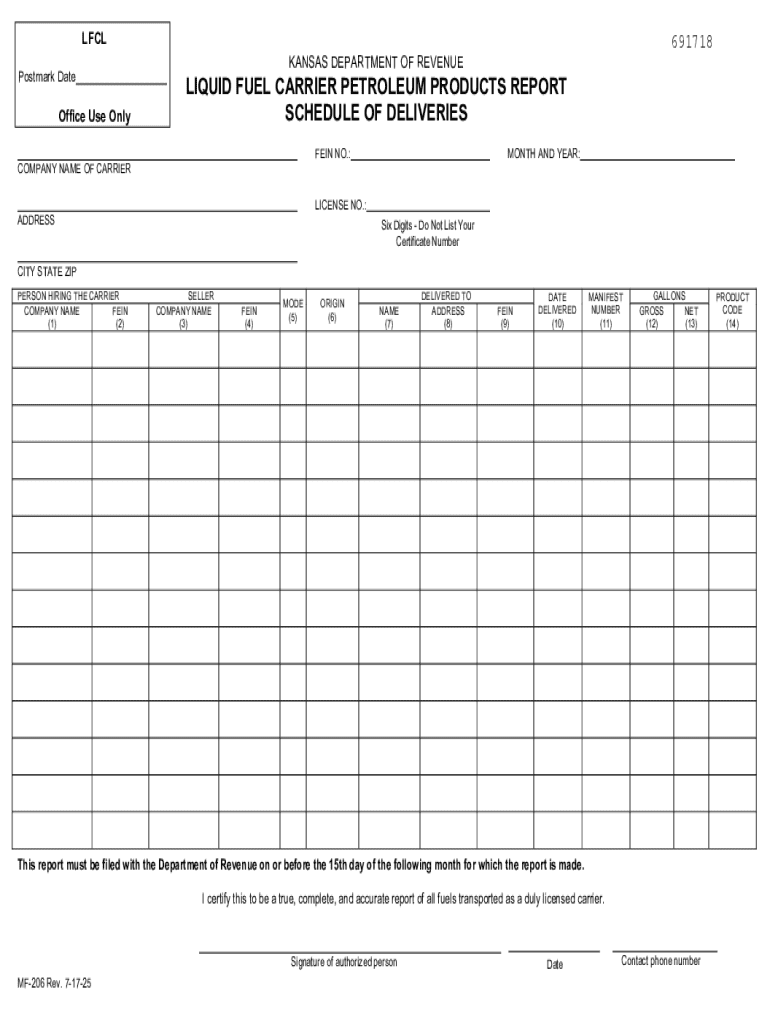
The Kansas Liquid Fuel Carrier Petroleum Products Report is a regulatory document used to track the transportation of petroleum products within the state. Primarily utilized by carriers transporting liquid fuels, the report ensures compliance with state regulations and helps facilitate tax calculations for transported goods. It provides detailed records of deliveries, which are essential for auditing and verifying the legitimacy and quantities of fuel transported by licensed carriers.
Core Functions
- Tracking Deliveries: The report logs the movement of petroleum products within Kansas, detailing the volume and type of fuel transported.
- Regulatory Compliance: Carriers use the report to adhere to the Kansas Department of Revenue's regulations.
- Taxation Reference: Information from the report is used in calculating taxes based on the quantity of fuel transported.
Steps to Complete the Kansas Liquid Fuel Carrier Petroleum Products Report
Completing the Kansas Liquid Fuel Carrier Petroleum Products Report involves a series of systematic steps to ensure accuracy and compliance. Here's a breakdown:
- Gather Information: Compile all necessary details regarding the fuel deliveries for the reporting period, including volume, type, origin, and destination.
- Enter Carrier Details: Fill in the carrier name and license number at the top of the form.
- Detail the Deliveries: Record each delivery's specific data, such as delivery dates and product types, in the report's schedule of deliveries section.
- Review and Verify: Double-check all entries for accuracy, ensuring that the reported data matches your internal records.
- Submit the Report: File the completed form to the Kansas Department of Revenue by the due date.
Common Mistakes to Avoid
- Incorrect Information: Ensure that all details entered are accurate to avoid penalties or additional information requests.
- Missing Data: All required fields must be filled out to avoid delays in processing or potential fines.
Important Terms Related to Kansas Liquid Fuel Carrier Petroleum Products Report
Understanding key terminology is vital for accurate completion of the report. Here are some important terms:
- Carrier License: A unique identifier issued by the state to legal fuel carriers.
- Delivery Schedule: A detailed breakdown of shipments transported within the reporting period.
- FEIN (Federal Employer Identification Number): Used to identify the business entity responsible for the fuel transportation.
Clarification of Terms
- FEIN: Similar to a social security number for businesses, used in official documentation and reporting.
- Schedule of Deliveries: Lists each delivery with specifics including product type and quantity.
Legal Use of the Kansas Liquid Fuel Carrier Petroleum Products Report
The report serves several legal purposes, ensuring carriers comply with state and federal guidelines concerning fuel transportation. It also offers a legal framework for levying transportation taxes and verifying the fuel volume reported by carriers.
Legal Responsibilities
- Reporting Accuracy: Carriers are legally responsible for ensuring the report's accuracy and thoroughness.
- Compliance Evidence: The document serves as proof of compliance in the case of audits or inspections.
State-Specific Rules for the Kansas Liquid Fuel Carrier Petroleum Products Report
Kansas has specific regulations regarding liquid fuel transportation which necessitates precise documentation. Carriers must be aware of state-specific rules that govern the form's completion.
Key Regulations
- Reporting Thresholds: Carriers must report all fuel quantities exceeding state-specified limits.
- Submission Deadlines: Reports must align with state-defined deadlines to prevent penalties.
Filing Deadlines / Important Dates
Timely submission of the Kansas Liquid Fuel Carrier Petroleum Products Report is crucial. Carriers should be familiar with the state-specific deadlines to ensure compliance.
Typical Deadlines
- Monthly Reporting: For most carriers, reports are due monthly, aligning with the monthly collection cycle for fuel taxes.
- Specified Date: Ensure submissions are made by the last business day of the month following the reporting period.
Penalties for Non-Compliance
Failure to comply with reporting requirements can result in significant penalties. Understanding these consequences is essential for carriers.
Common Penalties
- Fines: Monetary fines for late or inaccurately filed reports.
- License Revocation: Persistent non-compliance may lead to the revocation of carrier licenses, effectively halting operations.
Software Compatibility (TurboTax, QuickBooks, etc.)
Many carriers use software tools to streamline the completion and submission of the Kansas Liquid Fuel Carrier Petroleum Products Report. Compatibility with popular accounting software can simplify this process.
Compatible Software
- QuickBooks: Facilitates data management and report generation for easy transfer of information to the official form.
- TurboTax: Offers modules for businesses that deal with fuel taxes, providing templates and guidelines for compliant submissions.
Utilizing these compatible software options not only ensures compliance but also enhances efficiency through automation and integration with existing business processes.