







Definition & Meaning
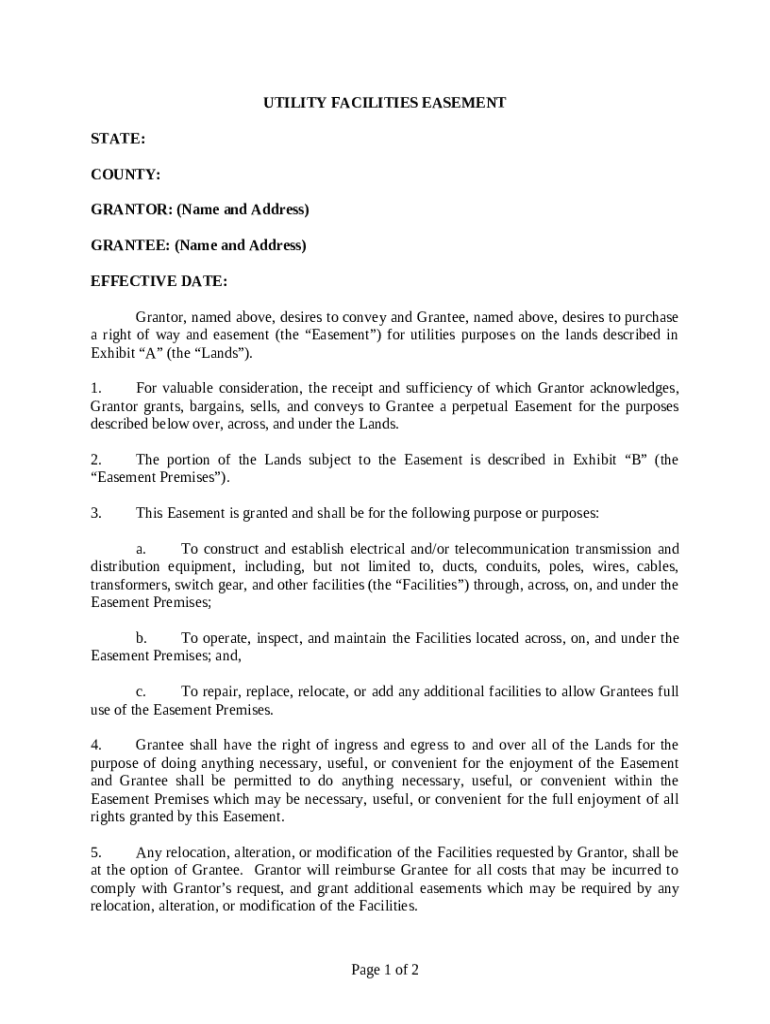
A Utility Facilities Easement is a legal right granted by a property owner, known as the Grantor, to another party, the Grantee, allowing the use of a specified portion of their land for utility purposes. This includes the installation, maintenance, and operation of utility facilities such as water pipes, electrical lines, and communication cables. The easement ensures that utility companies can access the land to provide essential services, while the property owner retains ownership of the land.
How to Use the Utility Facilities Easement
Using a Utility Facilities Easement involves understanding the specific rights and restrictions outlined in the easement agreement. The Grantee can install, repair, and maintain utility infrastructure within the easement boundaries. However, they must adhere to any conditions imposed by the Grantor, such as limiting work to specified hours or notifying them before accessing the land. The Grantor retains the right to use their land in ways that do not interfere with the easement's purpose.
How to Obtain the Utility Facilities Easement
Obtaining a Utility Facilities Easement typically involves negotiations between the property owner and the entity needing the easement, often a utility company. The process begins with a proposal outlining the easement's purpose and scope. Both parties must agree on terms, including compensation to the property owner if applicable. Once agreed, the easement is documented in a legal agreement. This agreement is usually recorded in the local land records office to ensure it is legally enforceable.
Steps to Complete the Utility Facilities Easement
- Identify the Need: Determine the necessity for a utility easement based on infrastructure requirements.
- Contact the Property Owner: Engage with the property owner to discuss the easement needs and propose terms.
- Negotiate Terms: Agree on the easement's scope, duration, and any compensation or conditions.
- Draft the Agreement: Create a legal document detailing the agreed terms, including the rights of both parties.
- Legal Review: Have the agreement reviewed by legal professionals to ensure compliance with local laws.
- Sign and Record: Both parties sign the agreement, which is then recorded with the appropriate local authority.
Key Elements of the Utility Facilities Easement
- Description of Easement Area: Detailed description of the land portion affected by the easement, including exact boundaries.
- Rights Granted: Specific rights granted to the Grantee, like access and maintenance permissions.
- Restrictions: Limitations imposed on both parties to ensure non-interference with each other's land use.
- Compensation: Any financial or non-financial compensation agreed upon for granting the easement.
- Duration: The time period for which the easement is valid, whether perpetual or for a defined term.
Important Terms Related to Utility Facilities Easement
- Grantor: The property owner granting the easement.
- Grantee: The party receiving the easement rights, usually a utility company.
- Right-of-Way: The right to pass through a property, often used interchangeably with easement.
- Permitted Uses: Activities allowed under the easement, such as installation or maintenance work.
- Non-exclusivity: Clause indicating that the easement does not grant exclusive use of the land to the Grantee.
Legal Use of the Utility Facilities Easement
The legal use of a Utility Facilities Easement is governed by the terms outlined in the easement agreement and local laws. It authorizes the Grantee to perform specific activities related to utility services, such as installing pipelines or electrical lines, while obligating them to minimize disruption to the property owner. Breaches of the agreement by either party can result in legal disputes, enforceable in court.
State-Specific Rules for the Utility Facilities Easement
Utility Facilities Easements are subject to state-specific regulations which can influence how they are negotiated, enforced, and recorded. For instance:
- California: Requires detailed environmental impact analyses for new utility easements.
- Texas: Emphasizes landowner consent and exact boundary descriptions within easement agreements.
- New York: Mandates recording easements in local district land records for enforceability.
Understanding these state-specific rules is crucial for ensuring compliance and protecting the interests of both the Grantor and Grantee.




