
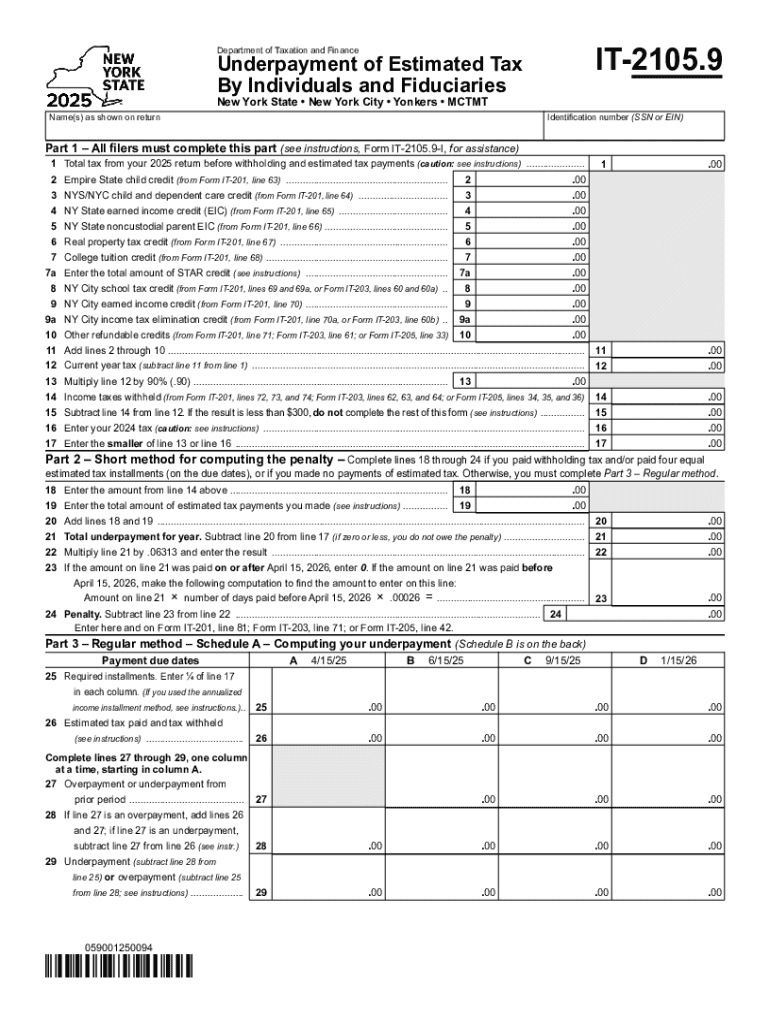







Definition and Purpose of Form IT-2105
The "Instructions for Form IT-2105: Estimated Income Tax" provide detailed guidance for taxpayers who need to calculate and pay estimated income tax to New York State, New York City, or Yonkers. This form is typically used by individuals and fiduciaries, such as trusts or estates, who expect to owe more than the amounts withheld from their income. Understanding the form is crucial for meeting legal tax obligations and avoiding penalties.
-
Estimated Income Tax: This is the method used to pay tax on income that is not subject to withholding. It includes income from self-employment, interest, dividends, rents, alimony, and gains from the sale of assets.
-
Importance: Accurately filing Form IT-2105 helps taxpayers avoid underpayment penalties. The form guides users in determining the correct amount of estimated tax they need to pay.
Steps to Complete Form IT-2105
Completing the Form IT-2105 involves several detailed steps to ensure accuracy and compliance with tax regulations:
-
Estimate Income: Calculate your expected income from all sources not subject to withholding. Include earnings like self-employment income, dividends, and rental income.
-
Determine Deductions and Credits: Assess any deductions and credits applicable to your tax situation. These elements will affect the final tax estimate.
-
Calculate Tax Liability: Use the Form IT-2105 instructions to figure out your total estimated tax. This includes applying the appropriate tax rates and considering potential deductions.
-
Schedule Payments: The estimated tax should be divided into four quarterly payments. Follow the specific deadlines given in the form instructions to avoid penalties.
-
Submit Payments: Payments can be submitted via check or money order if mailing the form or electronically using the state's online tax portal. Ensure each payment is made on time.
Key Considerations:
- Quarterly Deadlines: Keep records of when payments are due—typically April 15, June 15, September 15, and January 15 of the following year.
- Amending Payments: If your income situation changes, you may need to adjust the subsequent estimated payments.
Who Uses Form IT-2105
The form is primarily used by taxpayers who have income that is not subject to withholding taxes throughout the year. This includes:
-
Self-Employed Individuals: Those running their own business typically require this form, as taxes are not automatically withheld from their income.
-
Investors: People with significant investment income, such as dividends and capital gains, often need to make estimated tax payments.
-
Retirees: Retirees receiving substantial income from pensions or retirement accounts may find this form necessary if taxes are not withheld.
-
Trusts and Estates: Fiduciaries managing taxable estates or trusts need to estimate and pay taxes using this form.
Penalties for Non-Compliance
Failure to accurately complete or submit form IT-2105 can lead to penalties:
-
Underpayment Penalties: If taxpayers do not pay enough tax over the course of the year, they may incur penalties. This applies even if the full balance is paid by the tax deadline.
-
Late Payment Fees: Delinquent estimated payments can result in interest charges and additional fees.
-
Avoiding Penalties: To avoid these pitfalls, ensure estimated payments match or exceed 90% of the current year's tax liability or equal 100% of the previous year’s tax liability.
Filing Deadlines and Important Dates
Being mindful of deadlines is critical to avoid penalties:
-
Quarterly Payment Dates: Estimated taxes are typically due on April 15, June 15, September 15, and January 15 of the following year.
-
Annual Filing Deadline: If taxes are owed in addition to estimated payments, the final payment is due by April 15 of the subsequent year.
Legal Use of Form IT-2105
Form IT-2105 must be used in accordance with New York State taxation laws:
-
Compliance: Taxpayers must comply with New York State legal requirements by filing the form correctly to prevent legal complications.
-
Updates: Periodically check for updates to the instructions, as tax laws and rates can change.
-
Documentation: Retain copies of the form and any payments for reference and in case of an audit.
IRS Guidelines and Form IT-2105
While Form IT-2105 is specific to New York State, it aligns with broader IRS guidelines concerning estimated tax payments:
-
Consistency: Ensure that state and federal estimated taxes are calculated consistently to avoid discrepancies.
-
Federal Requirement: Taxpayers may also need to make estimated payments to the IRS using federal forms, such as the 1040-ES.
Required Documents for Form IT-2105
Gathering the following documents helps accurately fill out the form:
- Income Statements: W-2s, 1099s, and other income documentation.
- Prior Year Tax Return: Useful for estimating the current year’s tax liability.
- Deduction Records: Information on deductions and credits planned for the year, like business expenses or educational credits.




