
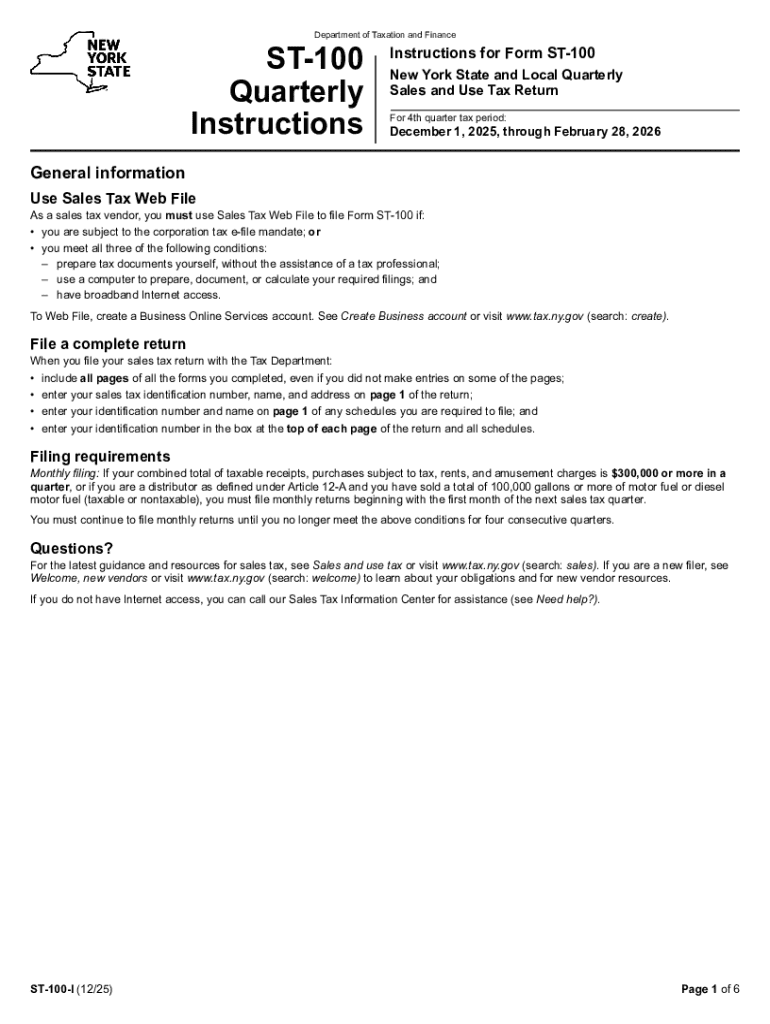







Definition and Purpose of Form ST-100
Form ST-100, or the New York State and Local Quarterly Sales and Use Tax Return, is a statutory requirement for businesses in New York that collect sales tax. This form enables the state government to track tax liabilities, ensuring businesses collect and remit the correct amount of tax.
The form is designed to report sales activities, taxable sales, use tax due, vendor collections, and any tax credits. Completing the ST-100 accurately and timely is crucial for business compliance with state tax laws. Apart from helping businesses avoid penalties and interest on unpaid taxes, it also ensures transparency in sales transactions.
Who Typically Uses Form ST-100
Businesses registered to collect sales tax in New York State must file Form ST-100. This includes retailers, service-based businesses, and sellers of taxable goods and services. Every entity liable to sales tax collection, regardless of size or industry, needs to adhere to this requirement.
Common users include:
- Retailers operating brick-and-mortar stores in New York.
- Online businesses with a significant presence or sales in New York.
- Service providers offering taxable services within state lines.
Steps to Complete Form ST-100
Gathering Necessary Information
- Sales Records: Collect detailed sales transactions for the quarter, including taxable and exempt sales.
- Use Tax Transactions: Identify and record purchases of unsold items, for which sales tax has not been paid.
- Tax Credits and Adjustments: Account for eligible tax credits or adjustments.
Completing the Form
- Enter Sales Details: Report total gross sales, identifying taxable and exempt categories.
- Calculate Tax Due: Compute the use tax and total sales tax due based on your tax jurisdiction.
- Declare Previous Payments: Record any advance payments made for the quarter.
- Reconcile and Submit: Calculate the net tax due or refund and ensure all entries reconcile with business records before submission.
Verification and Submission
- Review the completed form for accuracy.
- File electronically for faster processing or mail completed documents if required by state guidelines.
Important Terms Related to Form ST-100
- Gross Sales: Total sales amount before deductions or exemptions.
- Use Tax: Tax on purchases where sales tax was not collected at the point of sale.
- Exempt Sales: Transactions not subject to sales tax, including sales to government entities or exports.
- Tax Jurisdictions: Different areas in New York with varying tax rates, affecting tax computation.
Understanding these terms ensures proper completion of the form and accurate tax reporting.
Filing Deadlines and Important Dates
The ST-100 is a quarterly form, with specific filing dates:
- 1st Quarter: April 20
- 2nd Quarter: July 20
- 3rd Quarter: October 20
- 4th Quarter: January 20
Meeting these deadlines is crucial to avoid penalties. It is advisable to prepare submissions in advance to accommodate any unforeseen delays.
Penalties for Non-Compliance
Failure to file Form ST-100 or report sales taxes accurately can result in significant penalties:
- Late Filing: A penalty is imposed for late submissions, which increases over time.
- Underpayment: Interest charges apply to any tax not paid by the due date.
- Audit Risks: Non-compliance increases the likelihood of audits, potentially resulting in further penalties.
Complying with all filing requirements ensures business operations remain within the legal framework.
State-Specific Rules for New York Sales Tax
Tax Jurisdictions
New York tax rates vary by location. Businesses must ascertain applicable rates based on where sales occur.
Exemptions and Deductions
Specific sales and transactions are exempt but require documentation for justification. Businesses must maintain records to support any claimed exemptions or deductions when filing.
Examples of Using Form ST-100
Retail Store Scenario
A retail store operating in Manhattan registers $200,000 in sales for the quarter. Properly differentiating taxable from exempt and use tax liability forms the basis for accurately completing the ST-100.
Online Business Scenario
An online apparel shop ships to various New York locations. Each transaction’s tax is based on the buyer’s delivery address, requiring meticulous jurisdiction management.
Employing examples aids in understanding practical challenges and solutions businesses face when completing Form ST-100.
Digital Versus Paper Filing
New York encourages electronic filing for efficiency and environmental benefits. Online submissions streamline processing times and reduce errors.
Advantages of Digital Filing:
- Faster Processing: Immediate submission and confirmation.
- Built-in Accuracy Checks: Errors minimized through automated calculations.
- Environmental Responsibility: Reduced paper waste, aligned with eco-friendly initiatives.
However, businesses can still file by paper if they prefer or under specific ready-use criteria.


