
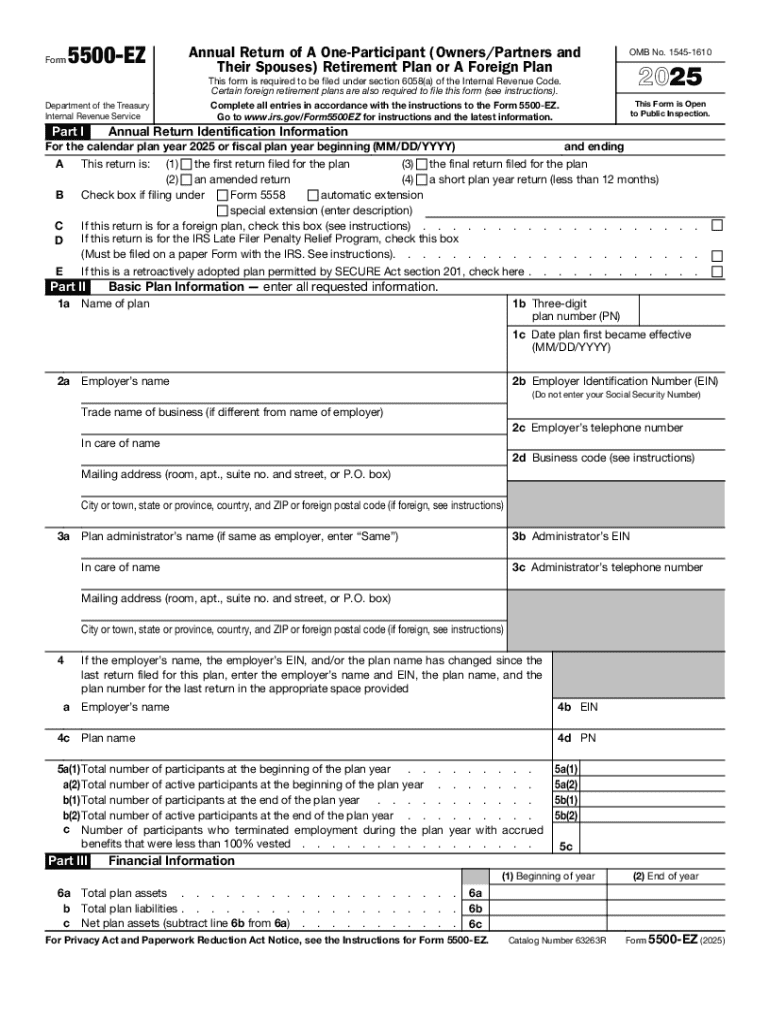







Definition & Meaning
The Form 5500-EZ Annual Return is an IRS form used by one-participant retirement plans and certain foreign retirement plans to report their annual financial activities. This form is specifically designed for individual plan owners or partners and their spouses. Unlike its sibling forms, the 5500-SF or the traditional Form 5500, the EZ version is used solely for plans that do not involve common-law employees. By filing this form, individuals can ensure compliance with the IRS’s reporting requirements while maintaining a transparent record of their retirement plan's activities.
How to Use the Form 5500-EZ Annual Return
Understanding its use is critical for plan administrators. Here's a step-by-step guide:
-
Gather Financial Information: Collect all financial records relating to the plan's assets, income, expenses, and distributions. Ensure all entries are accurate and reflective of the plan's financial health.
-
Download the Form: The Form 5500-EZ can be downloaded directly from the IRS website. Ensure you have the most recent version by checking the form year.
-
Complete Sections: Fill in each section of the form meticulously. This includes detailing plan characteristics and financial specifics.
-
Review for Errors: Double-check your entries for accuracy to avoid discrepancies that could lead to penalties or rejected filings.
-
Submit: Follow the filing instructions provided by the IRS. Submission can either be made online or mailed directly to the IRS, depending on the version of the form used.
Required Documents
When preparing to file Form 5500-EZ, ensure you have the necessary documentation at hand:
- Plan Document: This includes details about the plan’s setup and any amendments.
- Financial Statements: Documentation of the plan's end-of-year balances, including all contributions and distributions.
- Previous Year’s Form 5500-EZ: To compare and ensure continuity in yearly filings.
- Supporting Schedules: Attach additional schedules if your plan holdings are complex, requiring further breakdown.
Steps to Complete the Form 5500-EZ Annual Return
Filing the Form 5500-EZ requires precision. Below are detailed steps to effectively complete the form:
-
General Information: Enter the plan’s information, including the sponsor's name, plan number, and plan year.
-
Plan Characteristics: Specify the type of plan and its assets.
-
Financial Schedules: Itemize receipts and disbursements, contributions, benefits paid, and realized gains or losses from sales of assets.
-
Signature: Only authorized individuals should sign the document. Confirm that the signer's details are accurate and legible.
Who Typically Uses the Form 5500-EZ Annual Return
The primary users of Form 5500-EZ include:
- Self-Employed Individuals: Those maintaining a solo 401(k) or other one-participant plans.
- Partnerships: Where the only participants are partners and their spouses.
- Foreign Plans: Certain U.S.-based individuals running a retirement plan abroad.
Understanding who can use this form helps determine eligibility and whether the Form 5500-EZ is the correct filing.

Eligibility Criteria
To file Form 5500-EZ, a plan must meet specific criteria:
- One-Participant Plan: No employees other than the business owner(s) and their spouse(s) participate in the plan.
- Foreign Plans: U.S. residents who are also running a foreign retirement plan.
- Asset Threshold: Assets should not exceed a particular threshold, typically $250,000, to avoid triggering filing.

Filing Deadlines / Important Dates
Ensure compliance by keeping track of the following deadlines:
- Calendar Year Plans: The filing deadline is the last day of the seventh month following the end of the plan year, usually July 31.
- Extensions: File Form 5558 to request an extension, usually granting an additional two and a half months.
Penalties for Non-Compliance
Failure to comply with Form 5500-EZ filing requirements can lead to significant penalties:
- Late Filing: Penalties can accrue daily and may amount to substantial financial liabilities.
- Incorrect Filings: Providing incorrect information may lead to immediate fines and possible audits.
- Omissions or Delays: Such actions can jeopardize the plan's qualification status.
To avoid these severe outcomes, thorough preparation and compliance with deadlines are crucial.




