Definition & Meaning
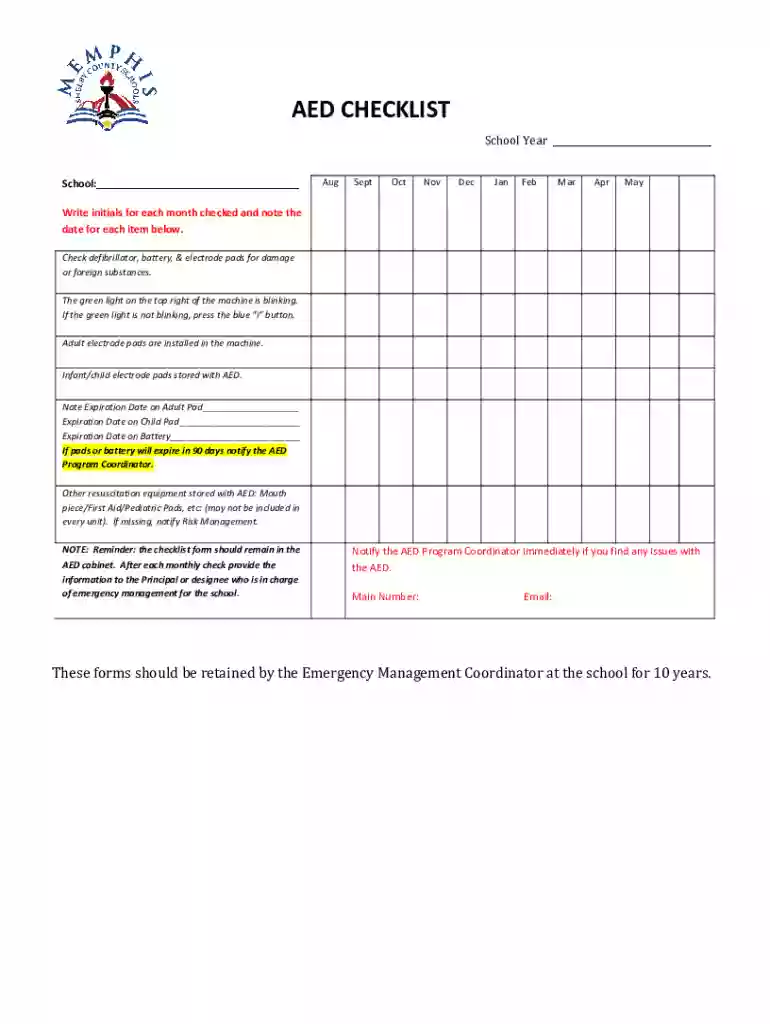
The AED Monthly Inspection Checklist is a structured tool used to ensure the proper maintenance and readiness of Automated External Defibrillators (AEDs). It serves as a verification method to document the condition and functionality of AED units, which are critical life-saving devices deployed in public spaces and workplaces. Regular inspections are essential, as they help confirm that the AED is always operational and that components—like batteries and electrode pads—are in optimal condition for use in an emergency. This checklist acts as a formal record that supports compliance with health and safety regulations, helping to avoid potential legal liabilities.
How to use the AED Monthly Inspection Checklist
To use the AED Monthly Inspection Checklist effectively, it is crucial to follow a systematic approach. Start by reviewing the manufacturer's guidelines, as these will provide specific instructions on what to inspect. Record this information on the checklist during each inspection:
- Visual Inspection: Examine the exterior of the AED for any visible damage or obstructions.
- Battery Check: Ensure the battery status indicator shows a full charge or sufficient power to operate in an emergency.
- Electrode Pads: Verify that the electrode pads are within their expiration date and securely connected to the device.
- Operational Test: Conduct a self-test if the AED model supports it. Note any alerts or warnings.
- Documentation: Record your initials and the date of inspection on the checklist. Address any issues discovered immediately to ensure the AED is ready for use.
Through this step-by-step inspection, the checklist ensures that all safety measures are diligently followed.
Key elements of the AED Monthly Inspection Checklist
The AED Monthly Inspection Checklist typically includes several key elements to guarantee comprehensive assessment:
- Device Information: Model number, serial number, and location of the AED unit.
- Inspection Date: Record each date an inspection is conducted.
- Inspector’s Initials: The initials of the individual responsible for the inspection.
- Battery Status: Check and note the condition of the battery and any replacement needs.
- Electrode Pads: Inspect for expiration dates and physical integrity of the gel pads.
- Readiness Indicator: Status should indicate "Ready" or equivalent, signaling operational functionality.
- Environmental Conditions: Ensure the AED is stored in conditions suitable to prevent damage (e.g., temperature-controlled environments).
- Emergency Kit Content: Confirm the presence of accessory items like scissors, razors, and a face mask.
These elements are crucial to maintaining a ready-to-use AED, fulfilling compliance requirements, and minimizing risks.
Steps to complete the AED Monthly Inspection Checklist
Completing the AED Monthly Inspection Checklist involves several precise steps, each designed to ensure thoroughness:
- Pre-Inspection Preparation: Gather necessary tools and have the AED user manual on hand.
- Detailed Component Check: Begin with a visual inspection followed by battery and electrode verification.
- Functionality Test: If possible, run a diagnostic test as recommended by the manufacturer.
- Checklist Completion: Fill out each section of the checklist, noting any deficiencies or corrective actions needed.
- Corrective Actions: Address any issues immediately, such as replacing expired pads or recharging batteries.
- Report Findings: Document findings and report any deficiencies to maintenance personnel or the safety officer.
- Store Securely: Ensure the AED is stored in a location that’s easily accessible during emergencies.
These steps ensure the checklist is completed effectively, boosting reliability and readiness.
Why should you use the AED Monthly Inspection Checklist
Utilizing the AED Monthly Inspection Checklist is vital for several reasons:
- Readiness Assurance: Ensures the AED is always ready for use during a cardiac emergency.
- Regulatory Compliance: Supports adherence to local safety laws and standards that mandate AED maintenance and inspection.
- Risk Mitigation: Reduces liability by documenting regular maintenance and ensuring device functionality.
- Data Tracking: Provides a historical log of maintenance activities, useful for audit trails and future reference.
- Life-Saving Potential: Increases the likelihood of successful defibrillation in an emergency, improving chances of survival.
- Peace of Mind: Offers reassurance to organizations and employees that critical emergency equipment is well-maintained and reliable.
These benefits underscore the importance of integrating the checklist into regular safety protocols.
Who typically uses the AED Monthly Inspection Checklist
The AED Monthly Inspection Checklist is primarily used by personnel responsible for health and safety compliance within an organization. This includes:
- Safety Officers: Tasked with maintaining workplace safety and ensuring all equipment is operational.
- Facility Managers: Oversee building operations and manage health and safety equipment.
- Security Personnel: First responders who need to confirm equipment readiness.
- Health and Safety Teams: Ensure organizational compliance with medical and legal standards.
- Trained Employees: Typically those certified in first aid or CPR who may be delegated inspection tasks.
Utilization by these roles ensures the AEDs are always prepared and contribute to a safer environment.

Important terms related to AED Monthly Inspection Checklist
Understanding key terms related to the AED Monthly Inspection Checklist enhances effective usage:
- Electrode Pads: Components placed on a patient's chest to deliver electrical currents.
- Battery Indicator: The display showing the charge level and health of the battery.
- Self-Test: An automated check that some AEDs can perform to assess functionality.
- Defibrillation: The delivery of an electrical shock to restore normal heart rhythm.
- Expiration Date: The date beyond which the electrode pads or battery might not function optimally.
- Readiness Indicator Light: A visual signal displaying the device’s operational status.
- Maintenance Log: A recorded history of all inspections and corrective actions taken.
Knowing these terms supports thorough engagement with the checklist and overall AED functionality.
Legal use of the AED Monthly Inspection Checklist
Legal considerations of the AED Monthly Inspection Checklist involve compliance with safety regulations designed to ensure AED availability and functionality:
- Regulatory Compliance: Many jurisdictions require regular AED inspections and documented proof of maintenance.
- Liability Protection: Proper documentation can protect organizations from litigation related to device failure.
- Good Samaritan Laws: Often, these laws offer protection to individuals and organizations using AEDs in good faith during emergencies, provided that proper maintenance protocols are in place.
- Inspection Mandates: Some states may have specific laws mandating monthly or quarterly inspections for AEDs, requiring adherence to scheduled check-ups.
- Training Requirements: Legal standards may stipulate that employees inspecting AEDs must be trained in CPR and use of AEDs.
The legal framework guiding AED usage underscores the necessity of adhering to maintenance protocols and using the checklist diligently.