






Definition and Purpose of an Application for Employment
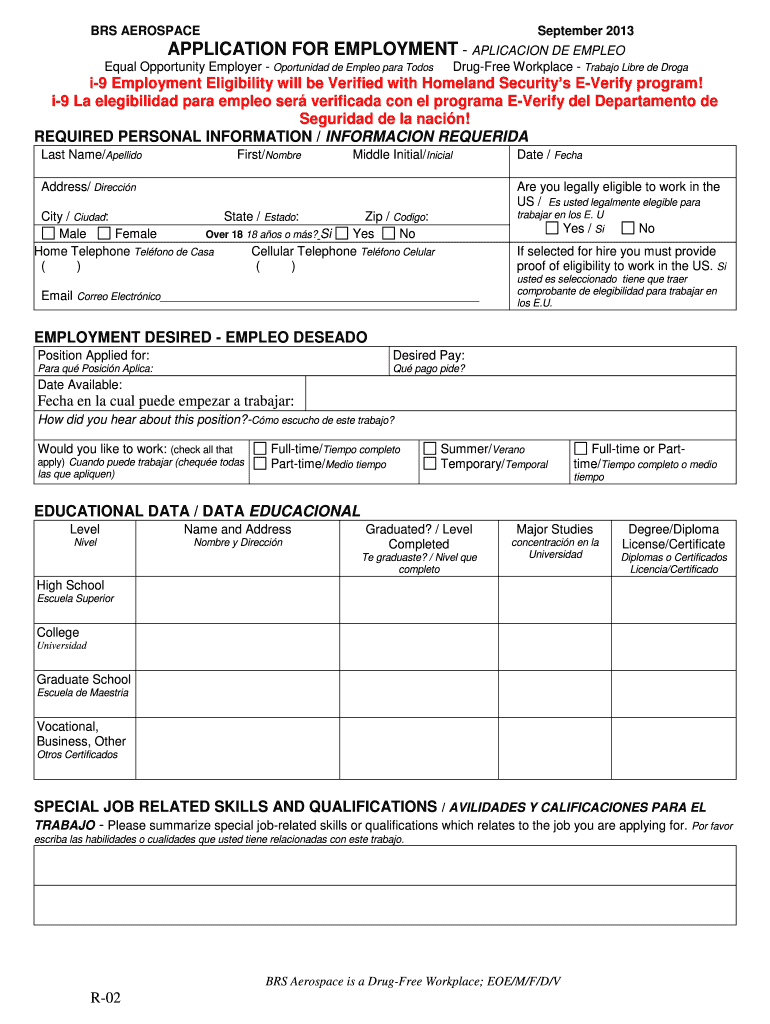
An application for employment is a formal document used by employers to collect essential information from potential candidates during the hiring process. It typically captures personal, educational, and professional details, helping employers assess applicants' qualifications and suitability for a position. This document standardizes the data collection process, ensuring consistency in evaluating numerous candidates. Importantly, it also includes declarations regarding the applicants' work eligibility, often asking if they are legally permitted to work in the United States. This ensures compliance with federal employment laws.
Steps to Complete the Application for Employment
Completing an application for employment usually involves several key steps:
- Personal Information: Provide your full name, address, phone number, and email.
- Educational Background: List your formal education, including schools attended, degrees obtained, and any relevant certifications.
- Employment History: Detail your previous work experience. Include roles, responsibilities, employers, and durations of employment.
- References: Supply contact information for individuals who can vouch for your professional qualifications. These usually include former supervisors or colleagues.
- Supplementary Information: Answer any additional questions that relate to availability, interests, or skills pertinent to the job role.
- Sign and Date: Confirm your consent to the terms and conditions by signing and dating the application.
Key Elements of the Application for Employment
An application for employment typically encompasses several core components that facilitate thorough candidate evaluation:
- Applicant Information: Includes personal contact details and identification.
- Position and Availability: Specifies the job applied for and the candidate's work availability.
- Education and Qualifications: Details academic history and relevant qualifications.
- Work Experience: Provides past employment information and job responsibilities.
- References: Lists individuals who can attest to the candidate's qualifications and work ethic.
- Legal Declarations: Includes statements about work eligibility and any required background checks.
Who Typically Uses the Application for Employment
Applications for employment are mainly used by human resources departments, hiring managers, and recruitment agencies as part of their candidate selection processes. They are particularly useful for:
- Large Corporations: To streamline the hiring process and ensure consistency across departments.
- Small and Medium Enterprises: To efficiently gather pertinent information and assess potential hires.
- Government Agencies: For adherence to standardized hiring protocols and compliance with legal requirements.


Legal Use of the Application for Employment
Applications for employment must comply with legal standards to protect both the employer and the applicant. Employers are prohibited from including questions that could lead to discrimination based on race, gender, religion, or age, in accordance with U.S. Equal Employment Opportunity Commission (EEOC) guidelines. Additionally, personal data collected must be safeguarded to maintain applicants' privacy and data protection laws.
State-Specific Rules for the Application for Employment
While federal guidelines govern much of the application for employment process, state-specific rules can also apply. For example:
- California: Restricts questions about criminal history until a conditional job offer is made, per the Fair Chance Act.
- Massachusetts: Limits inquiries into salary history during the initial application phase to promote pay equity.
- New York: Requires compliance with the "Ban the Box" ordinance, which prohibits asking about criminal records early in the application process.
Versions or Alternatives to the Application for Employment
Different variations and alternatives of employment applications may exist depending on the employer's requirements:
- Digital Applications: Online forms hosted on company websites or job portals.
- Paper Applications: Traditional paper forms that can be submitted in person or via mail.
- Integrated Software Tools: Platforms like DocHub that enable collaborative form completion and document management within organizations.
Important Terms Related to the Application for Employment
Familiarity with specific terms is crucial when dealing with employment applications:
- "At-Will Employment": Indicates that the employment relationship can be terminated by either party at any time.
- "Equal Opportunity Employer": Implies that the employer does not discriminate during the hiring process.
- "Background Check": A screening process to verify the information provided by the candidate.
Digital vs. Paper Versions of the Application for Employment
Applications for employment can be submitted digitally or via paper, each having distinct advantages:
- Digital: Offers convenience and speed, allowing for easy transmission and storage of applications. It also supports electronic signature functionality.
- Paper: May be preferred by some organizations that require hard-copy documentation or have limited access to digital resources.
While digital applications offer efficiency and are environmentally friendly, paper applications can be vital in settings where electronic solutions aren't viable.