






Definition and Meaning of Certificate of Incorporation
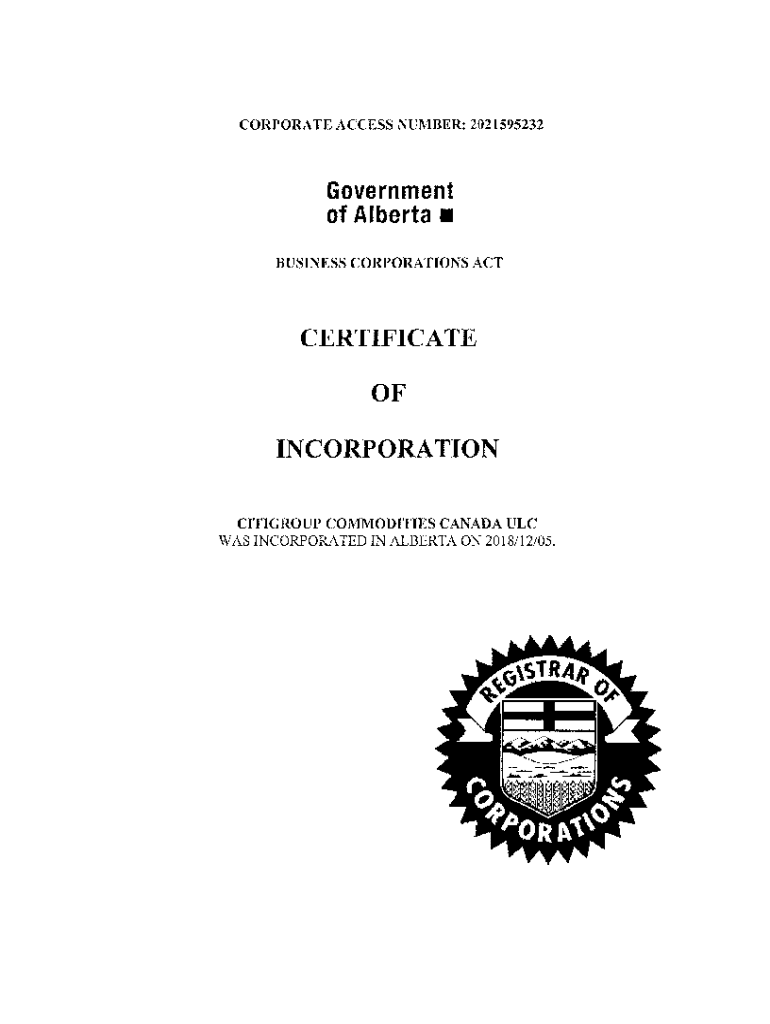
A Certificate of Incorporation for Alberta, issued by the Government of Alberta, is a formal document that legally recognizes a corporation's existence in the province. It signifies that a corporation has been established in accordance with Alberta's Business Corporations Act, thereby allowing it to operate as a legally registered entity. This certificate serves a pivotal role in outlining the corporation's essential details, such as its name, business number, and the date of incorporation. Additionally, it defines the corporate structure, including shareholder rights and share classes.
Key Elements of the Certificate of Incorporation
The document details multiple facets critical to the company's legal standing:
- Company Name and Number: This includes the legal name of the corporation and a unique alphanumeric identifier, which is used for all official government and regulatory filings.
- Incorporation Date: This is the official date on which the corporation is legally recognized.
- Share Structure: It specifies the types of shares issued, such as common, preferred shares, and any special rights or restrictions attached to them.
- Shareholder Restrictions: Restrictions, if any, on the transfer of shares or the number of shareholders allowed.
How to Use the Government of Alberta Certificate of Incorporation
Using this certificate involves several practical applications. Primarily, it serves as a legal reference to prove the establishment and legal status of a corporation. It is often required in various business activities, including:
- Opening Bank Accounts: Financial institutions often request this document to verify a company’s legal status before allowing for the opening of corporate bank accounts.
- Legal Contracts: When entering into contracts with vendors or clients, companies may need to present their certificate to prove their legitimacy.
- Regulatory Filings: Submission of this certificate may be necessary when applying for business licenses or permits and during tax filings.
Practical Scenarios
For example, when a corporation seeks to expand operations to other provinces or countries, this document serves as the foundational evidence of its legal status and operational history.
How to Obtain the Government of Alberta Certificate of Incorporation
To obtain this certificate, a corporation must register with the Alberta Corporate Registry. The steps generally include:
- Check Name Availability: Ensure the desired corporation name is available.
- Prepare Articles of Incorporation: Draft articles outlining corporate rules, share distribution, and initial directors.
- Submit Incorporation Application: Complete and submit the application along with the required fee through Alberta Registries or an authorized service provider.
- Receive Certificate: Once approved, the Government of Alberta issues the certificate, completing the incorporation process.
Required Documents
- Proposed corporate name and alternatives
- Articles of Incorporation
- Notice of Address
- Notice of Directors
- Payment of applicable registration fees
Legal Use of the Certificate
This certificate is a legal requirement for establishing the corporation's standing in Alberta. It ensures compliance with provincial laws and grants the corporation the capability to:
- Enter into legally binding contracts
- Own property and assets
- Protect shareholder investments under corporate law
Compliance and Governance
Corporations must maintain updated records as per the Business Corporations Act and comply with annual reporting to remain in good standing, ensuring that their Certificate of Incorporation retains its validity.
Key Differences in State-Specific Rules
While this document is specific to Alberta, it is crucial for entities operating in multiple jurisdictions to be aware of differences in incorporation requirements. For instance, the share structure, director responsibilities, or shareholder agreements might vary slightly in regions such as British Columbia or Ontario.
Cross-Provincial Considerations
For a corporation considering expanding in Canada, understanding the nuances of incorporation laws in other provinces and obtaining necessary documents there is critical.
Penalties for Non-Compliance
Failing to adhere to the legal requirements associated with an Alberta Certificate of Incorporation can result in various penalties:
- Fines and Penalties: Non-compliance with annual filings can result in financial penalties.
- Loss of Good Standing: This status may be revoked, risking the corporation’s ability to legally operate or expand.
- Legal Repercussions: Lack of compliance could lead to personal liability for directors or officers in the event of legal disputes.
Form Variants and Alternatives
The Certificate of Incorporation can vary based on the corporation type, such as a public versus private entity. Additionally, an "Amended Certificate of Incorporation" may be required if changes occur post-registration, like alterations in share classes or director's details. Corporations may also explore variants like extra-provincial registration if expanding beyond Alberta.
Digital vs. Paper Format
Though both digital and paper formats are legally valid, digital versions integrate seamlessly into online systems for ease of access, sharing, and storage. This remains consistent with modern practices aimed at reducing paperwork and increasing efficiency.