






Definition & Meaning
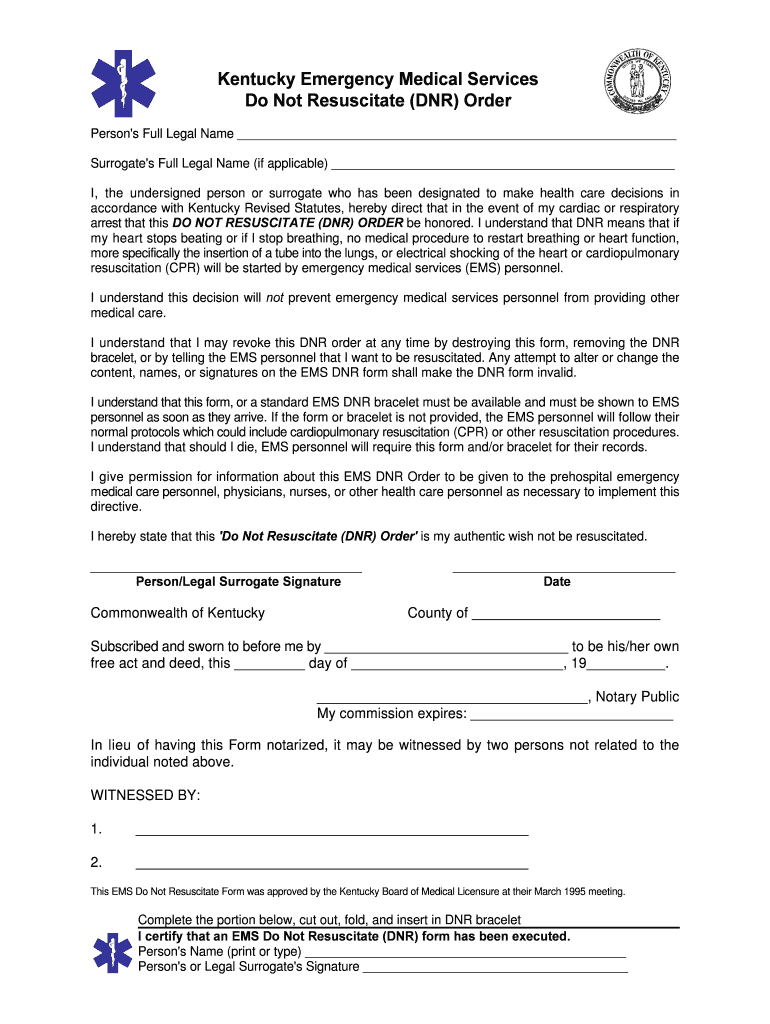
The "KY DNR Form," officially known as the Kentucky Do Not Resuscitate Order form, is a legal document used to communicate an individual's wish to refuse cardiopulmonary resuscitation (CPR) in case of cardiac or respiratory arrest. This form allows individuals to make decisions about their medical care preferences in advance, ensuring that their end-of-life wishes are respected. The document is typically prepared with the guidance of a healthcare provider and is an important part of advance care planning.
Steps to Complete the KY DNR Form
-
Consult with Healthcare Provider: Engage in a thorough discussion with your healthcare provider to understand the implications of signing a DNR order.
-
Obtain the Form: The form is provided by healthcare facilities, physicians, or can be downloaded from healthcare websites.
-
Fill Out Personal Information: Enter personal details such as name, date of birth, and contact information.
-
Specify the DNR Request: Clearly state your wish not to receive CPR or other resuscitation procedures.
-
Healthcare Provider's Signature: The form must be signed by a qualified healthcare provider to be valid.
-
Witness Requirements: Depending on the requirements, a witness or notary may need to sign the form.
-
Distribution: Once completed, distribute copies to relevant parties, including family members and healthcare providers.
How to Obtain the KY DNR Form
- Healthcare Facilities: Many hospitals and clinics in Kentucky offer this form as part of their standard advance care planning resources.
- Online Resources: The form can be downloaded from official state health department websites or other medical advisory platforms.
- Physician's Office: Request the form directly from your primary care physician or healthcare provider.
Why Should You Use the KY DNR Form
The KY DNR form ensures that a person's explicit wishes about resuscitation are respected and followed. It is especially important for individuals with terminal illnesses, advanced age, or specific medical conditions where CPR may not improve their quality of life or prolong meaningful survival. Having this form in place avoids unnecessary medical interventions and provides peace of mind to both patients and their families.
Who Typically Uses the KY DNR Form
- Elderly Patients: Many older adults opt for this form to prevent invasive procedures in the event of a life-threatening emergency.
- Terminally Ill Individuals: Those with terminal diagnoses often choose to use DNR orders as part of their palliative care plans.
- Patients in Nursing Homes: Long-term care residents may have these forms to align their medical care with their end-of-life wishes.
- Chronically Ill Patients: Individuals with chronic conditions that make CPR unlikely to succeed may use a DNR order.


Important Terms Related to the KY DNR Form
- Resuscitation: Medical procedures to restore heartbeat or breathing.
- Advance Directive: A broader category of legal documents that include living wills and power of attorney for healthcare.
- Cardiopulmonary Resuscitation (CPR): Emergency procedure involving chest compressions and sometimes artificial ventilation.
Legal Use of the KY DNR Form
Possessing a KY DNR form is legally recognized in the state of Kentucky. It must be completed voluntarily and with full understanding of its implication. Healthcare facilities must honor it and refrain from resuscitation efforts if presented. Legal considerations also demand that the document is accessible and shown during emergency situations to ensure compliance with the patient’s wishes.
Key Elements of the KY DNR Form
- Patient Identification: Accurate personal details to ensure the form pertains to the correct individual.
- Healthcare Provider's Attestation: A licensed healthcare provider’s confirmation that the patient understands their choices.
- Explicit Resuscitation Instructions: Clear statement refusing CPR procedures.
- Signatures: Signatures from the patient (or authorized representative), healthcare provider, and, where needed, witnesses or notary.
State-Specific Rules for the KY DNR Form
In Kentucky, specific guidelines govern the use of DNR orders, including who can sign them, how they should be witnessed, and where they should be stored. Residents should consult state resources or legal experts to ensure their form complies with Kentucky laws. Additionally, the form should be reviewed periodically to ensure it still reflects the individual’s wishes or adjust as health conditions change.