






Definition and Meaning of Old Indian Days - Tripod
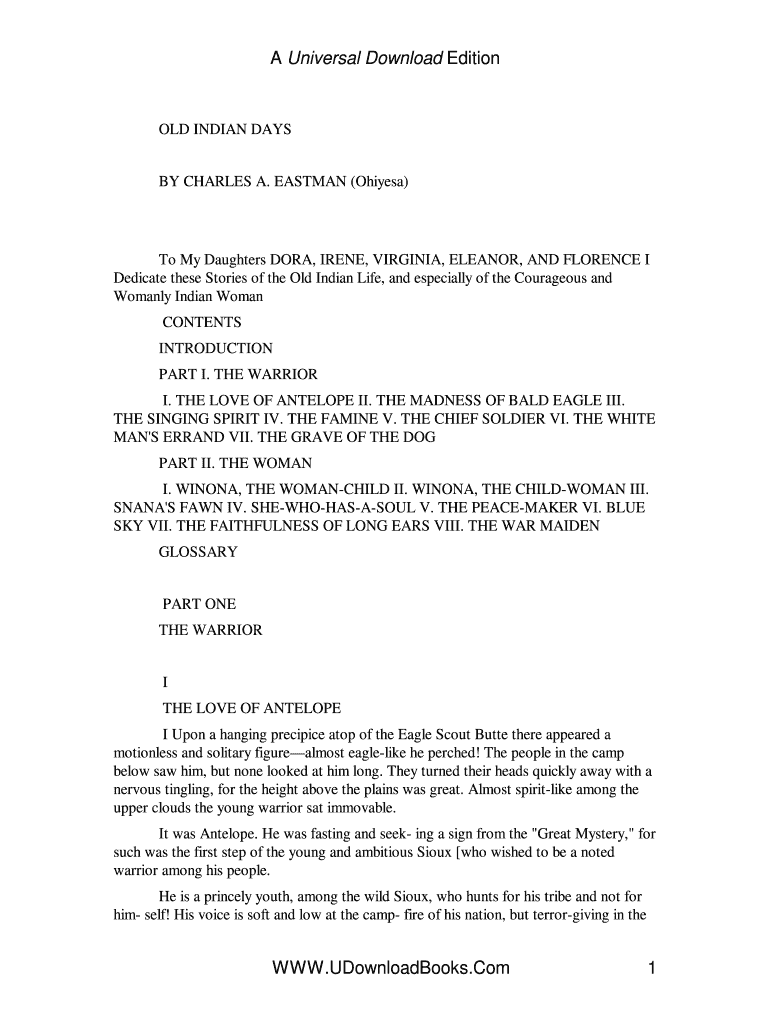
The term "Old Indian Days - Tripod" refers to a unique framework for understanding and exploring the historical and cultural narratives presented in Charles A. Eastman's collection of stories, "Old Indian Days." This framework can be likened to a tripod, which has three pillars: the historical context of the Sioux people, the thematic exploration of values such as bravery and community, and the storytelling techniques used by Eastman to depict these stories. Each pillar supports a comprehensive interpretation of how the Sioux culture and values have been documented and celebrated through literature.
How to Use the Old Indian Days - Tripod Framework
To effectively utilize the Old Indian Days - Tripod framework, begin by examining the historical backdrop of the stories. Familiarize yourself with the Sioux people's history and cultural significance during the late 19th and early 20th centuries. Next, analyze the primary themes within the stories such as bravery, love, and community dynamics. Finally, consider Eastman's storytelling style—observe his use of characters like Antelope and Winona to personify these themes. By methodically reviewing each pillar, readers and scholars can gain deeper insights into the text and its cultural relevance.
Steps to Complete the Old Indian Days - Tripod Analysis
- Research Historical Context: Start by gathering information on the Sioux people during Eastman's era. Focus on societal structure, key historical events, and cultural practices.
- Identify Main Themes: As you read through "Old Indian Days," note recurring themes. Consider how these themes reflect Sioux values.
- Analyze Storytelling Techniques: Pay attention to Eastman’s narrative style, character development, and how he integrates cultural lessons.
- Synthesize Information: Combine insights from the historical research, themes identification, and narrative analysis to form a comprehensive understanding of the text.
- Discuss Findings: Engage with academic or cultural discussion groups to broaden your perspective and validate your analysis.
Who Typically Uses the Old Indian Days - Tripod Framework
This analytical framework is primarily utilized by scholars, educators, and students interested in Native American literature and culture. It serves as a valuable tool for those studying cultural anthropology, history, or literature as it provides a structured approach to examining complex cultural narratives. Additionally, cultural historians and enthusiasts who wish to deepen their understanding of Sioux traditions and storytelling will find this framework useful.

Important Terms Related to Old Indian Days - Tripod
- Sioux: A Native American tribe represented in Eastman's stories, known for their rich cultural heritage and historical significance.
- Bravery: A recurring theme in the narratives, highlighting the courage of Sioux individuals.
- Community: Depicted through close-knit societal structures and communal values integral to Sioux life.
- Eastman, Charles A.: The author of "Old Indian Days," whose literary work captures the essence of Sioux culture.
Examples of Using the Old Indian Days - Tripod Framework
Consider a classroom setting where students are tasked with exploring Native American literature. Using the Old Indian Days - Tripod framework, students can focus on a story from Eastman's book, interpret its main themes, and discuss how historical context influences the narrative. Additionally, educators can employ this framework to design lesson plans that encourage critical thinking and cultural appreciation.
Why Study the Old Indian Days - Tripod Framework
Learning the Old Indian Days - Tripod framework enriches one's understanding of Native American literature and provides a systematic way to appreciate complex cultural narratives. It enables readers to delve deeper into the historical and thematic layers of Eastman’s work, fostering a greater appreciation for the values and traditions of the Sioux people. This framework also enhances interdisciplinary studies, linking literature with history and cultural studies.
State-Specific Rules and Use of Old Indian Days - Tripod
While the Old Indian Days - Tripod framework is universally applicable for analyzing Eastman’s work, researchers may find that particular state standards in the U.S. could offer additional guidelines for how Native American literature is taught or analyzed. For instance, states with significant Native American populations may incorporate specific cultural competencies into their educational curricula, enriching the analysis process.
Software Compatibility for Old Indian Days - Tripod Analysis
To facilitate the analysis of "Old Indian Days" using the Tripod framework, digital tools like literature analysis software and academic databases can be helpful. Programs such as QDA Miner and NVivo offer advanced text analysis tools that can help categorize themes, identify linguistic patterns, and compile contextual notes, thus enhancing your study and understanding of the literature.
Business Types and Cultural Institutions Utilizing Old Indian Days - Tripod
Businesses and cultural institutions, specifically those involved in publishing, education, and cultural preservation, can benefit from employing the Old Indian Days - Tripod framework. Publishers can use it to create insightful commentary or supplementary materials that enrich reader interaction with the text. Museums and cultural centers can integrate the framework into exhibits or educational programs that highlight Native American literature and history.