






Definition and Purpose of Form 990-T
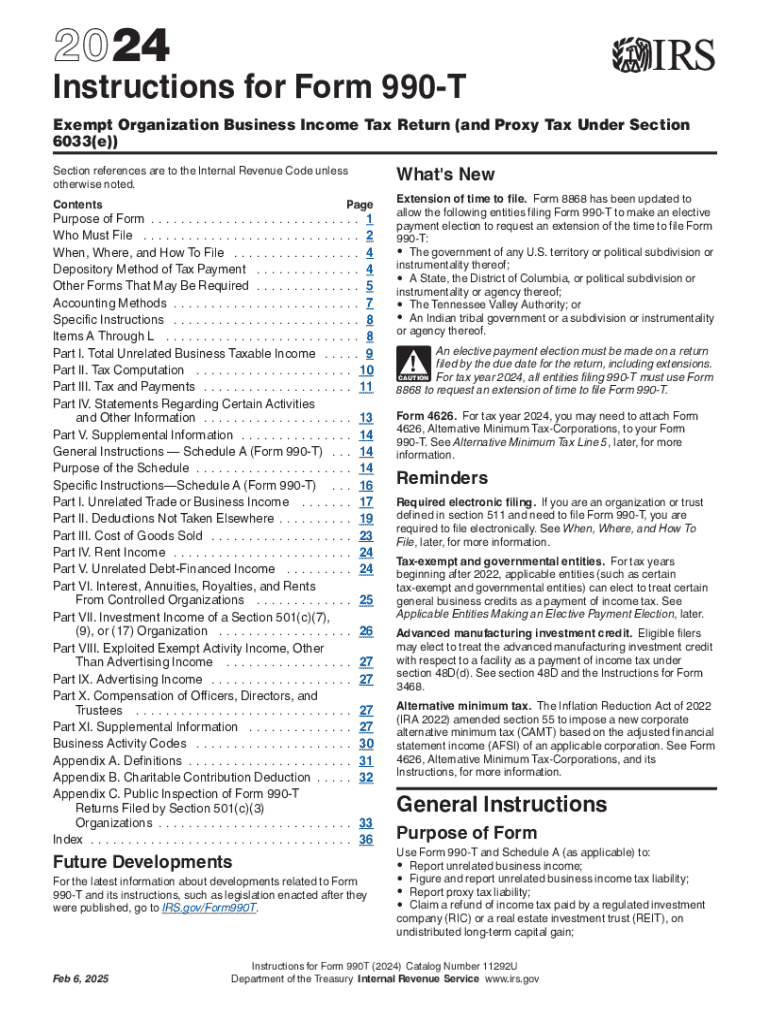
The Form 990-T, officially titled "Exempt Organization Business Income Tax Return," is used by tax-exempt organizations to report their unrelated business taxable income (UBTI). Organizations, such as charities, religious groups, and academic institutions, that engage in business activities not substantially related to their exempt purposes must declare any related income on this form. The UBTI is subject to taxation at regular corporate tax rates, ensuring that tax-exempt status does not confer an unfair advantage in unrelated business activities.
Unrelated Business Income
- Definition: Unrelated business income is generated from a trade or business that is regularly conducted and unrelated to the organization's exempt purpose.
- Examples:
- A museum operating a gift shop.
- A university publishing a magazine unrelated to its educational mission.
Significance
Understanding the dynamics of UBTI is crucial for maintaining compliance and avoiding unexpected tax liabilities.
Steps to Complete Form 990-T
The 2024 Instructions for Form 990-T provide a detailed process for accurately completing the form to ensure compliance with IRS regulations. Each step follows specific sections of the form like reporting income, calculating deductions, and determining tax liability.
- Report Gross Income: Start by reporting all unrelated business gross income.
- Deduct Related Expenses: Deduct expenses directly connected to earning such income.
- Calculate Deductions: Include allowable deductions affiliated with unrelated business activity.
- Compute Tax: Apply applicable corporate tax rates to the taxable income.
- Verify and Sign: Confirm the accuracy of the information and sign the form.
Examples and Calculations
- Example Calculation: A nonprofit earns $50,000 in unrelated business income and incurs $30,000 in related expenses, resulting in $20,000 taxable income.
- Dependencies: Accuracy in reporting depend heavily on detailed and precise bookkeeping by the organization.
Filing Deadlines and Important Dates
The exemption organization must file Form 990-T by the 15th day of the 5th month after the accounting period ends.
Critical Dates
- Standard Fiscal Year: If an organization operates on a calendar year, it must file by May 15.
- Extension: Organizations may request an extension using Form 8868, granting an additional six months.
Eligibility Criteria
Only tax-exempt entities with unrelated business activities must file Form 990-T. The IRS defines specific criteria for these activities to determine relatedness to the primary exempt purpose.


Criteria Overview
- Tax-Exempt Associations: Including charities, religious institutions, and other qualified organizations.
- Activity Conditions: Activities should be regularly carried out, unrelated, and profit-generating.
Important Terms Related to Form 990-T
Several terms are essential for understanding and completing Form 990-T.
Key Terms
- Unrelated Business Taxable Income (UBTI): Income generated from activities unrelated to an organization's primary purpose.
- Tax-Exempt Organization: An entity recognized by the IRS as exempt from federal income tax.
- Gross versus Net Income: Understanding the distinction is crucial for accurate form completion.
Required Documents
Preparation of Form 990-T requires various supportive documents detailing income and expenses related to unrelated business activities.
Necessary Documentation
- Financial Records: Inclusive of income statements and balance sheets.
- Receipts: For all claimed expenses.
- Previous Tax Filings: Comparative analysis aids error identification.
Penalties for Non-Compliance
Failing to comply with filing requirements for Form 990-T results in IRS-imposed penalties.
Types of Penalties
- Failure to File: Organizations can incur fines for late submissions, reducing excess exemptions from forthcoming fiscal years.
- Accuracy-Related: Underreporting can lead to accuracy-related penalties.
IRS Guidelines
The IRS offers comprehensive guidance to help organizations navigate the intricate details of Form 990-T.
Strategic Recommendations
- Utilize IRS Resources: IRS publications and online tools can streamline accuracy.
- Consult Tax Professionals: Expert advice ensures proper adherence to evolving tax laws.
Form Submission Methods
Organizations can submit Form 990-T electronically or via traditional mail.
Digital vs. Paper Advantages
- Digital: Reduces submission errors and expedites processing.
- Paper: Offers a traditional path for those less familiar with digital tools.
Understanding these aspects of Form 990-T is pivotal for maintaining compliance with IRS regulations and leveraging tax-exempt status responsibly. Each organization must review these areas annually to ensure fidelity to both federal laws and organizational accountability.