




Definition and Meaning of Appraisal Award
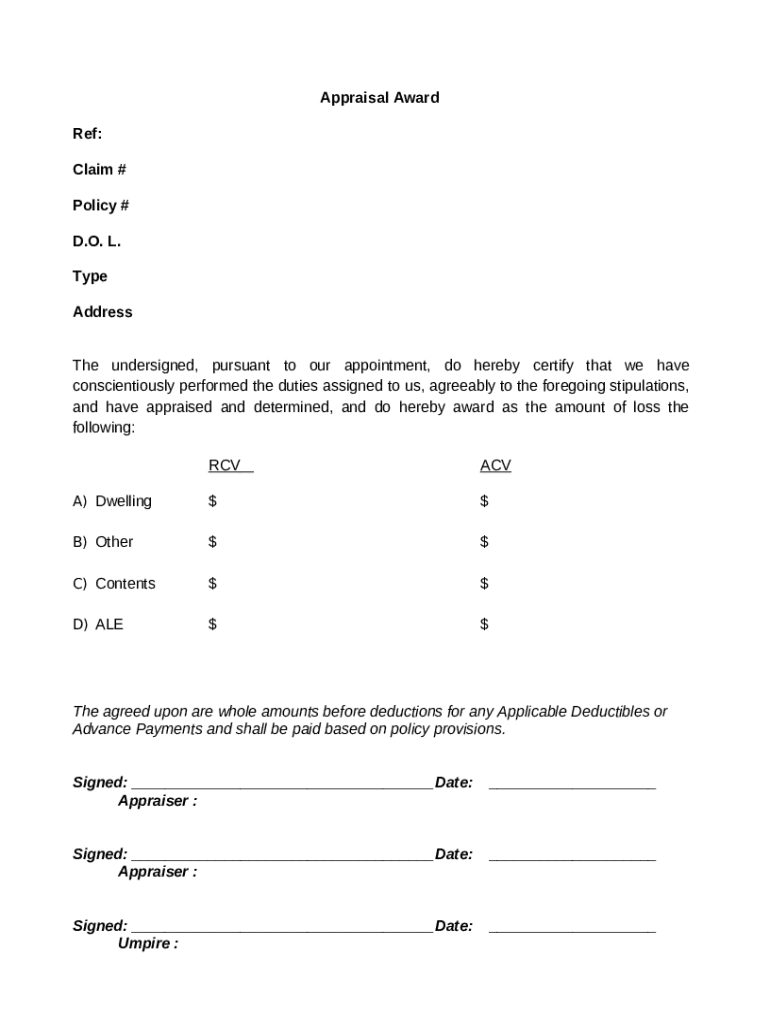
An appraisal award is a legally binding determination made by a neutral third party, typically an appraiser or panel, regarding the value of a disputed property or claim. In insurance contexts, it is a resolution mechanism used to settle disagreements between policyholders and insurers on the amount of a claim. The appraisal process involves each party selecting an independent appraiser. If these appraisers cannot reach an agreement, they will choose an umpire to make the final decision. The resulting figure is the appraisal award, representing the amount owed to the policyholder.
Important Terms Related to Appraisal Award
Understanding the jargon associated with appraisal awards is crucial for clarity:
- Appraiser: An impartial individual chosen by either the insurer or the policyholder to assess the property's value.
- Umpire: A neutral third party chosen by the two appraisers to resolve disputes when they cannot agree.
- Binding Decision: Once the umpire makes a decision, it is final and enforceable, similar to a judgment in court.
- Dispute Resolution: The formal process of settling a disagreement between the insurer and the policyholder without resorting to litigation.
Steps to Complete the Appraisal Award
Completing an appraisal award involves several organized steps to ensure accuracy and compliance:
- Initiate the Process: Either the policyholder or insurer can request an appraisal if there’s a dispute in the claim amount.
- Select Appraisers: Each party selects their own qualified appraiser to conduct independent evaluations.
- Conduct Appraisals: Appraisers assess the property or loss, compile reports, and share findings with each other.
- Appoint an Umpire: If appraisers fail to agree on the valuation, they will appoint a neutral umpire to make the final decision.
- Finalize the Award: The umpire reviews the assessment and decides on the appropriate appraisal award, which both parties must honor.
Practical Example in the Insurance Context
Consider a homeowner who suffers storm damage. The insurance company offers a settlement that is deemed insufficient by the homeowner. Initiating an appraisal can lead to a fair valuation via the outlined steps, providing a mutually agreeable resolution.
How to Use the Appraisal Award
Using an appraisal award effectively requires understanding when and how to invoke this mechanism:
- Claim Discrepancies: When there's a significant difference in settlement offers by the insurer and policyholder expectations.
- Selecting Expertise: Choosing appraisers with specific expertise relevant to the dispute can impact outcomes.
- Binding Acceptance: Acknowledge the outcome as a final settlement, thereby eliminating the need for further litigation.
Key Elements of the Appraisal Award
Accurate appraisal awards encompass several critical elements:
- Fair Market Value: Establishes the property’s worth at the time of loss.
- Comparative Analysis: Uses market comparisons and historical data to support valuations.
- Independent Judgments: Ensures all findings are free from bias.
- Documented Decisions: Provides a written record of the valuation process and decisions.
Legal Use of the Appraisal Award
The appraisal award is recognized by U.S. law as a legitimate means of resolving disputes without court intervention:
- Contractual Provision: Typically included in insurance contracts as a valid dispute resolution mechanism.
- Enforceability: Awards are as enforceable as court judgments once made.
- Judicial Review: Minimal court involvement unless there's evidence of fraud or malfeasance in obtaining the award.
State-Specific Rules for Appraisal Awards
States across the U.S. may have varying rules regarding appraisal awards:
- Arbitration vs. Appraisal: Some states might differentiate between arbitration (legally binding) and appraisal (valuation-focused).
- Pre-Dispute Agreements: Requirements to establish clear appraisal terms before disputes arise.
- Statutory Requirements: Specific rules governing the process and enforcement of appraisal awards.
Form Submission Methods
When applicable, there are several ways to submit appraisal awards or claims related documents:
- Online Platforms: Secure digital submission through insurers' websites enhances speed and efficiency.
- Postal Mail: Traditional method requiring time for mailing and processing.
- In-Person: Direct submission at an insurer’s office for immediate acknowledgment.
Penalties for Non-Compliance
Failure to adhere to the appraisal award process can result in penalties:
- Legal Consequences: Non-compliance with a binding award can lead to court-enforced judgments and additional legal fees.
- Insurance Policy Revocation: Continued disputes without following due process may risk policy termination.